GEOCON
A new website for Australia’s fastest-growing property developer
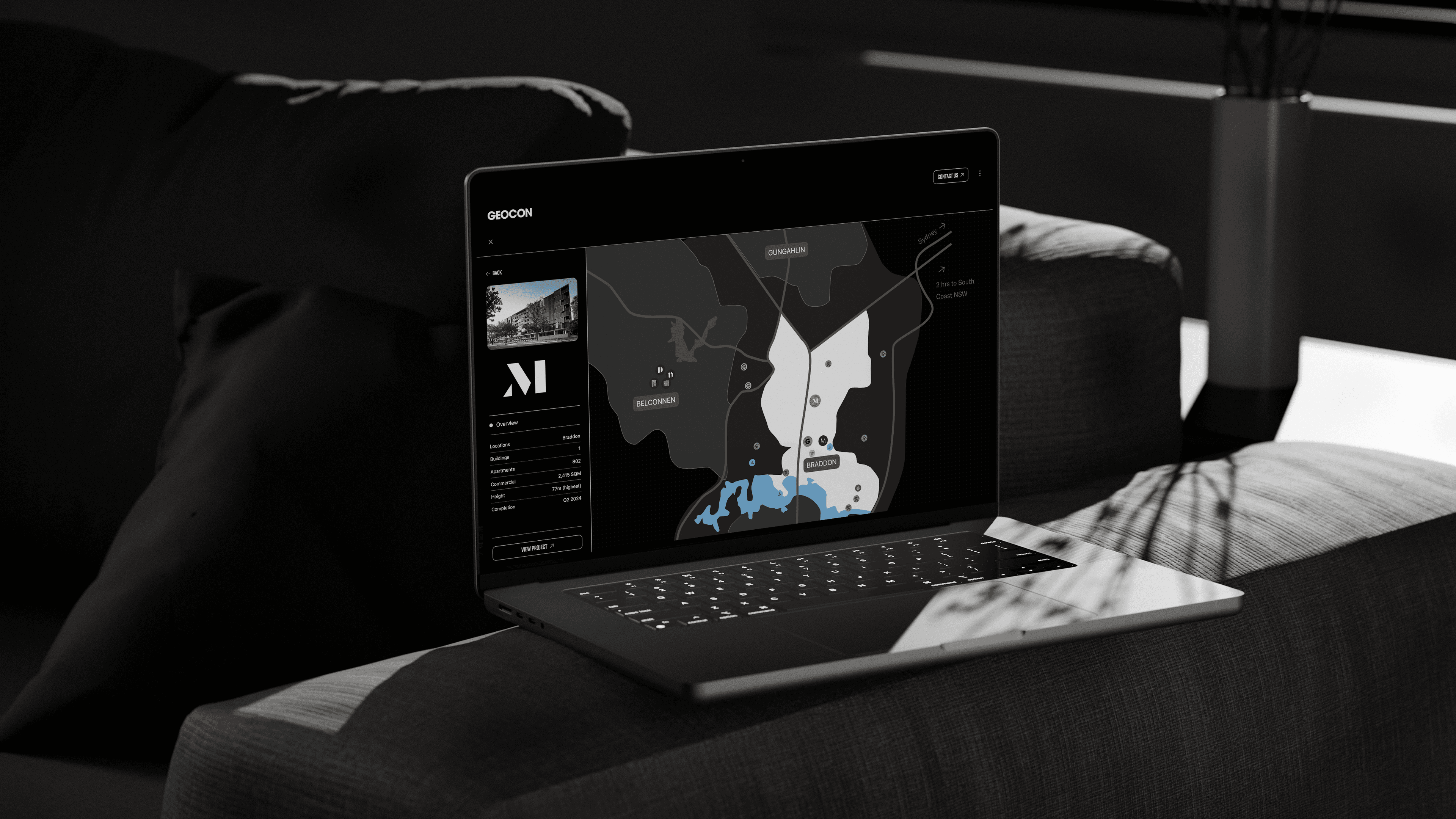
GEOCON, Canberra’s largest integrated developer and construction company, asked Mude to revitalise their online presence to better reflect their repositioned brand.
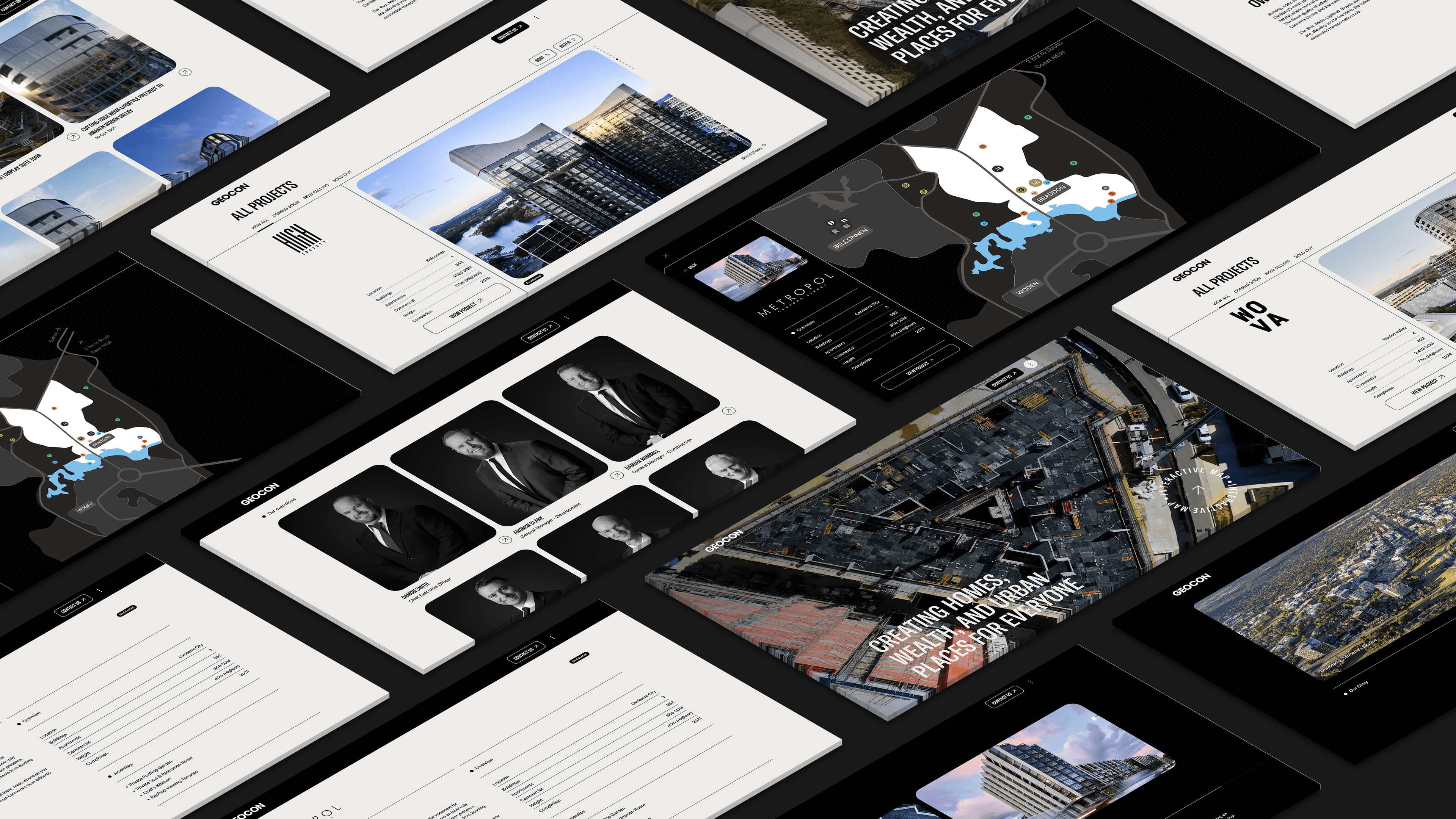
The existing site was fragmented; multiple microsites, inconsistent brand touch-points and disjointed user flows. We unified the experience, created a streamlined information architecture and established a site that works for buyers, investors and stakeholders. The new site offers an intuitive user journey, flexible project pages and deep integration with Salesforce to support lead management and automation. The platform is built to scale as GEOCON grows. The result: a digital platform that reinforces GEOCON’s leadership in the Canberra market, improves engagement across key audiences and positions the brand for the next chapter of growth.
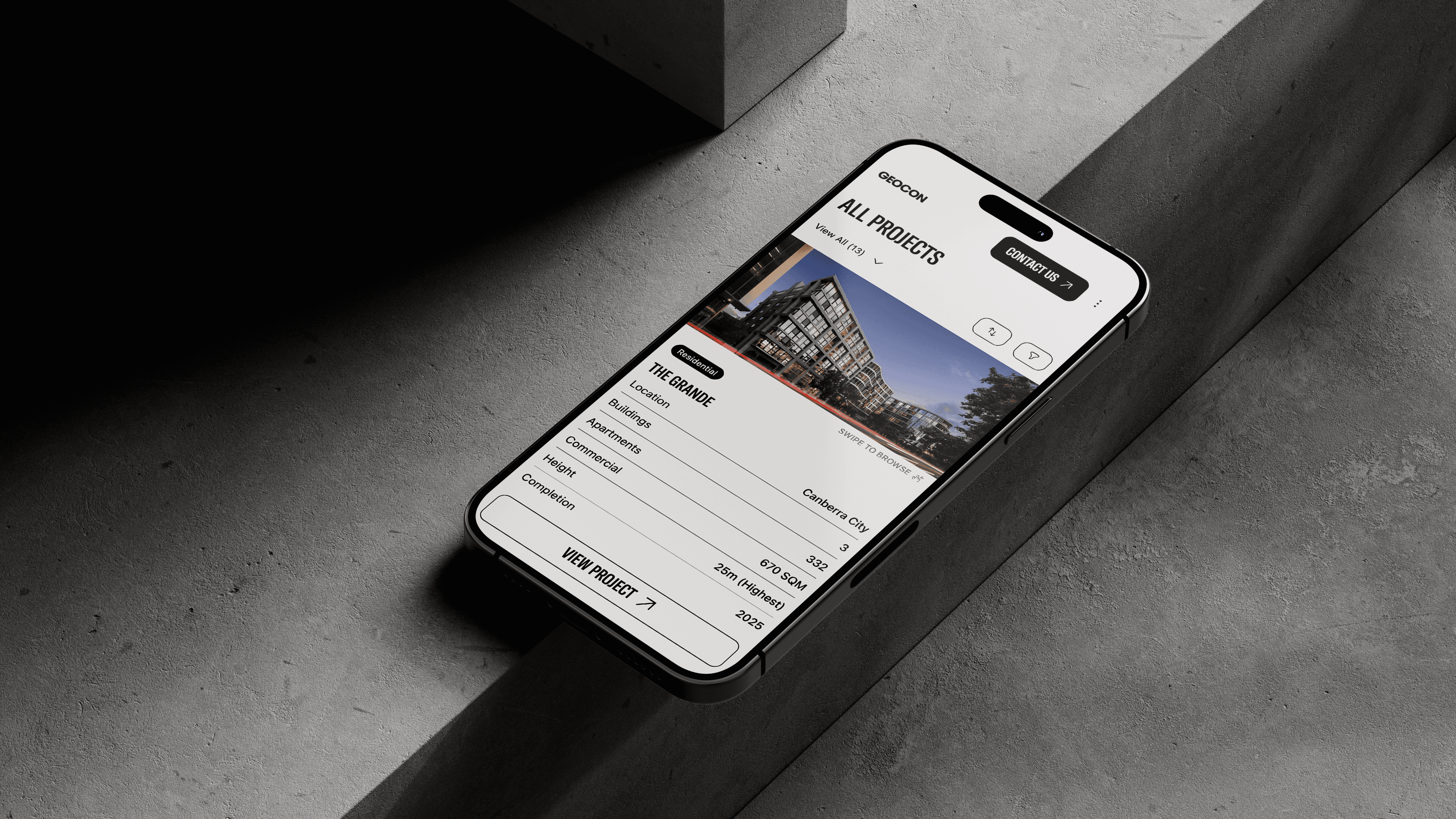
The brief
GEOCON sells to multiple audiences from a single business: live-in buyers, domestic and international property investors, financiers underwriting the pipeline, channel agents distributing the stock, and prospective talent for the construction and development teams. Each audience needs different content, and each is reading the brand for different reasons. The previous site treated them as variations of the same buyer journey.
The brief was to rebuild the site around the company GEOCON has become. A unified brand narrative carried across every page. An information architecture that distinguishes between audiences without fragmenting the experience. A project page framework that can stand up new towers quickly. A Salesforce integration that connects every project to the sales funnel. And a CMS the GEOCON team can operate without the design drifting over time.
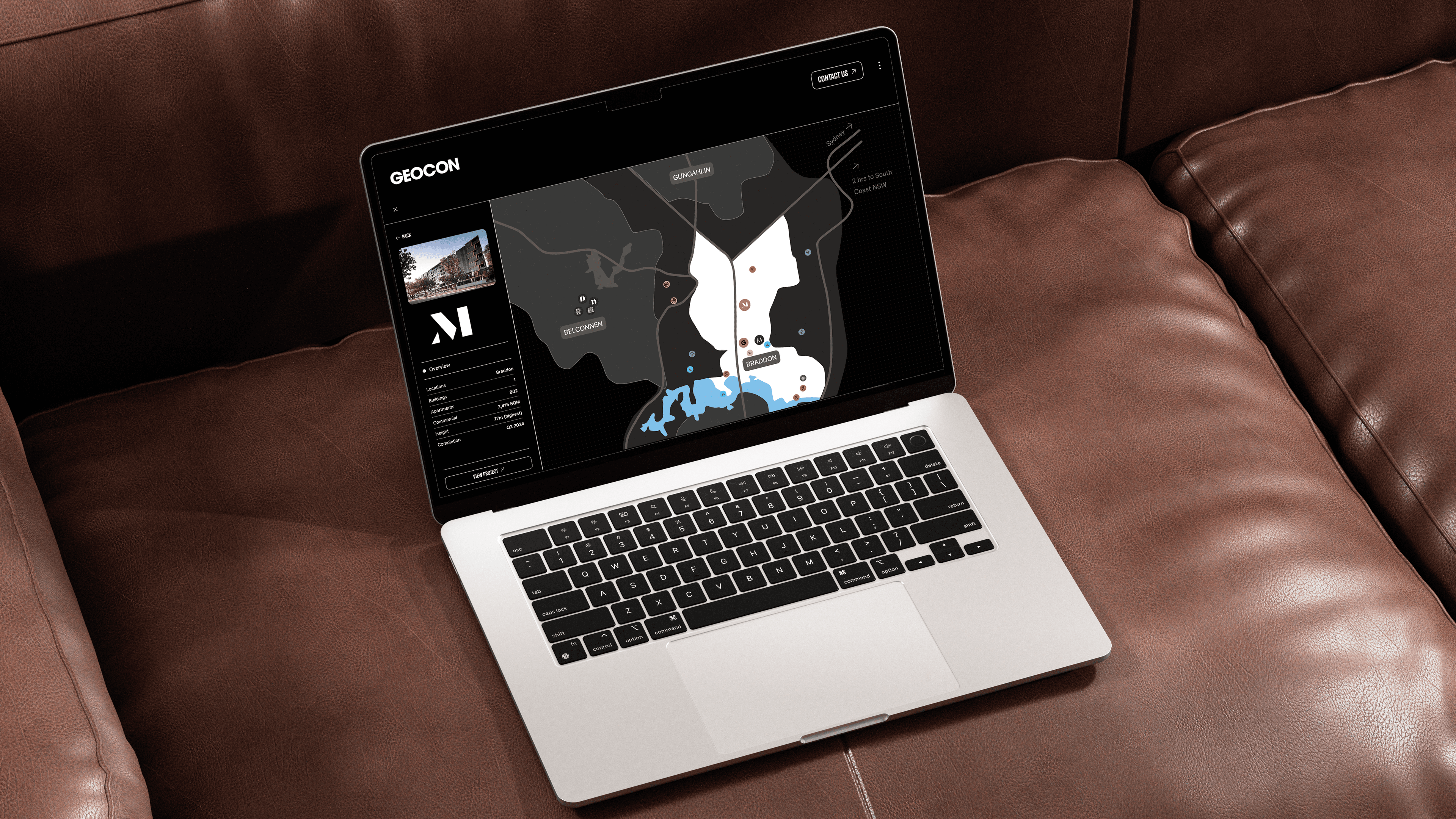
The homepage carries the broader story now. The company, the active pipeline, the community contribution, the ESG direction, and the operational scale of an integrated developer and construction company that has reshaped parts of inner Canberra over the past decade.
The site forks for each audience from there. Buyers move into available projects, with consistent gallery, location, and floorplan content across every tower. Investors see the same projects with additional context for their decision: completion timelines, the case for the Canberra market, and the company pipeline. Financiers can find operational, community, and ESG content directly. Channel agents have a clear path into the partner program. Prospective talent reach a careers section that sits inside the brand rather than appended to it. The structure means each audience finds the content they came for without wading through content meant for someone else.
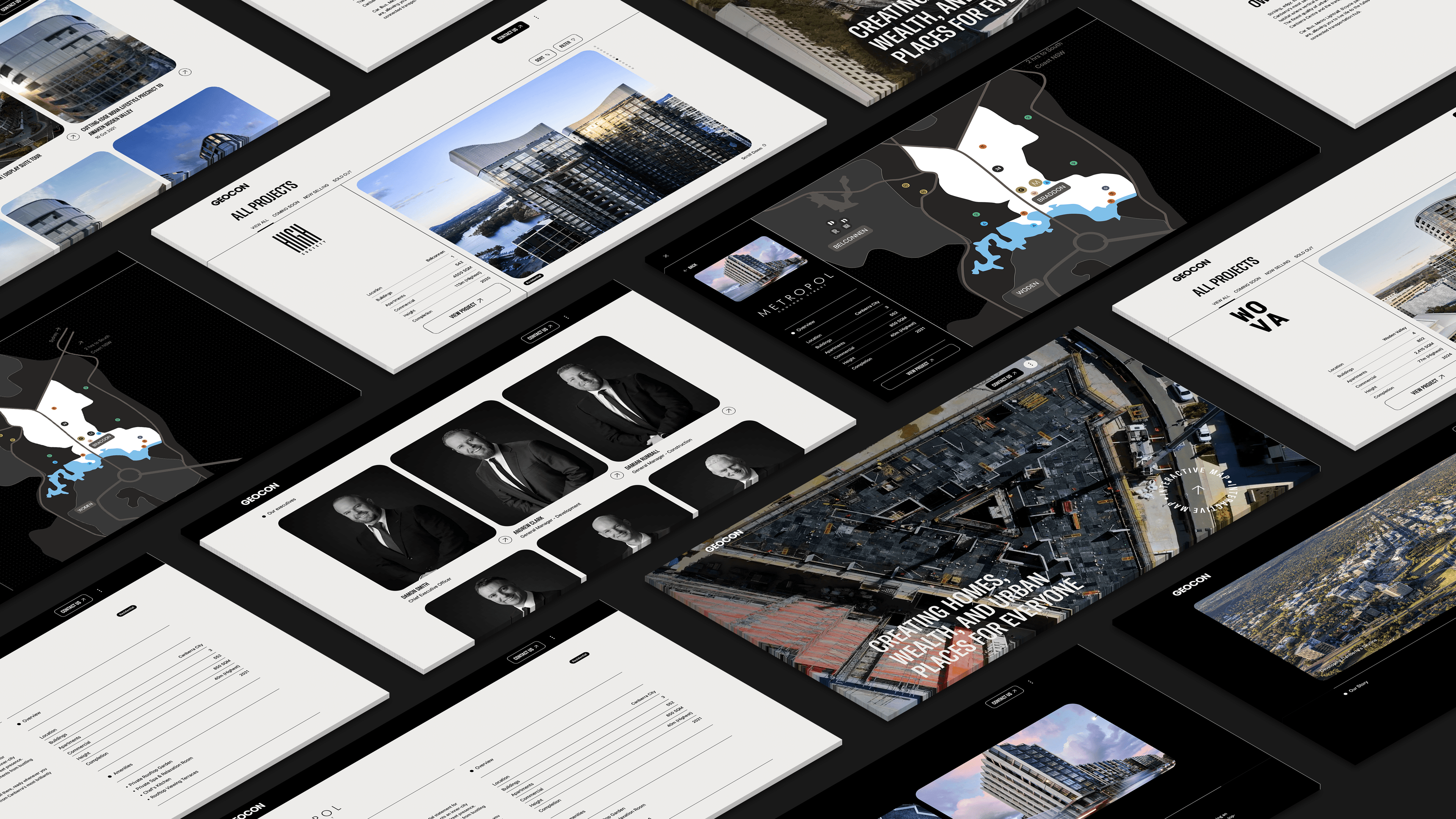
The visual system was rebuilt across the project. Typography, layout, photography direction, and editorial treatment now align with the brand work GEOCON had defined internally. The design treats GEOCON as the parent brand rather than presenting each project as a separate product launch. The homepage and editorial spine lean into the company’s longer story: the work in the community, the integrated developer-and-builder model that distinguishes GEOCON from project marketers who don’t build their own product, the team, and the way Canberra has changed over the past decade with GEOCON as one of the developers shaping it.
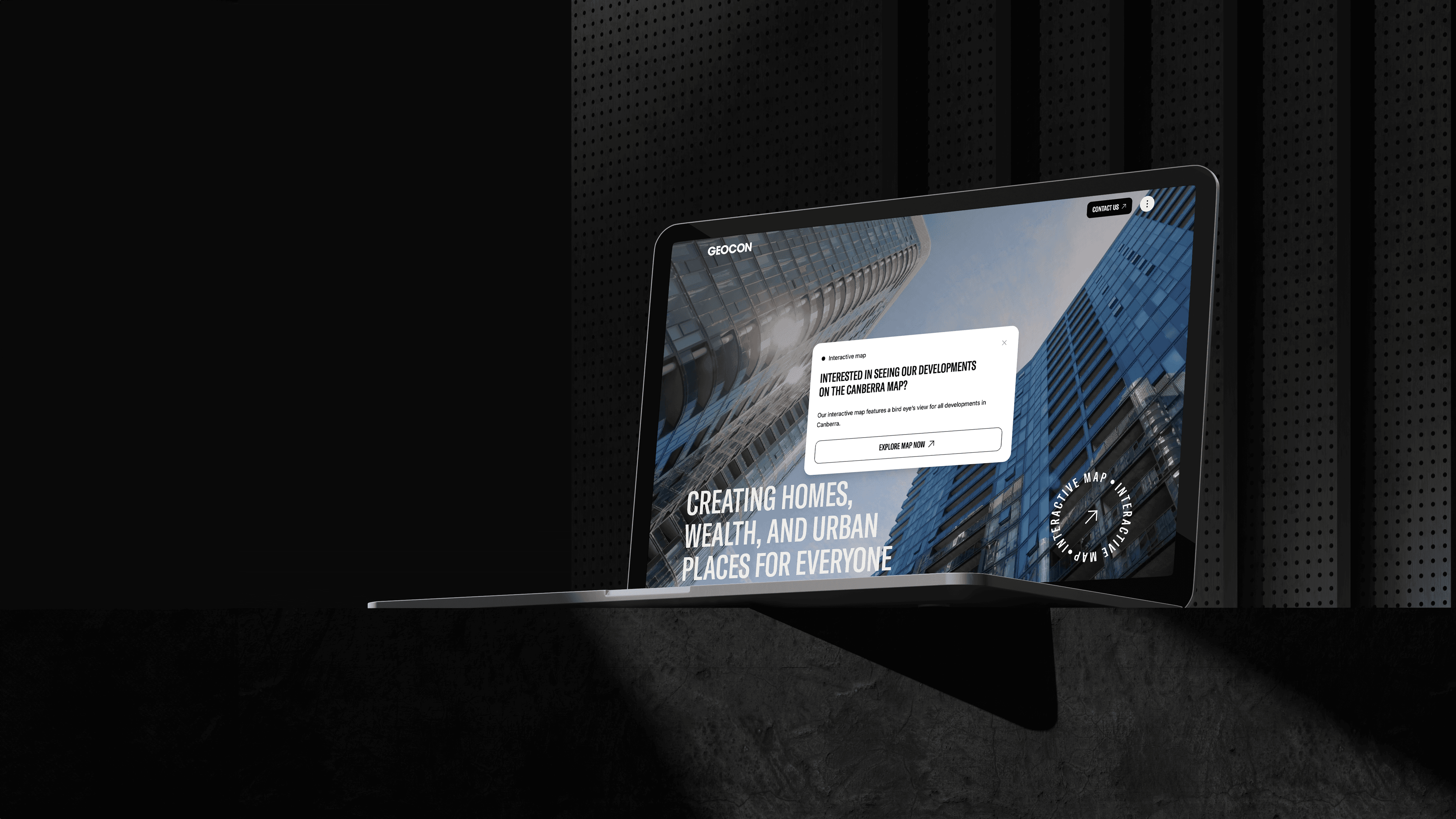
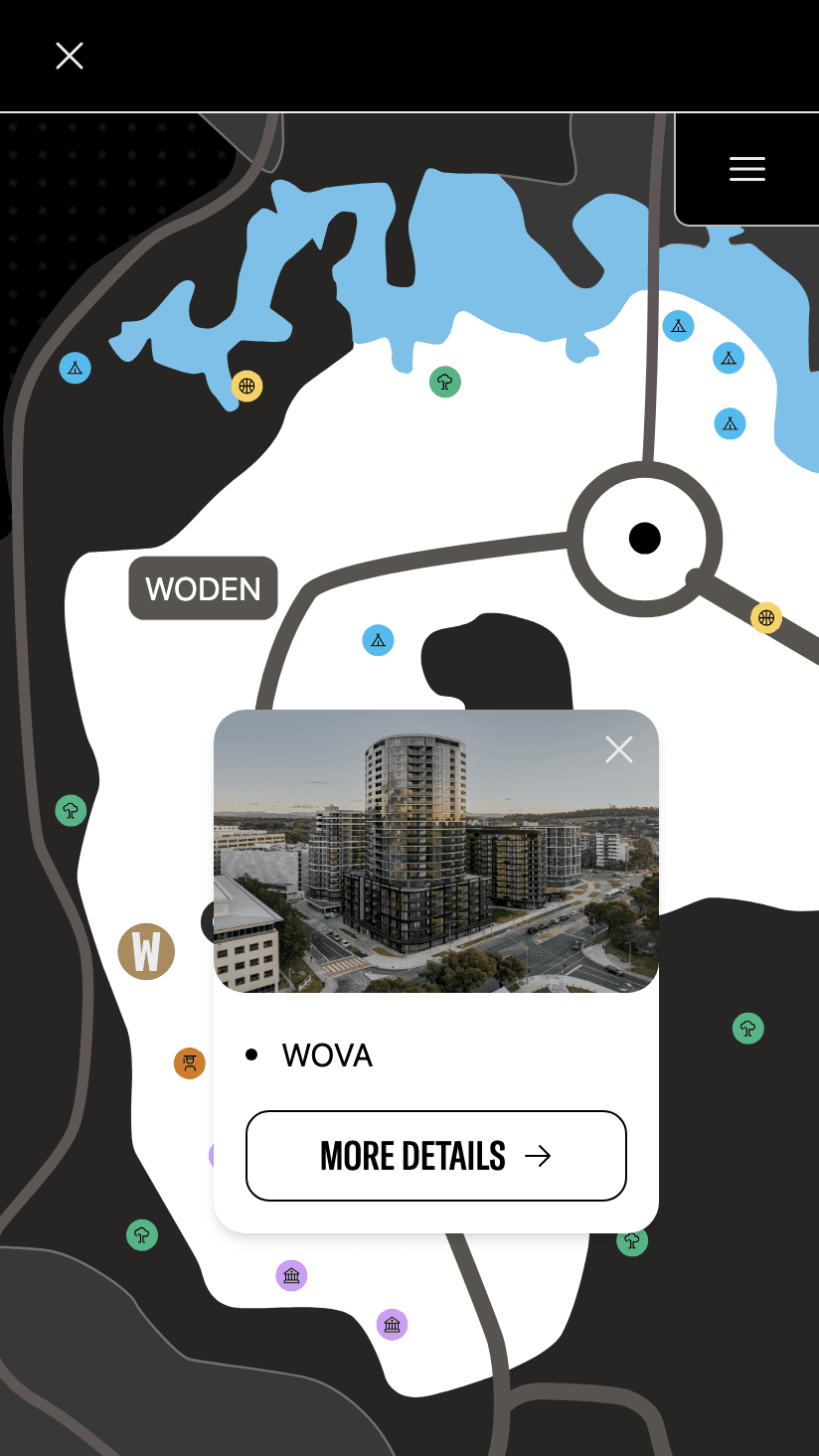
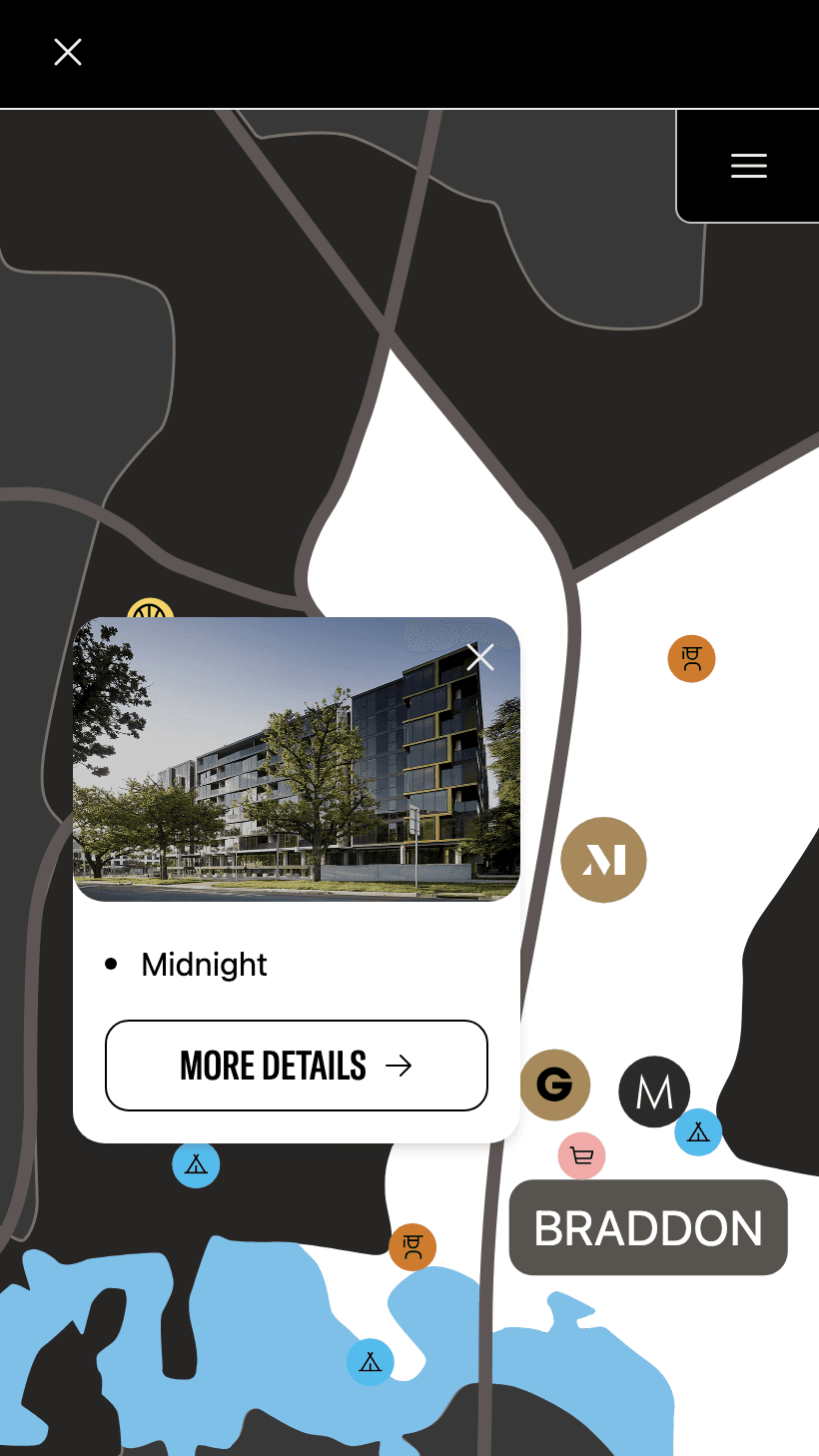
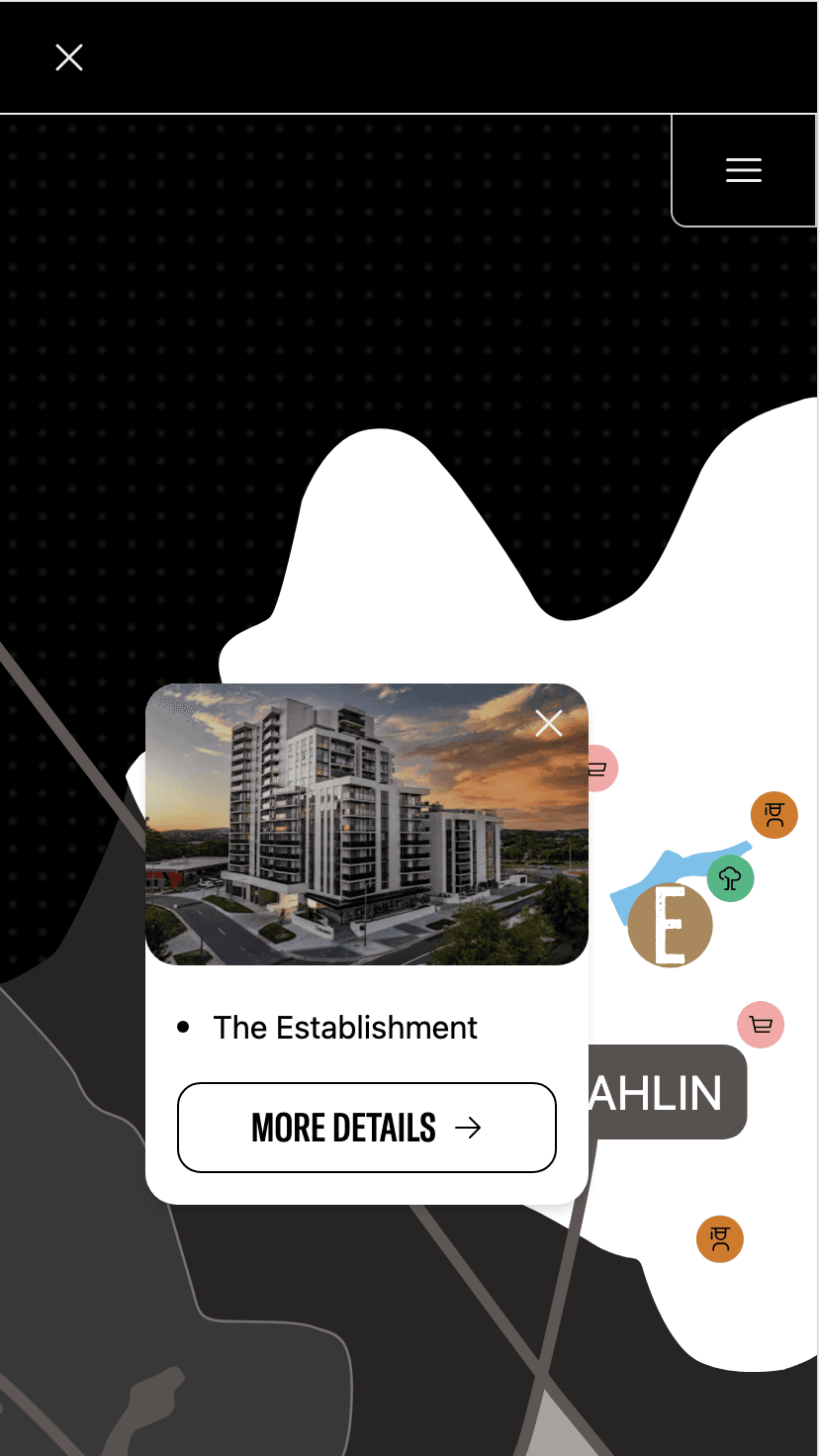
Each audience finds the content they came for, framed in a way that reflects the company’s actual standing and direction. The site supports the sales team and the marketing team without working against them, and the brand work GEOCON has done internally finally has a place to live online. The platform is built to evolve with the business rather than be replaced again in three years.
Related Projects
View Project
Brand, Video
Uphire
View Project

Website
Site Skills Training
View Project

Video, Campaigns
Defence Housing Australia
View Project
Brand, Video
Lystr
View Project

Website, Graphic Design
Amazon Music
View Project

Brand, Website
MagnaTerra Technologies
View Project

Brand, Website
Sunstrata
View Project

Website
Amazon Music
Frequently Asked Questions
You were going to ask anyway
GEOCON is Australia’s fastest-growing property developer and the leading vertically integrated property development company in the ACT. The business runs as a single operation across the full vertical: development site purchase, master planning, design, construction, real estate sales, marketing, financing, settlement and property management. That depth of integration is unusual in a market where most developers outsource the build side, the sales side or both.
GEOCON also operates Iconic Hotels as a sub-brand within the group. The website Mude designed needed to serve domestic and international audiences across multiple decision contexts: live-in buyers (owner-occupiers buying for primary residence), domestic and international property investors, financiers underwriting the development pipeline, channel agents distributing the stock, and prospective talent for the development and construction teams. A meaningful share of the audience also moves through the website more than once, with a live-in buyer often becoming a future investor on a subsequent GEOCON purchase, which the site has to accommodate without re-asking who they are.
The previous GEOCON website had six interrelated structural problems. First, it ran as a collection of microsites with no unified platform, where different project towers carried different visual treatments and navigation logic depending on when each was built. Second, regular updates over years had layered bolt-ons across the design without a way to reset to the original vision, so the brand consistency the business had built kept slipping. Third, no consistent project page framework meant every new tower required custom development. Fourth, no proper home for corporate or construction multimedia content, no filterable blog, no way to surface the work culture or community engagement at scale. Fifth, the CRM and marketing automation infrastructure was underutilised, with the website not properly feeding leads into the sales funnel. Sixth, the website had a single buyer journey that all GEOCON audiences (live-in buyers, domestic and international investors, financiers, channel agents and prospective talent) were forced through.
The combined effect was that decision-makers across every audience were arriving at content shaped for someone else, the brand perception was diluted, and the marketing team was spending operational time on work the platform should have been doing automatically.
The GEOCON website forks by audience after the homepage, keeping the top level unified, which routes each visitor toward the content that matches their decision. The homepage carries the full story: the company, the active project pipeline, the community contribution work, the ESG direction, and the operational scale of an integrated developer and construction company that has reshaped parts of inner Canberra.
From the homepage, the website forks. Buyers move into available projects with consistent gallery, location and floorplan content across every tower. Investors see the same projects with added context for their decision: completion timelines, the case for the Canberra market, and the company pipeline. Financiers can find operational, community and ESG content directly. Channel agents have a clear path into the partner program. Prospective talent reach a careers section that sits inside the brand, integrated with it. The multi-audience website design means each audience finds the content they came for without wading through content meant for someone else.
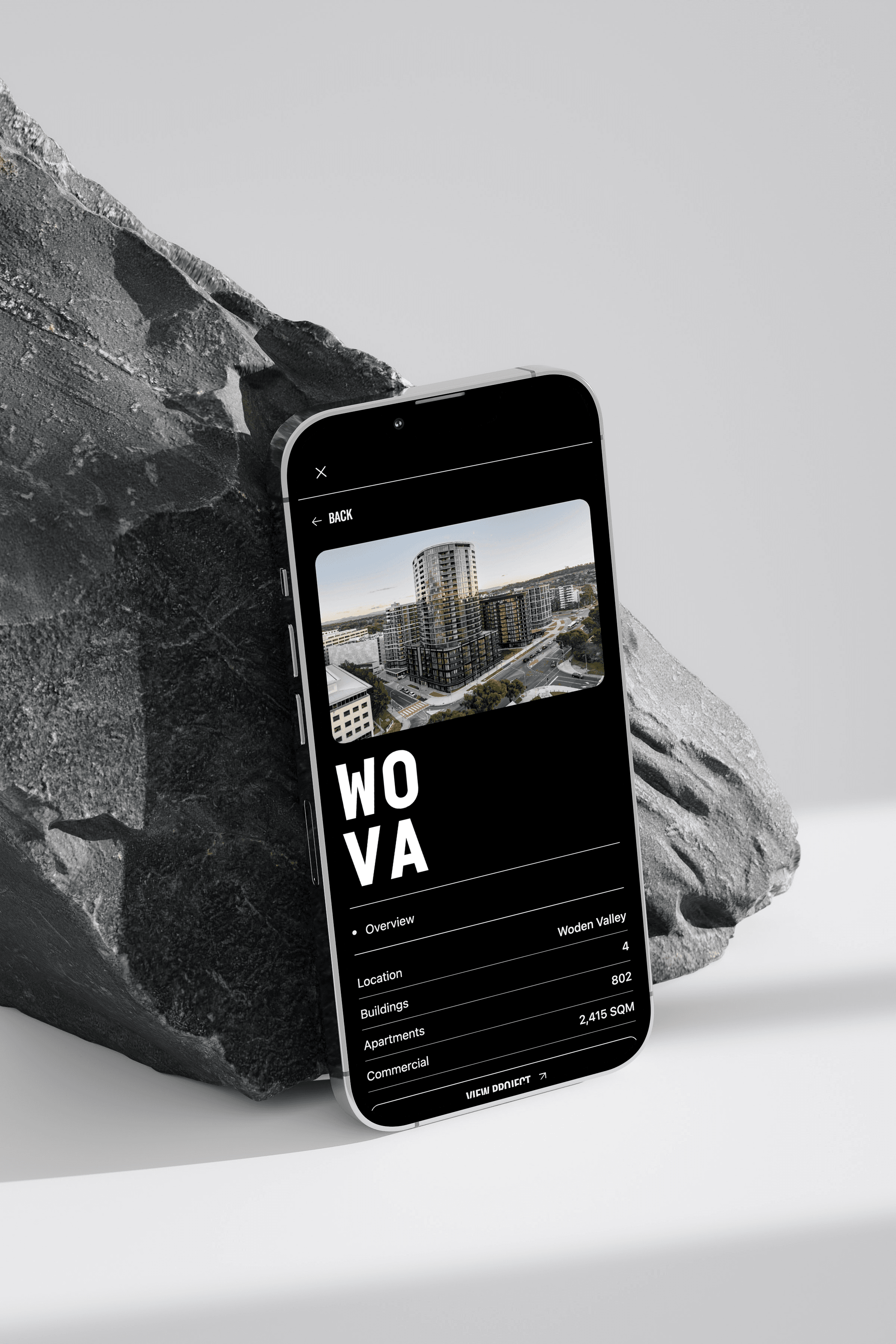
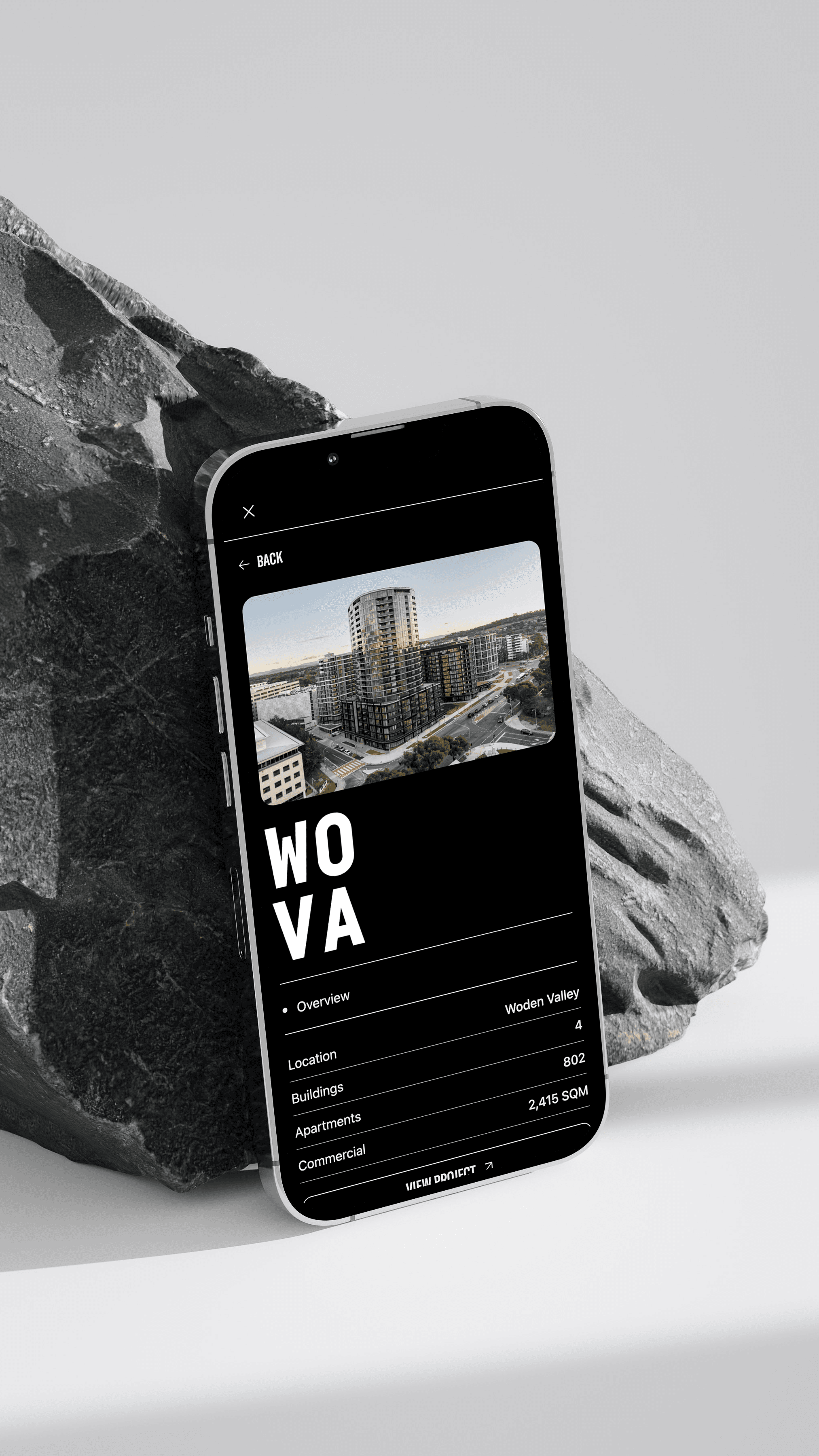
The GEOCON website runs a single project page framework that scales across every tower, residential development and mixed-use project in the pipeline. The framework holds the common structure: project introduction, location and amenity context, gallery, floorplans, pricing and availability, finishes and inclusions, partner and design credits, and a Salesforce-integrated enquiry form. The structure is identical across every project, so a buyer comparing two GEOCON developments is looking at the same content shape twice.
Inside that framework, the GEOCON marketing team can stand up new project pages in days. The CMS work Mude delivered means the team controls every project page without engineering involvement, and the design system stays consistent regardless of who’s building the page. That makes the website a scalable property developer website platform, working as a system across multiple projects.
Great property developer web design starts with understanding that a property developer’s website isn’t selling a product, it’s selling a future asset and a future life. The website has to convey trust, scale, design quality and operational competence at the same time, because the buyer is committing capital to something that doesn’t exist yet. The visual design needs to feel calm and confident, stepping away from the stock photography and over-busy listings that typical real estate web design leans on.
Great property website design also handles the multi-audience problem properly. A live-in buyer is reading floorplans and finishes. An investor is reading rental yield and growth thesis. A financier is reading pipeline and ESG. A channel agent is reading commission structure and partner support. A custom website design built for a property developer has to route each of those audiences into the right content without making the site feel five different ways. The GEOCON website redesign is a case study in how that gets solved structurally, not stylistically.
The GEOCON website was built around a custom content management approach that the GEOCON marketing team can operate without engineering involvement. Custom content structures for projects, locations, partners, gallery assets, multimedia content and news let the team manage each content stream independently without breaking the design system. New towers can be stood up in days, with the visual identity, brand language and Salesforce integration inheriting automatically.
The platform decisions were also made to protect the original design vision from the kind of bolt-on decay that had eroded the previous site over years. Components can be turned on or off, and content can be customised inside the system, with the design system holding throughout. The website development was scoped to support both: a custom website design serious enough to carry the brand, and a content system the marketing team can run themselves without each ad-hoc update slowly drifting the site away from its original intent.
Brand consistency across a property developer’s project portfolio is a structural challenge and a visual one. Each new project has its own architecture, its own location, its own price point, its own buyer mix, and often its own creative agency working on the project-level marketing. Without an underlying system, every project drifts away from the parent brand, and within a few years the developer has a portfolio of microsites that no longer look like one company.
The GEOCON website solves this through a single project page framework that every tower inherits. The visual identity, typography, brand language, image treatment, content structure, and Salesforce integration are all standardised. Project-specific elements (location maps, floorplan packs, gallery treatments) sit inside a system that holds the brand together. That structural consistency lets GEOCON keep adding new projects without each one looking like a different developer.
It depends on what the site is costing you, and that cost can be visible or operational. Sometimes the trigger is appearance: the brand has changed, the design looks dated next to competitors, and the site undercuts how the business wants to be seen. Sometimes it’s structural and hidden under the surface: the team needs a developer for routine updates, enquiries never reach the sales system, or several audiences share one journey that fits none of them. Often it’s both. The operational reasons tend to get underweighted, because a site can work badly while still looking fine.
In GEOCON’s case the reasons were mostly operational. It had run Salesforce for years. The old site barely fed it, so leads stopped short of a sales system it had already invested in. Every new tower needed custom development before it could launch, and one journey was carrying five audiences: live-in buyers, investors, financiers, channel agents and prospective talent. The brand had also moved on without the site keeping up, so there was a visible reason too. Mude scoped a full rebuild because both the structure and the look needed fixing.
A redesign that misreads the brand can ship something off-brand on day one. The second, which often gets underestimated, the team adds pages and makes changes and the brand gradually slips out of shape.
GEOCON had finished its brand work internally before the site started, which kept the launch risk contained, and the job was to carry an already-settled brand across faithfully. The real risk was the drift, because the old site had shown it: the repositioned brand worked in the guidelines and came apart on the live site over time. Mude built the new platform so the typography, layout and photography direction hold as the team publishes, which protects the brand through the updates and at launch.
A clearer page, better mobile experience, faster load and a sharper value proposition can lift how many people enquire. The often-missed part comes after someone enquires: whether the enquiry is captured, attributed and routed to someone who can act on it quickly, or whether it sits in an inbox to be sorted by hand. A redesign that fixes the page and ignores that second layer leaves the part that compounds untouched.
In GEOCON’s case the main gain was that second layer, because that was the gap. The old site collected enquiries and mostly left them there, with the CRM and automation tools the company already owned barely connected. On the new platform an enquiry on any project page lands in Salesforce and Pardot tagged with the project, audience and source, gets scored, and enters the right follow-up. That matters for a high-value, considered purchase, and GEOCON’s position sharpens it: it sells through channel agents who also carry rival developers’ stock, so an enquiry that’s sorted and into follow-up quickly stays warm.
GEOCON commissioned a new website because the previous one had grown into a fragmented digital footprint that couldn’t keep pace with the business. The site had accumulated years of bolt-ons and ad-hoc updates that had quietly bastardised the original design vision over time. Multiple microsites, inconsistent brand touchpoints, disjointed user flows, and project pages that took manual work to stand up each time a new tower entered the pipeline. The CRM and marketing automation infrastructure was underutilised, and the community and philanthropic work GEOCON does was barely visible online.
The business had also gone through internal brand work that the old website couldn’t carry, and was moving into the ESG space as financiers increasingly required it. The new website project was a property developer website rebuild. The brand work had already been done; the digital platform hadn’t caught up. The brief Mude received was to give the repositioned brand a place to finally live online with consistency, and to give GEOCON a scalable platform that could keep growing with the business across sales, talent attraction, channel partner programs and financier-facing ESG content.
The new GEOCON website is built around three things that distinguish it from a typical property developer website. First, a unified brand narrative carried across every page, so the homepage, the project pages, the careers section and the investor content all read as one company. Second, an information architecture that forks by audience without fragmenting the experience, so live-in buyers, investors, financiers, channel agents and prospective talent all find content shaped for their decision. Third, a project page framework that lets the GEOCON marketing team stand up new towers in days, with consistent gallery, location, floorplan and pricing structures across every project.
Underneath, the website carries deep Salesforce integration for lead management and sales automation. The website design choices were made to support scale: as GEOCON adds projects, the platform absorbs them without needing to be rebuilt every three years.
The Salesforce integration connects every project page on the GEOCON website to GEOCON’s Salesforce instance and Pardot marketing automation environment, so an enquiry on any project flows directly into the sales pipeline with the right project, audience type and lead source attached. The integration runs through Salesforce and Zapier together, with lead capture forms, expression of interest forms, and partner programme registrations all routing through the same system.
The Salesforce and Pardot setup also drives lead scoring and lifecycle automation downstream. Each enquiry is qualified against seven criteria (location, purchase intent, bedrooms, bathrooms, car spaces, budget, and timeframe) that move the lead through GEOCON’s defined lifecycle stages: new, assigned, engaged and qualified. Follow-up sequences fire based on project stage, and the marketing team gets accurate attribution data on which website pages and audience flows are producing qualified leads, beyond raw click volume. That changes the website from a brochure into an operational sales platform that does the qualification work that used to happen manually on the sales floor.
The GEOCON website was designed and built by Mude, a brand and design studio with studios in Sydney and Canberra. The Canberra studio led the engagement, which was helpful because GEOCON is a Canberra-headquartered business and a lot of the project work involves walking sites, attending sales suites and being part of the same city the buildings live in.
Mude’s web design Canberra work spans property, government, healthcare and creative sectors. As a digital agency in Canberra working across regulated industries, the studio’s web design firm positioning sits inside a practice across complex, multi-audience businesses where the digital platform has to carry brand, lead systems and audience routing together.
A property developer choosing a web design agency should look past portfolio screenshots and ask whether the agency builds websites as operational sales platforms or as brochures. The questions that matter are practical. Can the agency build a project framework that scales, so a new tower or estate can be published without rebuilding the site each time? Can it integrate the website with the sales and marketing systems, so enquiries are captured, scored and routed to someone who can act on them? Can it structure the site for several audiences at once, since developers sell to live-in buyers, investors, financiers, agents and prospective talent in parallel? And can it carry an existing brand at full fidelity, applying the established system as designed?
GEOCON is the example Mude points to. The brief was a custom platform built on one project framework, integrated with Salesforce and Pardot, structured to fork by audience after the homepage, and built to hold GEOCON’s existing brand as the marketing team adds content over years. That is the end of the market where the website does commercial work for the business. A developer evaluating agencies is really sorting for the ones that treat a website as infrastructure the sales team relies on, not a portfolio piece that looks finished on launch day and dates within a year.
A successful property developer website does four things at once. It conveys the developer’s scale, credibility and design quality consistently across every project. It routes multiple audiences (buyers, investors, financiers, agents, talent) into the right content without fragmenting the experience. It scales as new projects enter the pipeline, without needing to be rebuilt or redesigned every time. And it integrates with the developer’s sales infrastructure so the website earns leads, attributed and routed to follow-up.
The GEOCON website was built to do all four. The unified brand narrative carries credibility. The audience-forked information architecture handles five distinct buying conversations. The project page framework scales without engineering work. The Salesforce integration turns the website into an operational sales platform. That combination makes a property developer website that supports the business: brand fidelity, scaling architecture, and integrated sales infrastructure all carrying weight together.
A brand refresh updates a company’s brand strategy, positioning, visual identity and tone of voice. A website rebuild, or a website redesign, updates the digital platform that brand lives on. The two are related and distinct engagements, and businesses often need both at different points in their growth. A brand refresh without a planned website redesign often leaves the new brand stranded on the old site, while a website redesign without a settled brand often becomes a brand engagement halfway through.
The GEOCON project was the second of the two. GEOCON had already done internal brand work that repositioned the business. The previous website couldn’t carry that brand work in the way the company needed. Mude’s brief was a website rebuild. The job was to take the brand the business had developed, and give it a digital platform with the brand consistency, scalability and operational integration the business actually needed. That distinction matters because it changes the scope, the deliverables, the timeline and the agency you should be hiring. The GEOCON project sat firmly on the website redesign side: the brand was already settled, so the work was building the platform to carry it.
There’s no fixed interval, and build quality is only part of it. The usual rule of thumb is every two or three years. That’s a convention, with no hard deadline a site has to meet. How long a site genuinely lasts depends more on how it was built: one stitched from one-off pages ages quickly because nothing underneath holds it together, while one built on a system the team can extend can run for years on regular updates. Build quality isn’t the only driver. A business that repositions, or a platform that reaches end of life, can warrant a redesign regardless of how sound the current site is.
GEOCON’s previous site was the short-lived kind: patches kept working, extensions didn’t, so replacing it was the only real option. Mude scoped the rebuild to last, so the platform takes on new towers, campaigns and precincts as they enter the pipeline. That takes build quality off the table as a reason to start over. A major change in direction could still prompt a redesign down the track.
It varies by project. A redesign is mostly a sequence of decisions. The look often gets explored early. It usually can’t be finalised until the structure underneath is settled. On the GEOCON project the main decisions ran roughly in this order:
- Audience and intent. Work out who the site serves. GEOCON sells to five audiences at once, and some are more than one over time (a live-in buyer often comes back as an investor), so the site has to hold that without re-asking who someone is.
- Information architecture. Decide where the site forks. GEOCON’s splits by audience after the homepage, not at the top, so each group gets its own path without the site breaking into microsites again.
- Page frameworks. Build the templates the business repeats. One project framework lets a new tower go live in days, with gallery, location, floorplans and pricing in the same structure each time.
- Brand application. Carry the existing brand across so GEOCON leads as the parent and each tower sits inside it, with no separate product launches.
- Integration. Connect the site to the commercial systems, so every project page feeds Salesforce and Pardot and an enquiry arrives tagged to the right project and audience.
- Handover. Hand over a CMS the team can run without engineering, so the site grows without drifting.
The visual design firms up alongside and after these, once there’s a structure for it to sit on.