Mude taps DistroKid and Vodafone to put a robot on the roof
Mude taps DistroKid and Vodafone to take our cinematic rooftop series live for the first time. Winston Surfshirt and Cody Jon, full sets, and a robotic arm filming in 360.
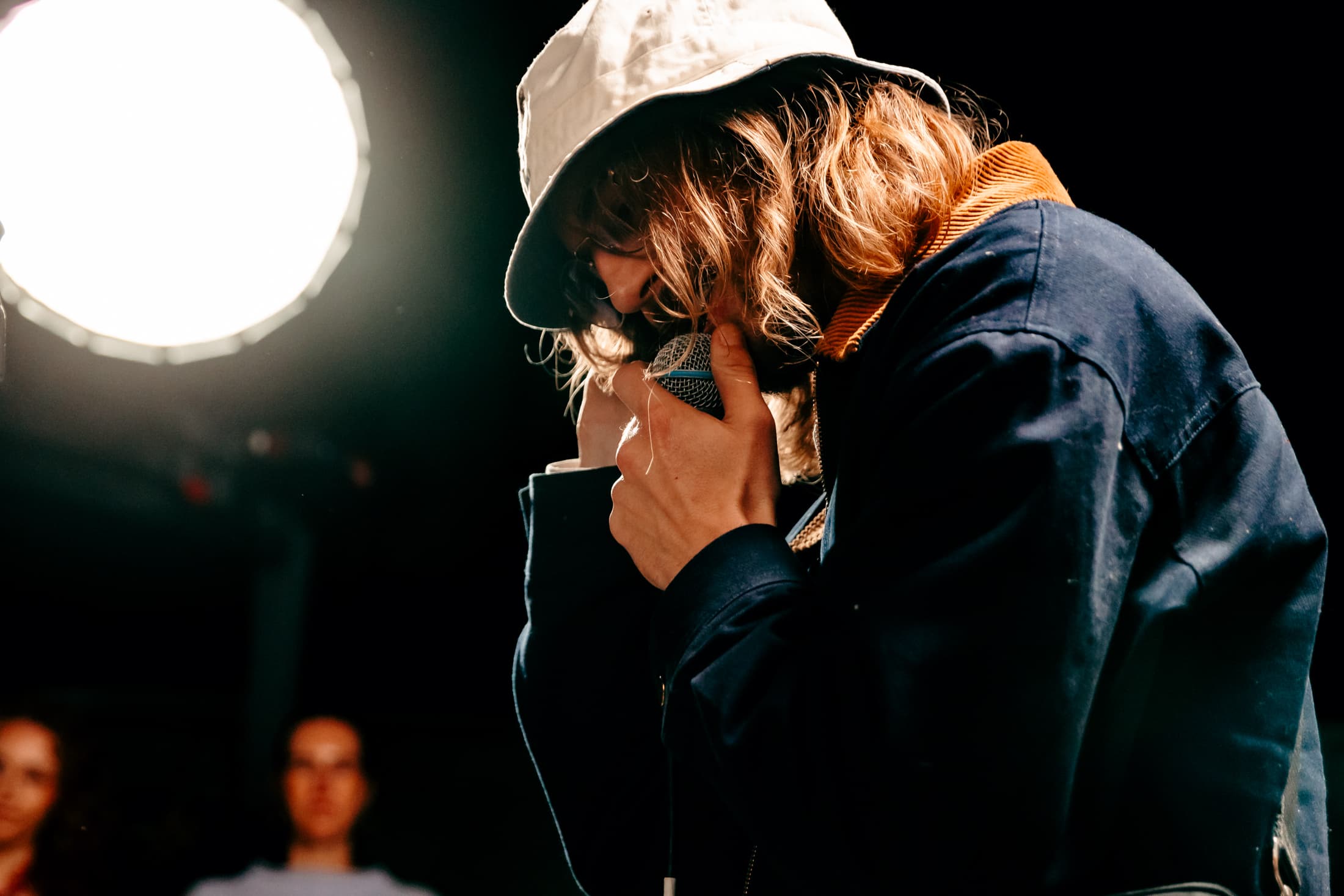
On June 18 we took Mood on the Roof live for the first time. The doors opened at six and the set we’d built turned the rooftop into something between a venue and a film set: a stage, a standing crowd in the round, and a suspended robotic arm overhead. The arm swept over the audience in full 360s through the whole night, rising and dipping around the artists. As far as we can tell, no live concert has been shot this way before.
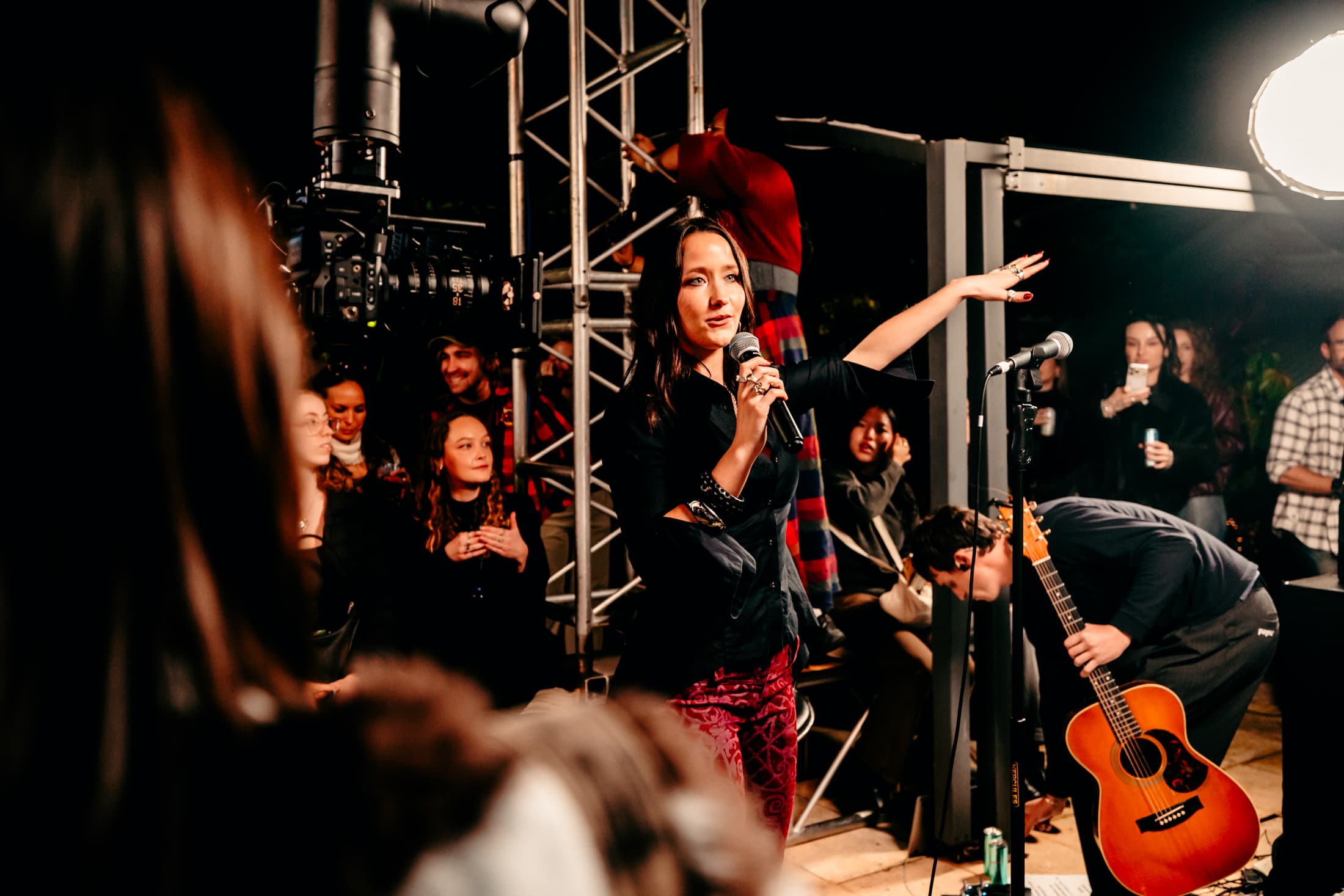
MC'd on the night by Tait McGregor
Image by Jess Gleeson
Mood on the Roof started as a side project for the Mude team. The roof is the garden above our studio in Glebe, and for years we’ve filmed artists up there one at a time, a single song in a single take, with no audience in the space and nothing on the roof but the artist, the band and the camera. The idea was to treat a live performance like a piece of short cinema rather than a live stream.
The films have a deliberate look to them, moody and composed. Because it’s one take, there’s no editing around a wrong note or a missed cue, and that constraint is a big part of why they feel the way they do.
Benson Boone played the roof before ‘Beautiful Things’ became the most-streamed song in the world and went past three billion streams. Alec Benjamin did a stripped-back ‘Let Me Down Slowly’ up there, now past two billion. Griff has played it, the BRITs Rising Star who’s since opened for Taylor Swift, Coldplay and Dua Lipa. Nick Mulvey, twice nominated for the Mercury Prize, has been on the roof. So have Vacations, the Newcastle band now past three and a half billion streams, along with Keli Holiday, dodie, grentperez, BOY SODA and Bea and her Business.
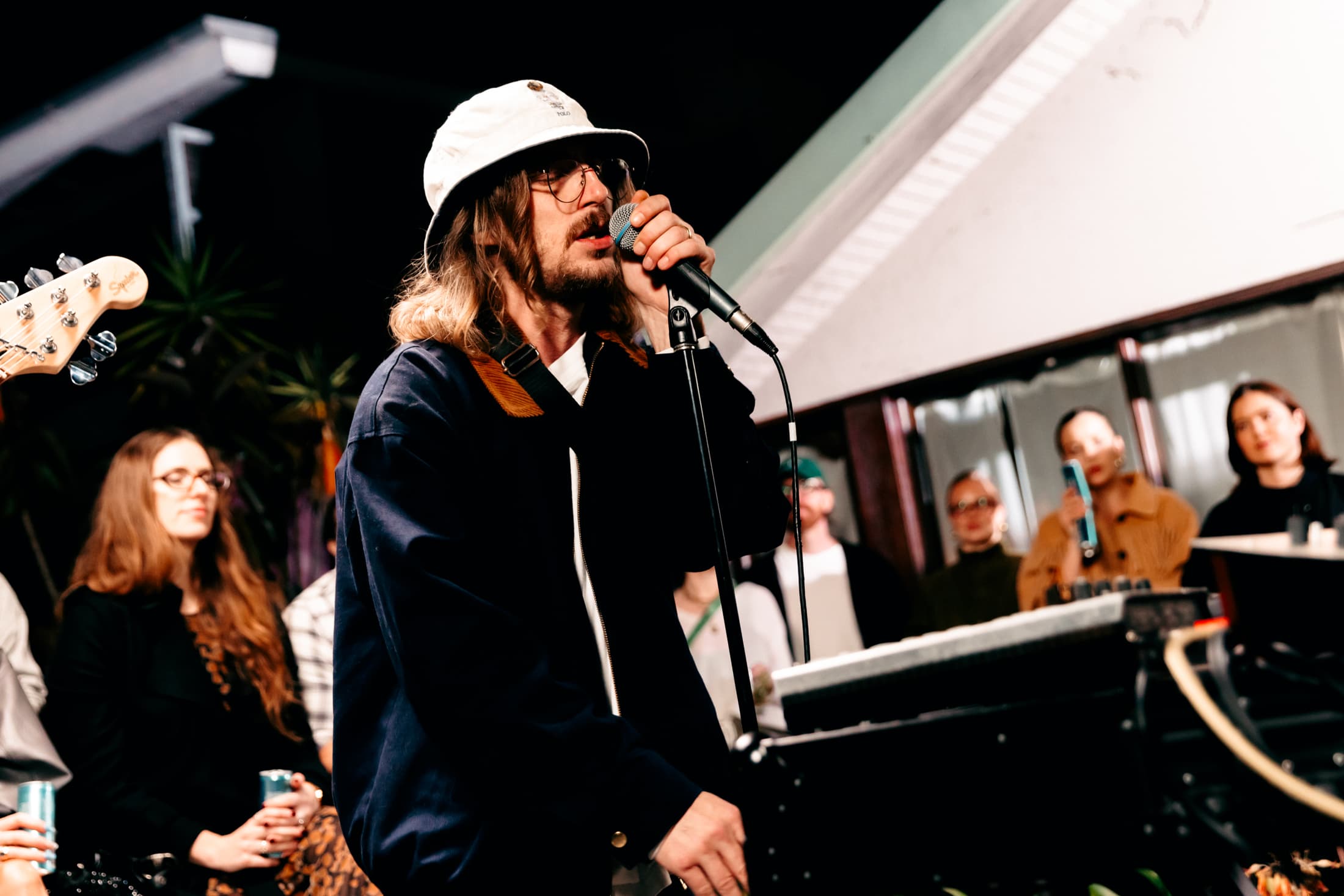
Winston Surfshit
Image by Jess Gleeson
Nights is the first time we’ve taken any of that off the screen and into a live audience setting. For one night we put a live audience on the roof, asked the artists to play full sets instead of a single song, and built the whole event around the robotic arm. We’d been talking about a live edition for a while, and the arm was the thing that made it worth doing rather than just filming a normal gig. A single-song film and a full live set are very different things to produce. One is a controlled three-minute take you can reset and run again. The other is a full show with an audience, a bar and a running order, captured live with no second chance, and the arm moving through all of it.
Filming in the round adds its own problems: the audience surrounds the performance, so there’s no back of house and no safe angle to tuck away something awkward, and the arm has to travel through the crowd and over the artists without stopping the show or ending up in its own shot.
Winston Surfshirt headlined. They’ve spent more than a decade turning funk, soul and west-coast hip-hop into something that only sounds like them, and broke through on ‘Be About You’ on the way to double-platinum. Elton John is a fan, and played their ‘Ice Cream’ on his radio show and called them his favourite band of the moment. What they brought to the roof was built for this one night and won’t be played anywhere else.
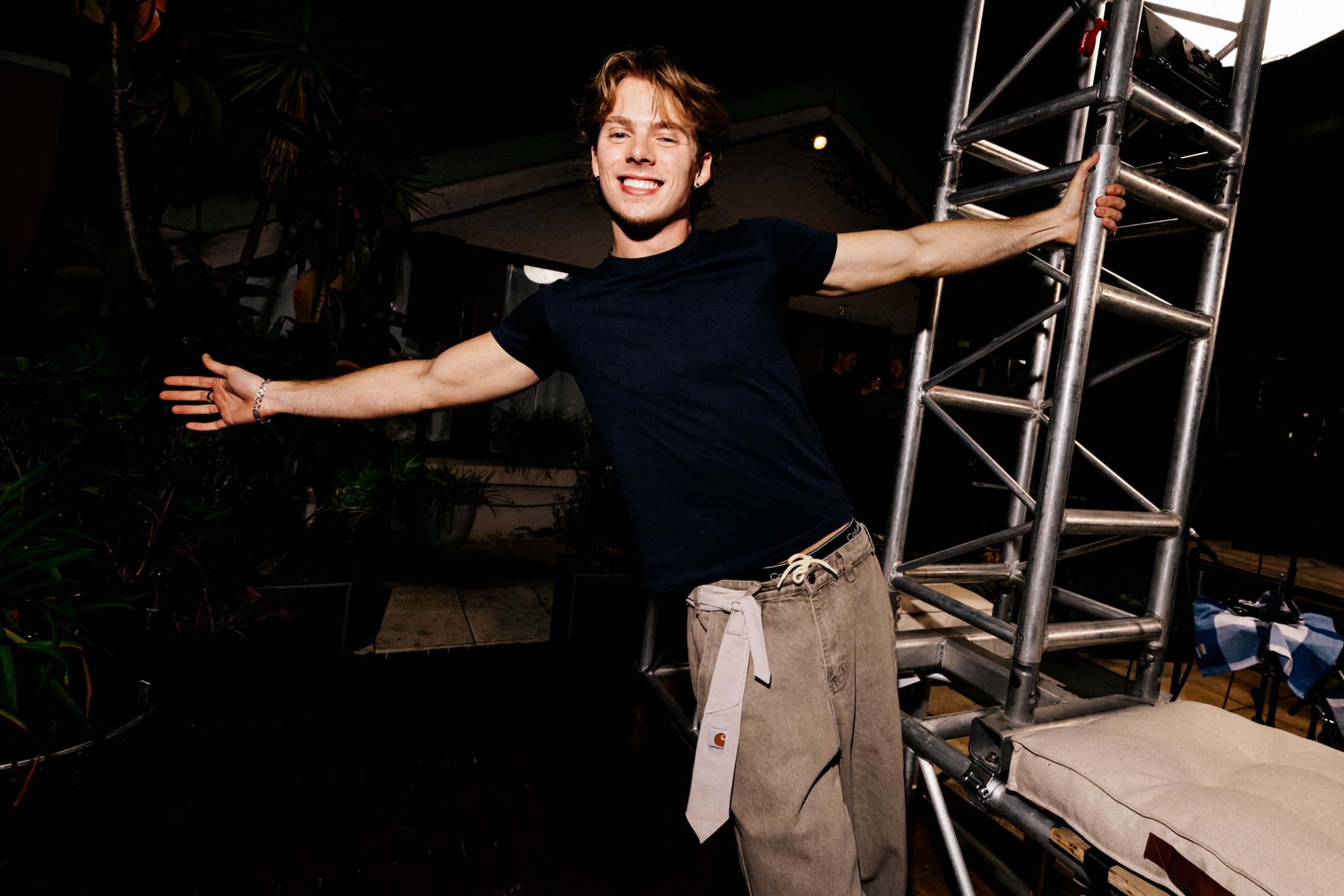
Cody Jon
Image by Jess Gleeson
Cody Jon opened. He’s an independent artist out of Sydney making 2000s-leaning pop and R&B in his bedroom, already through SXSW and BIGSOUND, with ELLE Japan putting his name next to PinkPantheress and Tate McRae. Pairing him with Winston Surfshirt was deliberate, two Australian acts at very different points in their careers, one a decade in and double-platinum, the other still making records in his bedroom.
DistroKid presented the night, Vodafone backed it, and Papa Salt handled the drinks. The whole thing was invite-only and capped tight, the way the films have always been made.
This was the first Mood on the Roof Nights. The format is staying, the footage we shot on the arm is being cut now, and we’ll do more of these with other artists. The films will keep running alongside them. This is the kind of work the studio makes.