How DJI used StoryBrand to win the positioning game
A brand that stops talking about features and starts telling a story the audience can see themselves in tends to win the category. DJI shows how the StoryBrand framework reshapes positioning, and what it teaches about building brand preference.
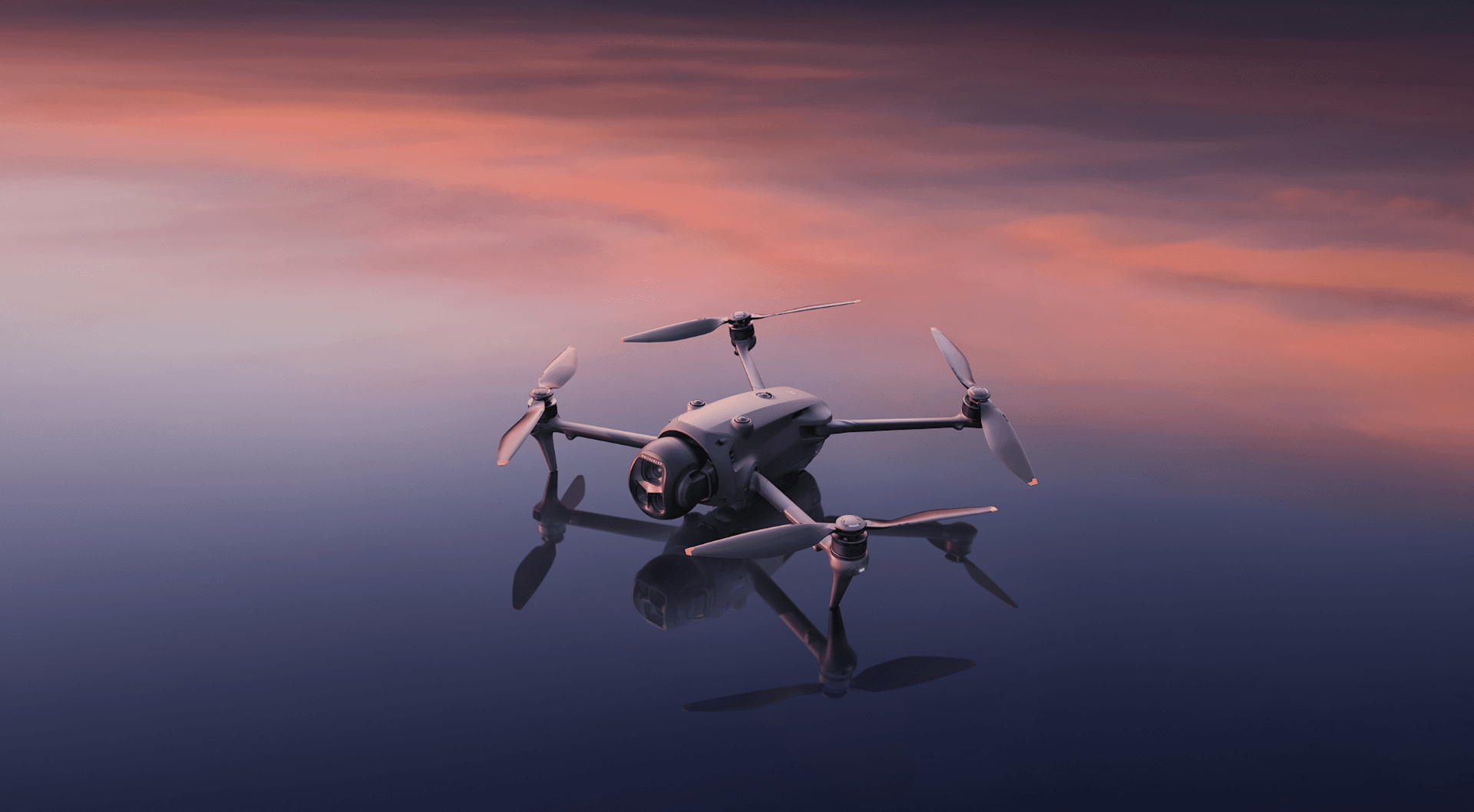
If you’ve spent any time around cameras, drones or content creators in the last decade, you already know DJI. You’ll see them on film sets, music video shoots, tourism campaigns, in YouTubers’ kits and wedding videographers’ hip rigs. They’re everywhere, so much so that when people say “drone,” they often mean DJI. The brand is that dominant.
As someone who grew up in a family of TV and video professionals, I became the kind of buyer DJI would have been targeting. When I started buying gear of my own, I was their exact audience.
Which brings us to this. DJI didn’t win through a tech specs arms race. They won because they understood story, they built a brand that creators preferred, with clear positioning, a strong narrative and a distinctive role in the culture of content creation.
That’s what got me thinking about DJI through the lens of StoryBrand: a messaging framework developed by Donald Miller that applies screenwriting structure to brand communications, and a brand strategy framework we use at Mude. Whether DJI studied the model or not, they’re a good example of how to build a brand that places themselves not as the protagonist, but as the guide.
The StoryBrand framework
Let’s explain the theory first.
StoryBrand is a messaging framework developed by Donald Miller. It borrows from the logic of the classic hero’s journey, and applies it to how brands communicate.
Here’s the basic idea:
The customer is the hero.
Your brand is the guide.
Every good story has a protagonist, but the protagonist doesn’t get there alone. There’s a problem to solve, they need help, and they’re either too flawed or too inexperienced to get there on their own. Enter the guide who offers wisdom, a plan and a path forward. Think Yoda. Think Haymitch. Think Alfred. The guide helps the hero win.
The framework breaks this down into seven parts:
1. A Character
2. With a Problem
3. Meets a Guide
4. Who Gives Them a Plan
5. And Calls Them to Action
6. That Helps Them Avoid Failure
7. And Ends in Success
Most brands get this structure backwards. They talk about themselves as the main character — all features, awards, innovation, “leading” this and that. The mindset shift StoryBrand forces is recognising that the brand isn’t the protagonist. The person pulling out their wallet is the protagonist. The brand is the guide they meet on the way.
So what does that look like in practice?
How DJI became the default
DJI started in 2006, when Frank Wang, then a university student in Hong Kong with a love of flight and engineering, began building flight controllers. At the time, drones were either military kit or hobbyist toys. Then in 2013, DJI launched the Phantom, the first consumer drone you could take out of the box, fly within minutes and capture genuinely impressive footage with (for the time). By lowering the barrier to entry, DJI grew rapidly, and today they control most of the consumer drone market and have expanded into gimbals, action cams and industrial tech.
DJI’s brand positioning strategy lines up with several of the principles we work through with clients on positioning and brand-led business. Mapped to the StoryBrand framework:
What DJI did from a strategic perspective lines up with several of the principles we work through in positioning and brand strategy. Mapped to the StoryBrand framework:
- The Character: aspiring creators and filmmakers
- The Problem: epic aerial shots used to be limited to helicopters and big budgets
- The Guide: DJI
- The Plan: intuitive drones and gimbals that make pro-level shots accessible
- The Action: shoot like a pro
- The Success: create work that looks like it took a crew
- The Avoided Failure: looking amateur in a pro world
DJI understood the aspirations of a very specific kind of customer — the visual storyteller — and built positioning around being the brand that customer would choose. Early on, the company focused narrowly on the growing community of creators and filmmakers, and embedded itself in the culture they were already part of: YouTube, travel films, gear reviews, tutorials. The result was brand salience in the right circles, with the right audience, doing the right kind of work. DJI was for people who wanted to make cinematic content, not for people launching a drone in a park on a Sunday. The positioning treated the brand as a creative enabler, the kind that could make a buyer feel like a filmmaker, even when they were just starting out.
What DJI built is what cultural brand strategy looks like, when the brand became a signal of identity for a specific community of creators, and that identity-signalling did more for preference than any feature spec could.
One of the moves DJI made was resisting the trap of premium-for-premium’s-sake, where so many homegrown brands in Greater China chase prestige as the differentiator. DJI sold something more interesting than prestige: a culture, a creator fantasy, an identity upgrade. The brand positioned itself as the guide that could make epic storytelling feel achievable.
DJI made the creator the hero, handed them the tools, and built a world around the brand that said you can make this too.
From default to charismatic brand
Whether the company was consciously applying StoryBrand theory or not, DJI showed up consistently with the right story for the right audience, and the cumulative effect is that the brand has become the default for “creator gear.” Once a brand is the default in its category, the position is hard to attack, competitors aren’t asking the audience to switch products, they’re asking the audience to switch identities, and identity switches are much rarer than product switches.
What DJI has accumulated, in the language of brand strategy, is earned brand equity: equity that comes from the brand’s own behaviour and the tribe it’s built over time, rather than borrowed equity that depends on a campaign budget or a category endorsement. To us, DJI has become a charismatic brand: one customers feel has no real substitute.
When we talk about positioning, the underlying question is the overlap between what an audience wants and what only your brand can credibly offer. That overlap — when the brand’s narrative, the operational reality, and the customer’s identity all reinforce each other — is what we call brand congruence, and it’s where brand preference begins, and where charismatic brands form. Story gives you a structure to speak into the customer’s journey rather than your own agenda, and brands like DJI show what that looks like in practice, a clear sense of who the protagonist is, what they want, and how the brand helps them get there. When those signals reinforce each other and the customer’s identity meets a brand that reflects it back, the result is preference, and over time, the kind of preference that builds the brand people prefer.
Looking to build a brand people prefer?
StoryBrand is one of the tools we use, but story without operational follow-through is not strategy. See how purpose, vision, mission and activation hold the system together in the pillar piece on building a brand-led business, or read more on the onlyness that sits underneath defensible positioning.
See how brand messaging fits into the bigger picture: Brand Strategy at Mude
Further Reading
If you want to explore the StoryBrand framework in full, Donald Miller’s Building a StoryBrand is the original reference.
Building a StoryBrand – Donald Miller
You can also explore the methodology and tools at:
https://storybrand.com