
Amazon Music
Amazon Music’s Country Heat competition website is back to reward the country faithful
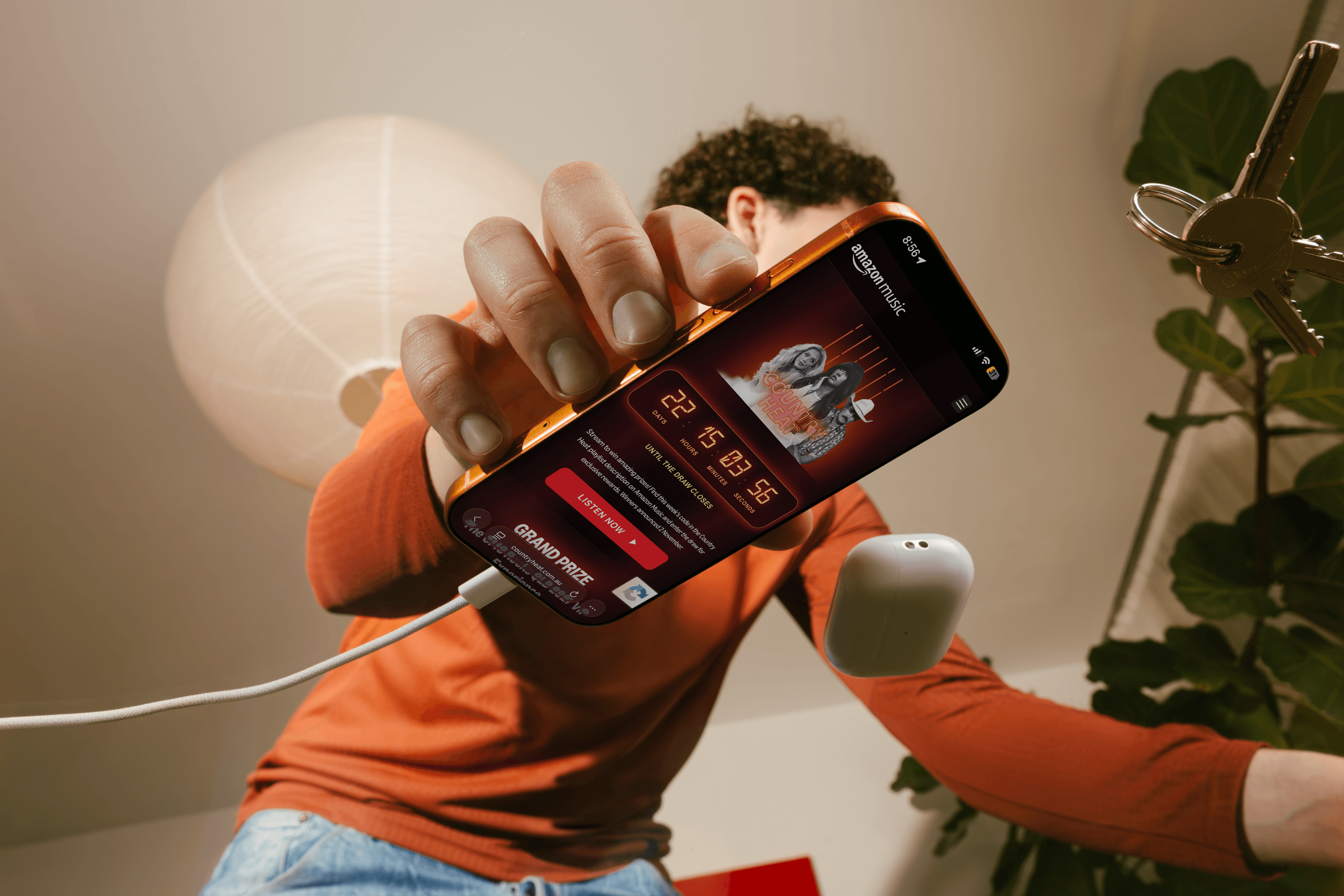
Amazon Music is paying its country faithful back for the streams this October, and we ran the site back for a second year.
Cowboy Carter took Album of the Year at the 2025 Grammys, a year after Pharrell sent a western collection down the Louis Vuitton runway. On Amazon Music, the flagship country playlist is Country Heat, and this October the labels behind it brought proper heat to the prize list, from sold-out Ella Langley pressings up to VIP at CMC Rocks QLD in its 20th year. We built and ran the 2025 site (that case study is here), and for round two a new code drops in the playlist description every Friday, release-day style, so the people streaming Country Heat have a reason to pull it up again each week.
The playlist code
Entry works through a code in the Country Heat playlist description on Amazon Music. A fan finds the week’s code there, enters it on countryheat.com.au with their details, and they’re in the draw.
A code in a playlist description can’t prove that anyone streamed anything. To find it, though, a fan has to open the Country Heat playlist in Amazon Music and read the description, and by then they’re one tap from pressing play. For a campaign whose job is getting people into that playlist, we reckon that does most of the work. A code is also about the lightest thing you can ask for on a public competition page. There’s no file to upload, so there’s nothing for bots to fill the server with.
A single draw doesn’t strictly need weekly codes, and we asked about that. Amazon wanted a new one each Friday so the code didn’t go stale as people passed it around. The site accepts upper or lower case, so a stray caps lock doesn’t cost anyone an entry.
Changing a playlist description isn’t instant for every listener. Some people see the new code straight away and some keep seeing last week’s for a while. So across a three-day window around each Friday swap, the site accepts both the outgoing code and the incoming one, and nobody gets told their code has expired because their app hadn’t refreshed yet. Each person can enter once a week, which tops out at three entries for anyone who comes back every Friday.
Picking a favourite
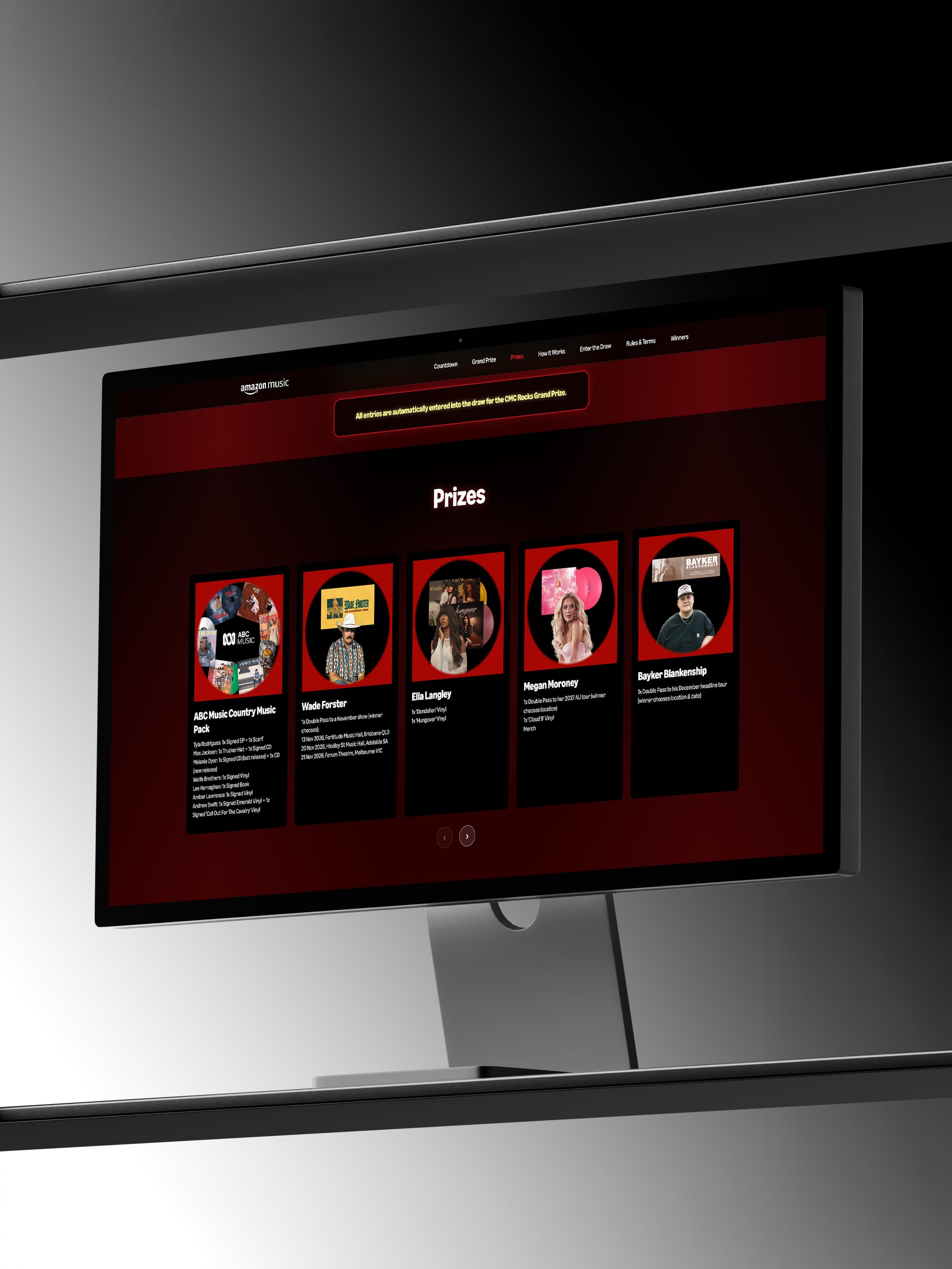
The part we’re fondest of is the favourite prize. Most of this year’s prizes are tied to an artist, and some to a place and date as well: a double pass to one of Wade Forster’s November shows, or Ella Langley’s ‘Dandelion’ and ‘Hungover’ on vinyl. A straight random draw is going to send some of those tour passes to people who can’t get to the show, which wastes a prize a label has put up.
So the entry form asks each person to pick a favourite. The draw runs prize by prize, and everyone who nominated a prize goes first in line for it. If nobody nominated a prize, its winner comes from the whole pool. Because people can enter every week, they can nominate a different favourite each time, and every entry goes into the grand prize draw regardless of what they picked.
We built a version of this preference logic for the 2025 draw. This year it has to handle up to three entries per person, each with its own favourite.
The CMC Rocks grand prize includes two festival tickets with VIP upgrades to The YETI Station, pre-pitched camping that has sold out to the public, a meet and greet with an artist, and a limited 20th anniversary merch pack. At RRP that comes to about $2,465 before you count the meet and greet. Prizes from eight labels sit around it, from Sony Music and UMG through to ABC Music.
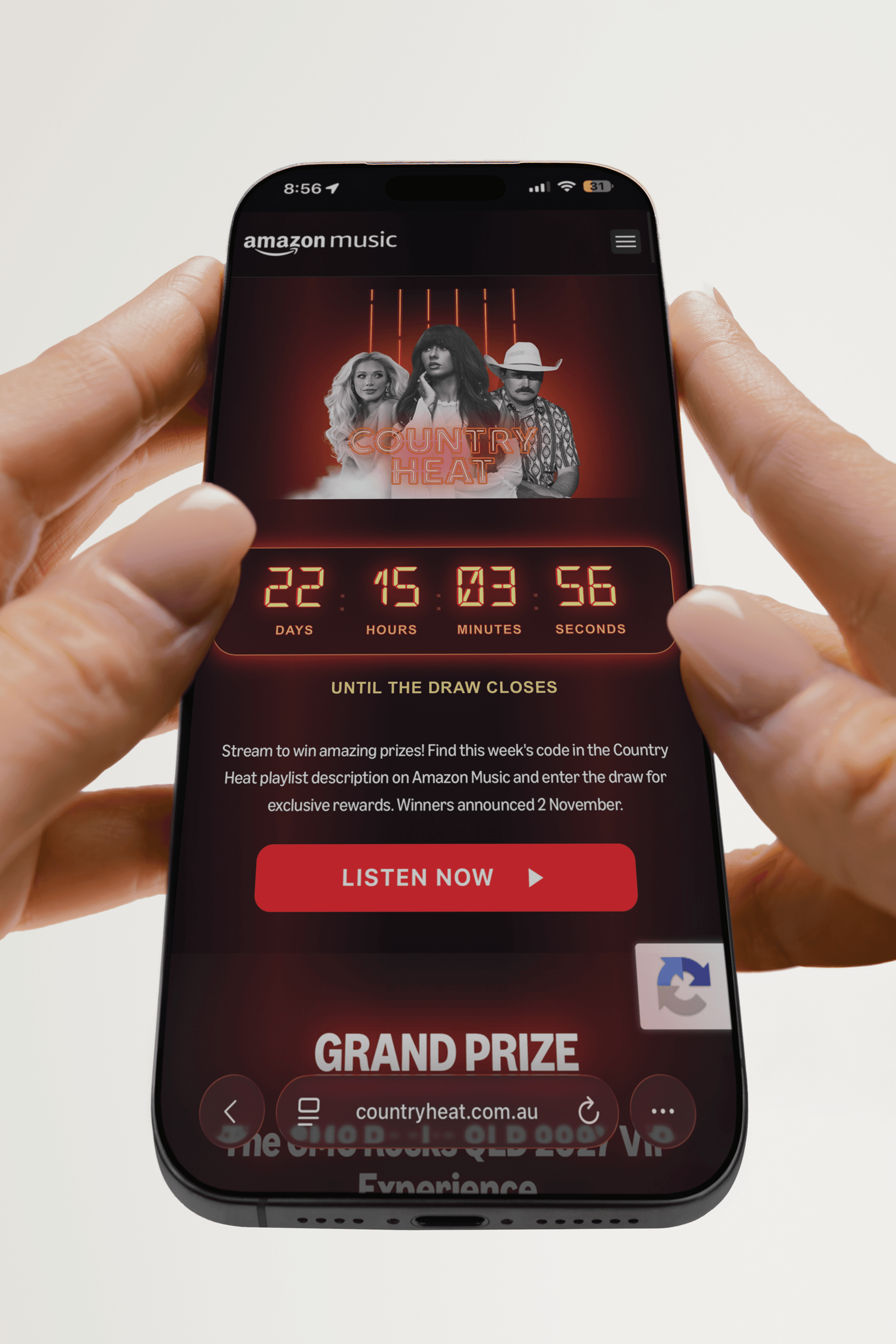
The site is one long page laid out like a gig poster. There’s a countdown at the top, then the grand prize, the prizes, three short steps on how to enter, the form and the rules, and the header jumps you to any of them. The look carries over from 2025 (the neon Country Heat lettering and black-and-white artist photography), with this year’s artists in the hero. The front end is plain HTML, CSS and JavaScript with no framework, so there’s nothing heavy for a phone to download.
Each prize gets a designed card showing the artist and what’s in the pack. The form asks for a name, contact details, a postal address and a date of birth, which is a lot to hand over to a page that looks thrown together. We reckon people are more willing to fill it in when the page around the form looks cared for, so the design time went into the hero banner and the prize cards. The form also asks for the entrant’s legal name as it appears on their ID, which saves a round of back and forth when a winner comes to claim.
The page runs itself on Sydney time. At 12:00 am on 2 November the countdown stops and its copy switches to point people to the winners section, and the form disappears at the same moment without anyone needing to be up at midnight to hide it. Until then, the winners section is a grid of question marks.
A contact form on a typical website has two messages, success or try again. This one has a separate message for each way an entry can go wrong, from someone who has already entered this week to a code that’s expired or hasn’t gone live yet. Each message tells the person what to do next.
Year two
Running the same campaign a second time helps. About 50 to 60 per cent of last year’s back-end code carried over. The main rework was the code-checking logic, since 2025 gave every stream its own unique code and 2026 has three shared ones. The email flow came across untouched: one email when you enter, and one on 2 November sending everyone back to the site to see the winners.
In 2025 we also had no idea how many people would enter, so we spent October checking the free memory on the database and the hosting. This year the 2025 entry numbers set the size of both from the start.
That head start meant the build fit into four days of work, covering the database setup for the new competition, the front end with this year’s content, the DevOps and email notifications, and the creative assets.
Around the site
Amazon wanted the artists to help promote the campaign, so we made a social asset for every artist to post to their own stories, plus a generic version for Amazon Music’s channels. CMC Rocks got its own pair of assets showing the grand prize with its RRP values, which went to CMC for sign-off. Bolster boosted the artist posts, and Amazon’s US team ran dark posts using the generic assets. We also made motion design pieces about the campaign for Amazon Music to use.
Related Projects
View Project

Video
View Project

Video, Photography
Amazon Music
View Project
Website
Amazon Music
View Project

Video, Photography
Chugg Music
View Project
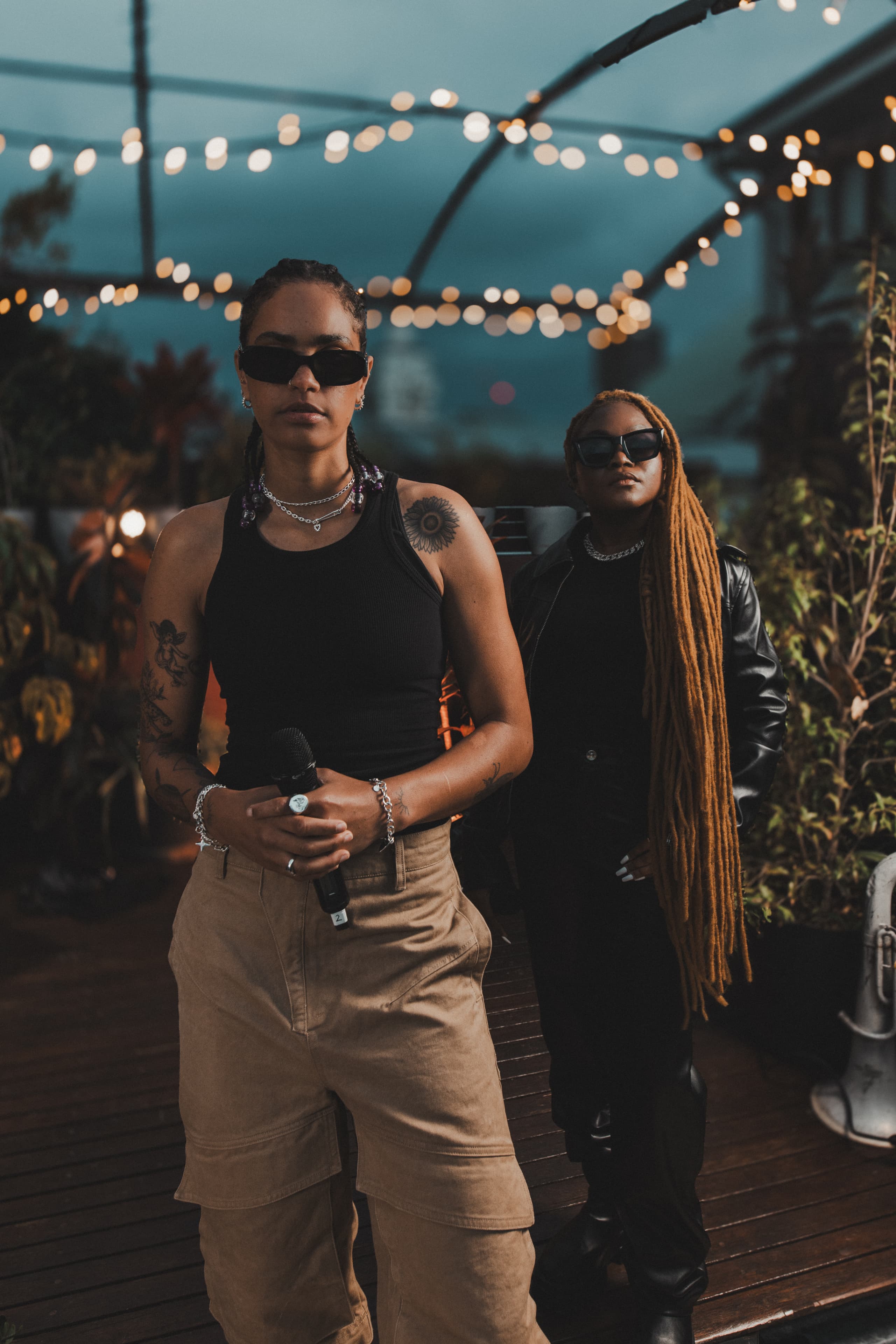
Brand, Video
Mood on the Roof
Webby Awards Nominee
2View Project
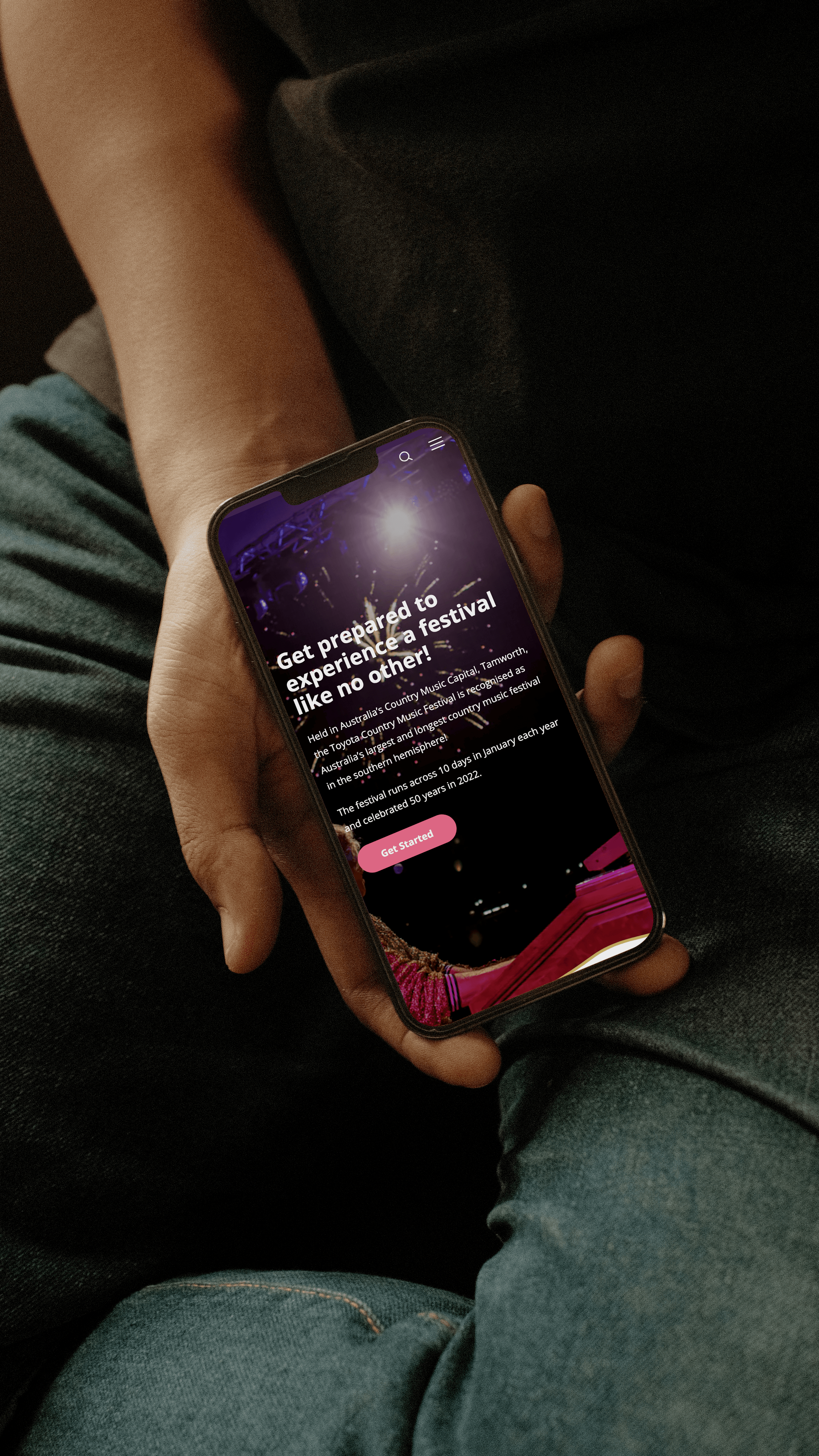
Website
Tamworth Regional Council
View Project
Campaigns
Mavin Records
View Project

Video
Dan Sultan
Frequently Asked Questions
You were going to ask anyway
Mude, a brand and creative studio based in Sydney and Canberra, designed and built the Amazon Music Country Heat competition website (countryheat.com.au) for Country Music Month 2026. It’s the second year running Mude has built the site for Amazon Music, following the first version in 2025.
Mude also runs the competition website through the campaign, from the hosting and support inbox through to drawing the winners on 2 November 2026 and contacting them by email.
Eight record labels put up prizes for Amazon Music Country Heat 2026: Sony Music, UMG, ABC Music, The Orchard, Virgin Music, Empire, BMG and Unified. The grand prize comes from CMC Rocks QLD, which celebrates its 20th year in 2027.
The artists on the prize list include Ella Langley, Megan Moroney, Lainey Wilson, Kaylee Bell, Wade Forster and Bayker Blankenship, alongside an ABC Music pack with signed music and merch from seven of its artists.
On a streaming competition, a brand activation agency builds the experience fans actually take part in, which on Amazon Music’s Country Heat 2026 meant the competition website, the entry system, the social assets and running the draw.
The work on Country Heat is split across several partners. Amazon Music is the promoter and owns the terms and conditions, the record labels supply the prizes, Bolster handles paid media, and Mude builds and runs the competition website and makes the social assets for the artists and for Amazon Music.
A microsite is a small standalone website built for one campaign, usually on its own domain, while a landing page is a single page, usually inside a brand’s main website, built to get one action from visitors.
The Amazon Music Country Heat competition website (countryheat.com.au) is a microsite. It has its own domain and entry system, and it runs for a set campaign window of 24 days in October 2026. A microsite makes sense when a campaign needs its own identity and its own data, separate from the brand’s main website.
A music competition website needs an entry flow that works on a phone and prizes presented well enough that fans want to hand over their details.
On Country Heat 2026 that meant one long-scroll page, a designed card for every prize showing the artist and what’s in the pack, entry codes that work in upper or lower case, and a separate error message for each way an entry can fail, from an expired code to someone who has already entered that week. The site also changes itself on schedule: at midnight on 2 November 2026 the form closes and the countdown points to the winners.
Country Heat 2026 uses a new code each week so the code doesn’t go stale as fans share it around, and so they have a reason to open the Amazon Music playlist again every week to find the next one.
Playlist descriptions don’t update for every listener at the same moment, so for a three-day window around each Friday change, the competition website accepts both the outgoing code and the new one. Nobody gets told their code has expired because their app hadn’t refreshed yet.
The 2026 Country Heat competition website was scoped at four days of development, because it reused the site Mude built for Amazon Music in 2025. About 50 to 60 per cent of the 2025 back-end code carried over, along with the entry and announcement emails.
A competition website built from scratch takes longer, because the entry flow, the database, the draw and the winner emails all have to be designed and tested before a fixed launch date.
Mude is a brand and creative studio in Sydney and Canberra that builds and runs competition websites and brand activation sites, including the Amazon Music Country Heat competition website in 2025 and 2026.
Mude handles the build and the live operation in-house, from the entry system and hosting through to drawing winners and contacting them. Get in touch at info@mude.com.au.
Country Heat is a stream-to-win competition where fans find a code in the description of Amazon Music’s Country Heat playlist and enter it at countryheat.com.au to go into the draw for prizes from country artists. The 2026 competition runs from 9 October to 1 November 2026, with winners announced on 2 November.
There are three codes across the campaign, released on Fridays from launch, and each code can be entered once per person. Every entry also goes into the draw for the grand prize, a VIP experience at CMC Rocks QLD 2027.
Country Heat 2026 runs a single draw at the end of the campaign with three shared weekly codes, where the 2025 competition ran four weekly draws and gave every stream of the playlist its own unique code.
The 2026 entry form also lets fans name a dream prize on every entry. The 2025 case study covers how the first year worked.
Amazon Music’s Country Heat competition is one example of a music brand activation in Australia. Fans find a weekly code in the Country Heat playlist description and enter it at countryheat.com.au for prizes from country artists, so the action that earns an entry is opening the playlist Amazon Music wants people listening to.
Mude’s other music work includes filming Gretta Ray live for Amazon Music and building the festival app for the Tamworth Country Music Festival. Mude also runs Mood on the Roof, its own rooftop live music series in Sydney.
A competition website has to change itself on a schedule and check every entry before it counts, which a regular business website rarely needs to do.
On Country Heat 2026, the competition website opens and closes on Sydney time without anyone touching it, and every entry is checked against the live weekly code before it goes into the draw. A regular contact form has two messages, sent or try again, while the Country Heat form has a separate message for each way an entry can fail. At the end of the campaign Mude exports the full entry list, timestamped in Sydney time, for Amazon Music as the record of who was in the draw.
A competition entry form should ask only for what the promoter needs to check eligibility and deliver the prize. The Country Heat 2026 entry form asks for the entrant’s legal name, email, phone number, postal address and date of birth, plus an optional dream prize and agreement to the terms and conditions.
The legal name has to match the winner’s ID when they claim, email and phone are how winners get contacted, the postal address is where physical prizes get sent, and the date of birth covers the 18+ rule. We reckon every extra field beyond that is one more reason for a fan on their phone to give up.
Entries to a streaming competition come from the artists and the platform pointing fans to the playlist where the entry code lives. For Amazon Music’s Country Heat 2026, Mude made a social asset for every artist on the prize list to post to their own stories, plus generic assets for Amazon Music’s channels, with paid media handled by Bolster.
The weekly code gives fans a reason to come back. With three weekly codes and one entry per code, a fan who returns every week ends up with three entries across the campaign.
On Country Heat 2026, Mude runs the draw on 2 November 2026 and contacts the winners by email, and manages the support inbox for the whole campaign.
Every entry is timestamped in Sydney time, so the entry list Mude exports for Amazon Music as the record of the draw lines up with the campaign’s own dates. Everyone who entered also gets an email when the winners go up on the site.