Defence Housing Australia
A documentary film for Defence Housing Australia on investing with confidence and with a purpose
A brand film and testimonial series for Defence Housing Australia’s property investors.
Defence Housing Australia (DHA) houses Australian Defence Force members and their families wherever they’re posted, and most of the homes it manages belong to private investors. DHA asked us for a film that would make the case to those investors, explaining why DHA exists and why a DHA lease is a secure place for an investment property, something it could play at investor events and in presentations as well as on YouTube.
We made a four-minute documentary-style film with no narrator, told by DHA’s Managing Director Andrew Jaggers, its Business Development Manager Luciano Galati, three Defence families and two DHA landlords. The same three and a half days of filming in Sydney and Canberra also produced a short cutdown and four standalone testimonials, and DHA published the film on its DHA Invest YouTube channel in August 2026.
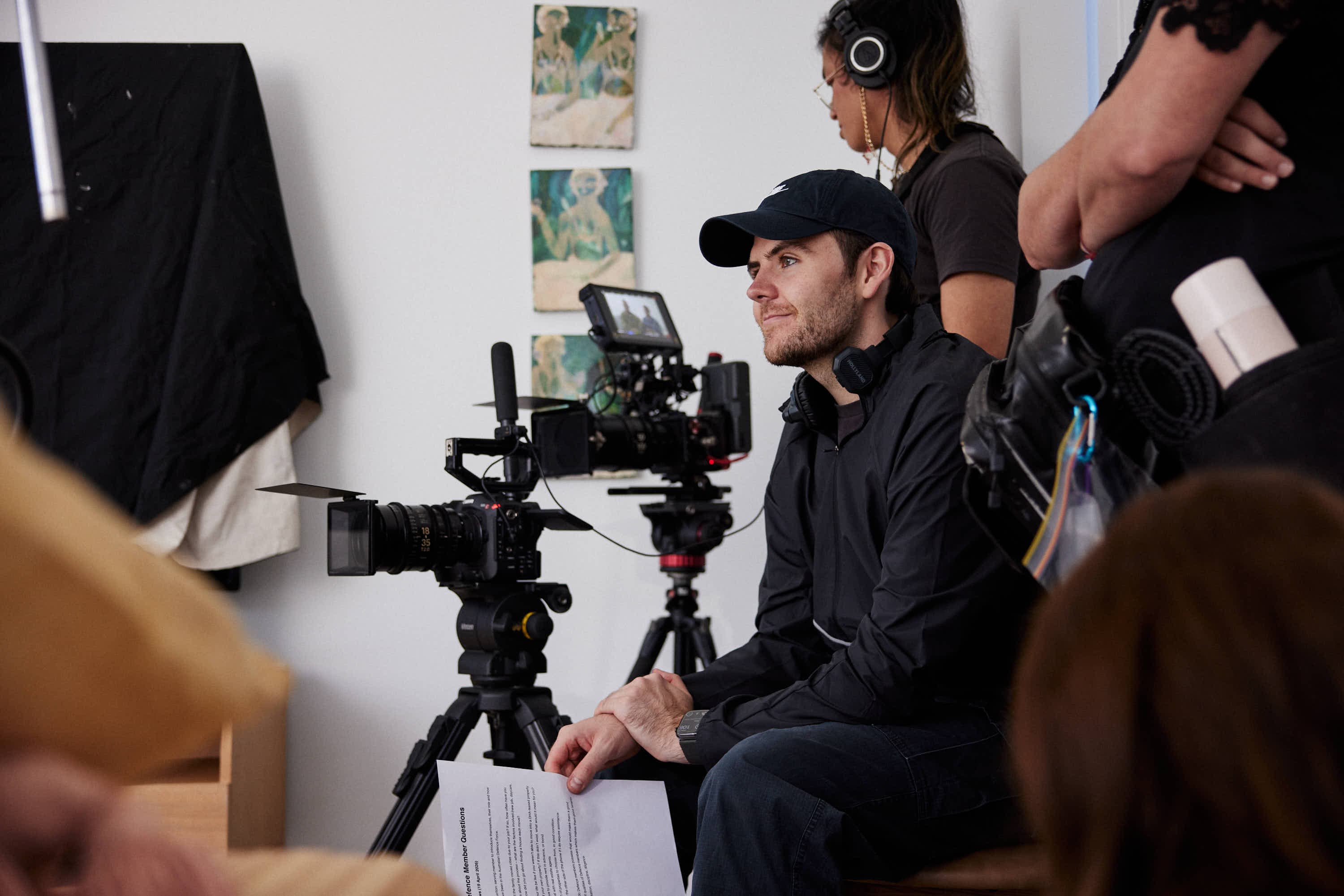
The background
Leading Seaman Tom Hennessy has been an electronics technician in the Navy for about 20 years, and in that time he and his wife Jade have moved house about seven times, interstate and across Sydney. When a posting comes through they pick their next house online and lock it in before the removalists turn up, so the weekends of open homes that come with renting privately are a part of moving they’ve never had to do.
Having a home ready wherever a family lands is the job the Australian Parliament set DHA up to do nearly 40 years ago, because Defence posts its people around the country every few years and somebody has to have the keys waiting. The federally owned agency now manages around 17,000 homes, and about 12,000 of them belong to private investors who lease them to DHA, which pays them the rent and puts a Defence family in the house.
That makes a DHA tenancy an unusual one for the landlord, since the lease is with a government agency while the people living in the house are a family who were posted there and will probably be posted somewhere else in a few years. The reason DHA needs the investor’s house in the first place is that the family keeps moving, and the film had to put both sides of that in front of an investor.
The brief
DHA wanted one film to sit at the front of its investor marketing, made for people weighing up where to put their next investment property, and since we’d already made DHA’s explainer series on how investing with DHA works, this one didn’t need to walk through the lease clause by clause and could hand the benefits to people who’ve lived with them for years. The tone we pitched was “grounded and filmic, avoids becoming an explainer or a hard sell”, and the final cut kept to it.
The question underneath the whole thing was what happens if DHA isn’t there, so we asked the Hennessys and the Meikles, in a few different ways, what their life would look like without a DHA home to move into, and Nick Meikle (who serves in the Air Force alongside his wife Aimee) said they “could have been stuck in a hotel for a very, very long time.” Luciano gave us the investor version of the same answer, “If we didn’t have the properties from investors, our Defence members would find it extremely difficult to source and secure properties,” which is the second voice you hear in the film and the reason it opens on the families before DHA’s history comes in.
The film
There’s no narrator, much like an episode of Australian Story, and the film opens on Andrew Jaggers describing Defence members on the move as “going through a chaotic time in their lives”, with Luciano’s investor line straight after it. The families then have the floor for less than half a minute, Tom and Jade Hennessy finishing each other’s sentences about packing up a whole life with kids in tow while Aimee Meikle runs through what she and Nick never had to deal with, “bond payments, inspections, open houses.”
DHA itself only turns up after that, with Andrew on the history and the government ownership over footage from DHA’s own archive reels and Luciano on the size of the portfolio, so by the time the numbers arrive you already know who the homes are for.
The middle of the film belongs to the landlords, cut against Luciano so that each benefit of the lease arrives as something one of them has lived with. When Luciano says DHA keeps paying rent while a house sits empty, Phil Coe comes straight in with his “two properties rented concurrently, one through DHA and one commercially.” The best line in the film is Susan Longbottom’s, about how you “almost forget that you have an investment property until you get the extra amount of money in your bank account every month.”
Luciano then sets out the three ways in while an animated map deals with the assumption that DHA homes only sit near bases out in the regions, and Andrew closes on DHA’s own line, in his own words: “you’re not just investing in a property with DHA, you’re investing with confidence and also with a purpose.” Underneath all of it the score runs three licensed tracks back to back, opening on Hotham’s “New Vision”.
The families
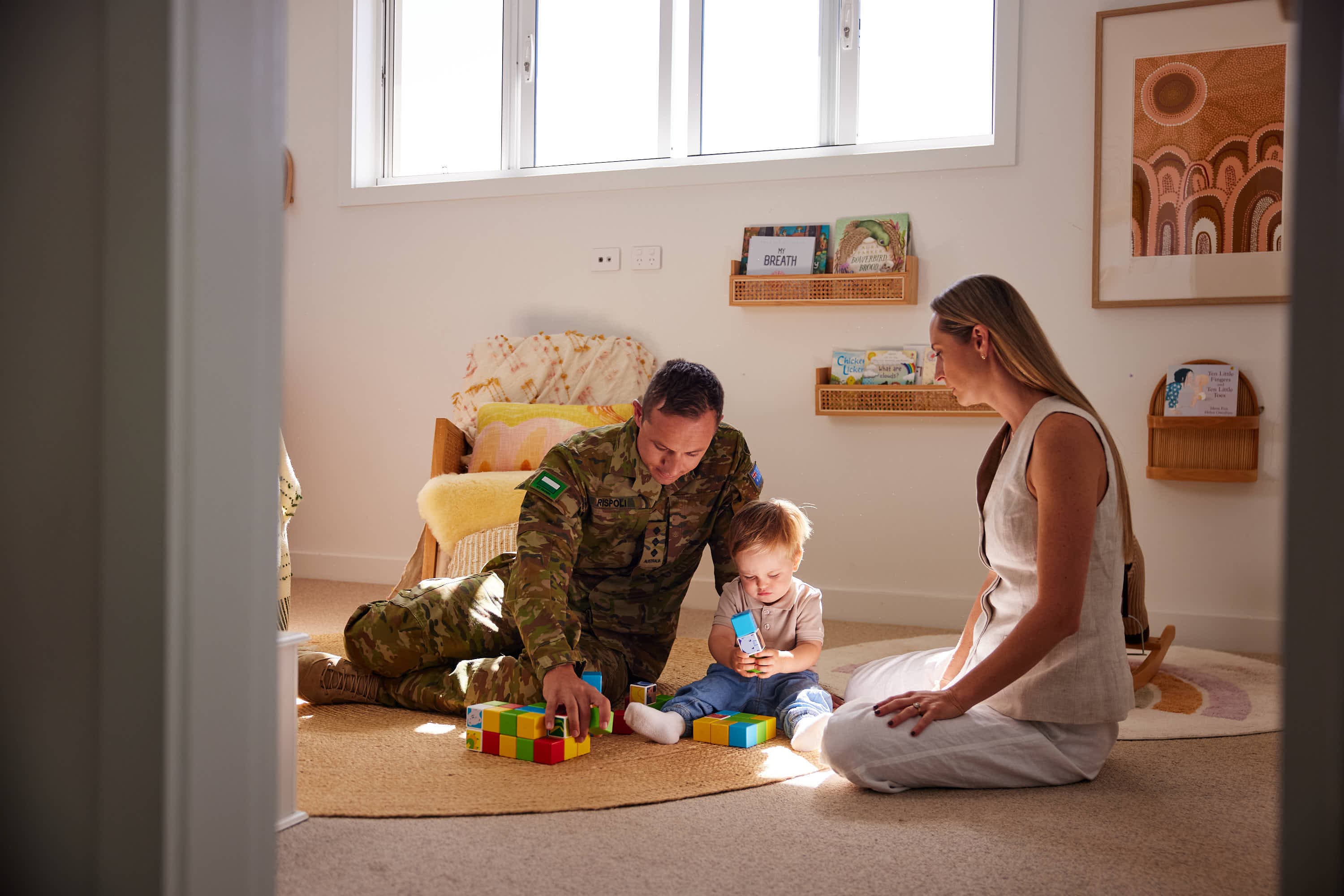
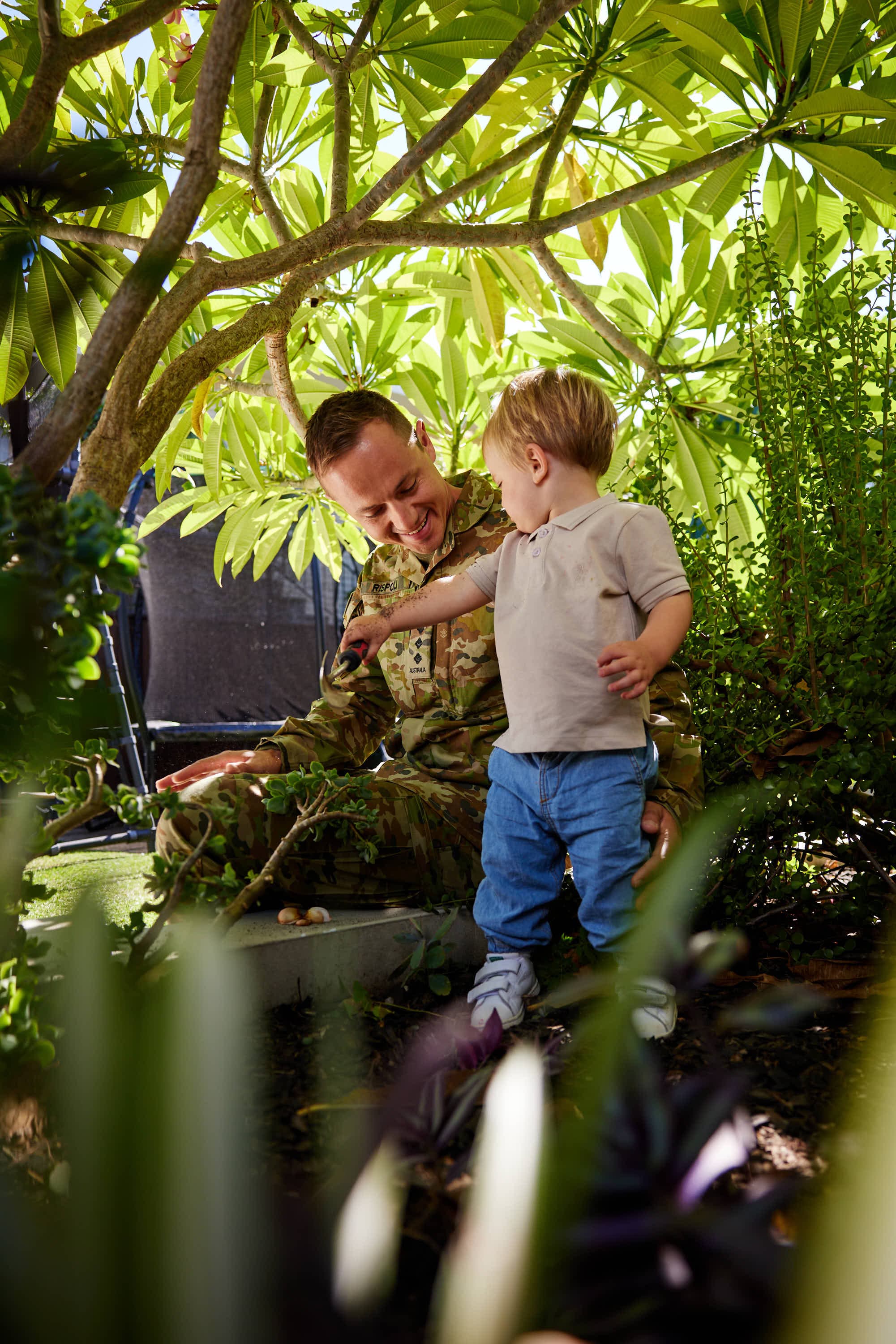
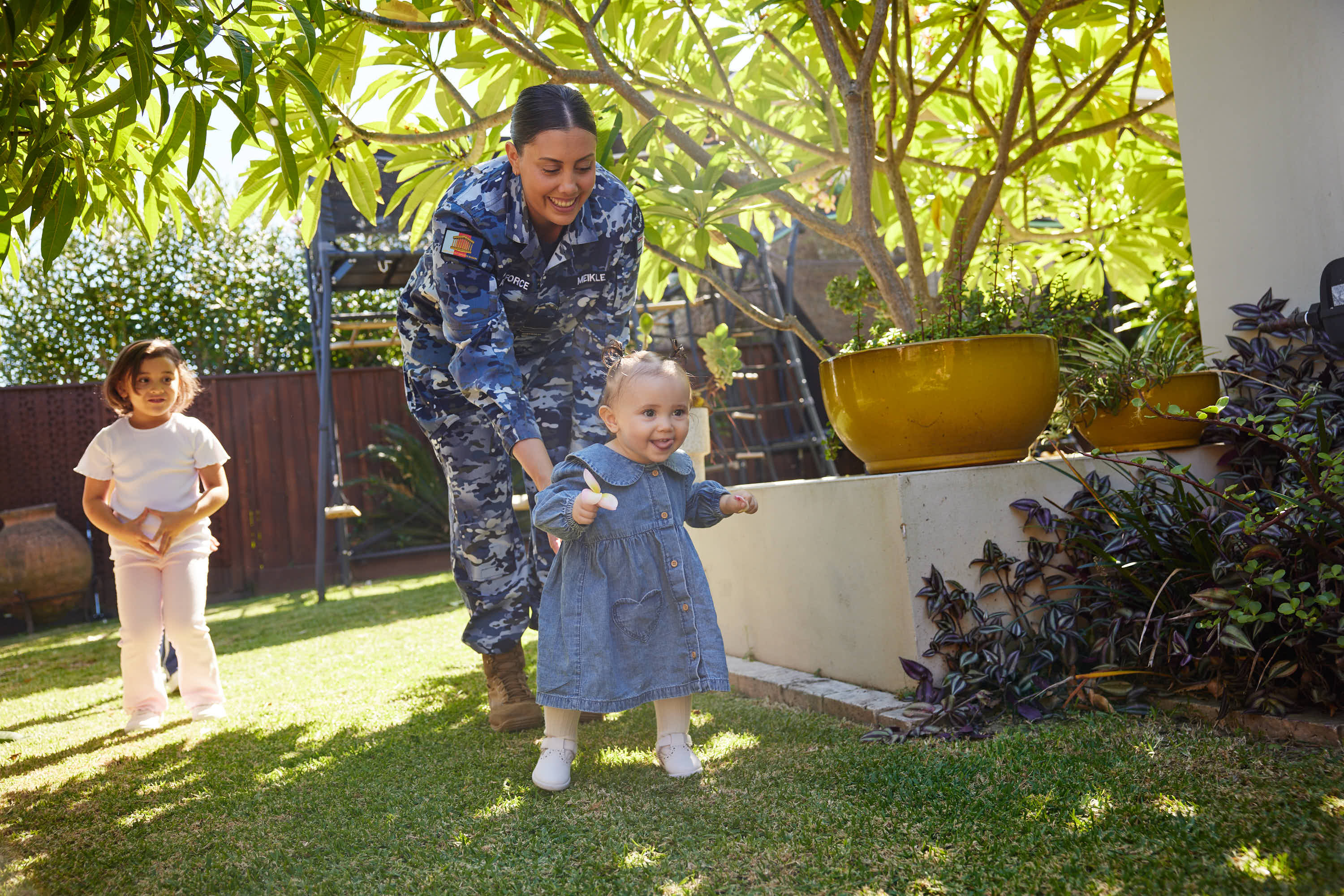
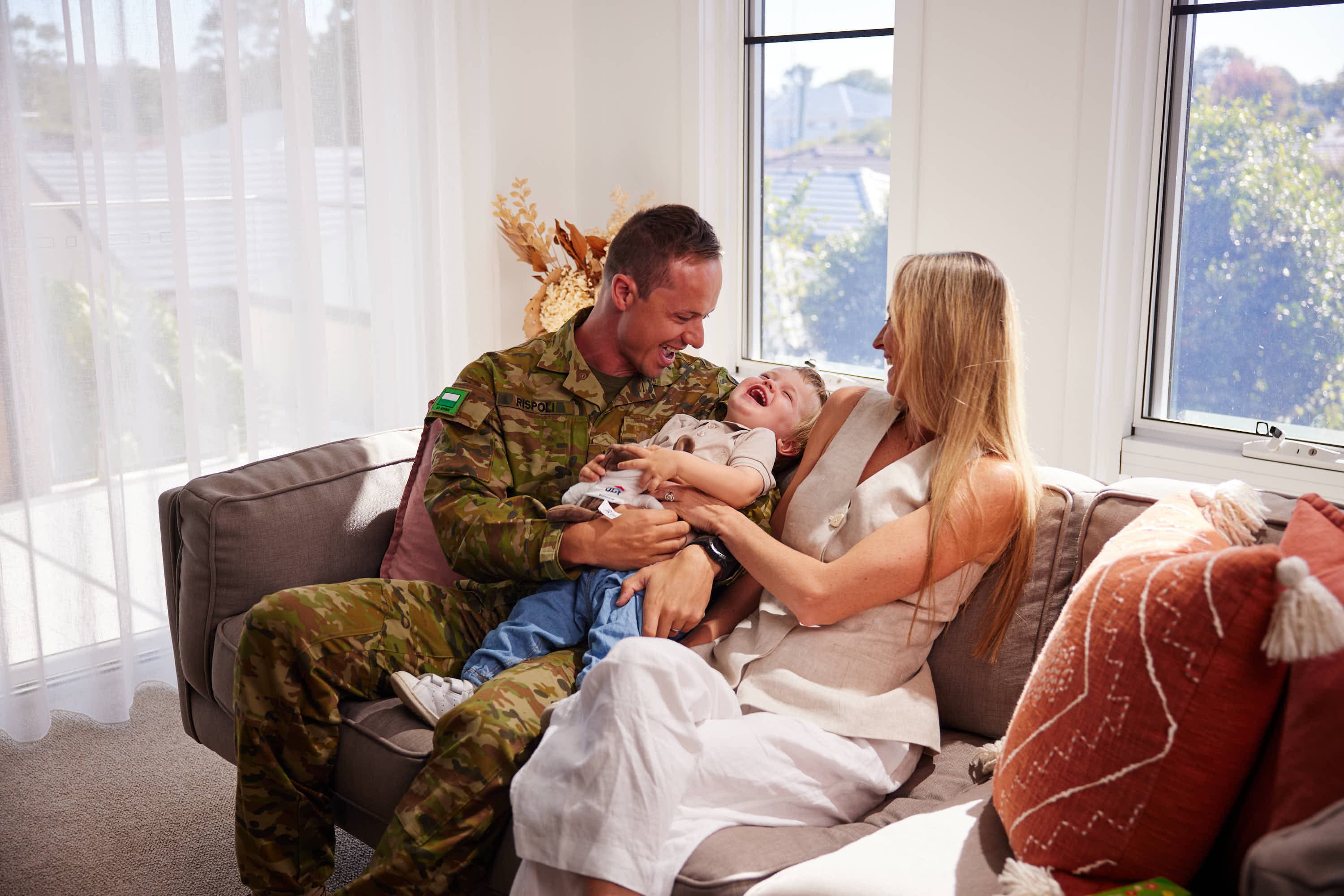
The families were shot on one Sunday in April in a house we hired in Emu Plains, at the foot of the Blue Mountains (DHA picked it partly for the kids’ bedroom, which has a teepee in it), with three families rotating through over the day and the Army family there for photography and b-roll. DHA’s wardrobe brief was solid colours and no logos, and the serving members spent part of the day in uniform and the rest in their own clothes because DHA wanted them to read as ordinary families at home, which is also why each family brought their own toys and games, and why the pool and the wine cellar stayed well out of frame.
Nobody got questions in advance, only a short list of topics, and the interviews ran as conversations with the camera off to one side while we came at the same few subjects from different directions until the answers arrived in their own words. Tom has been in the Navy for about 20 years and Aimee in the Air Force for 11, and Tom’s summary of what DHA does after all those postings is that it “takes the hassle out of that move”, meaning the temporary accommodation and the weekends of open homes.
The landlords
Susan Longbottom, a public servant we filmed at home in Weston, has been a DHA landlord since 1996, when her first investment property came with a DHA lease already on it. Over the years the other investment properties were sold off and the DHA ones kept, and she now plans to use them as her retirement income.
Phil Coe is a teacher, filmed at St Clare’s College in Griffith, who bought his first investment property with his wife in 2006 and has since rented property both through DHA and on the commercial market, where one change of tenant left them six weeks without rent. He also has a friend going through a headache with a commercially rented property who is, in Phil’s words, “quite jealous”.
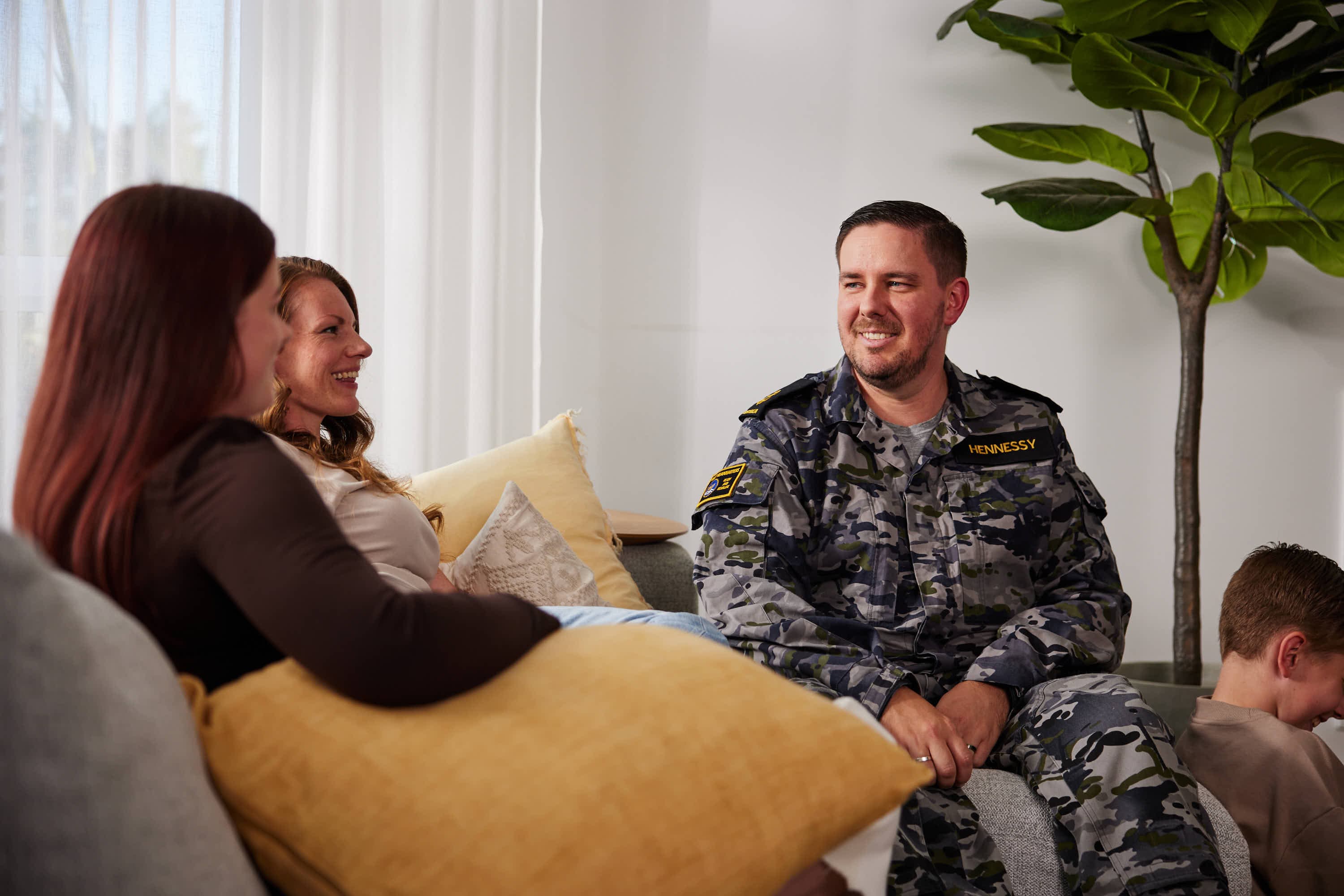
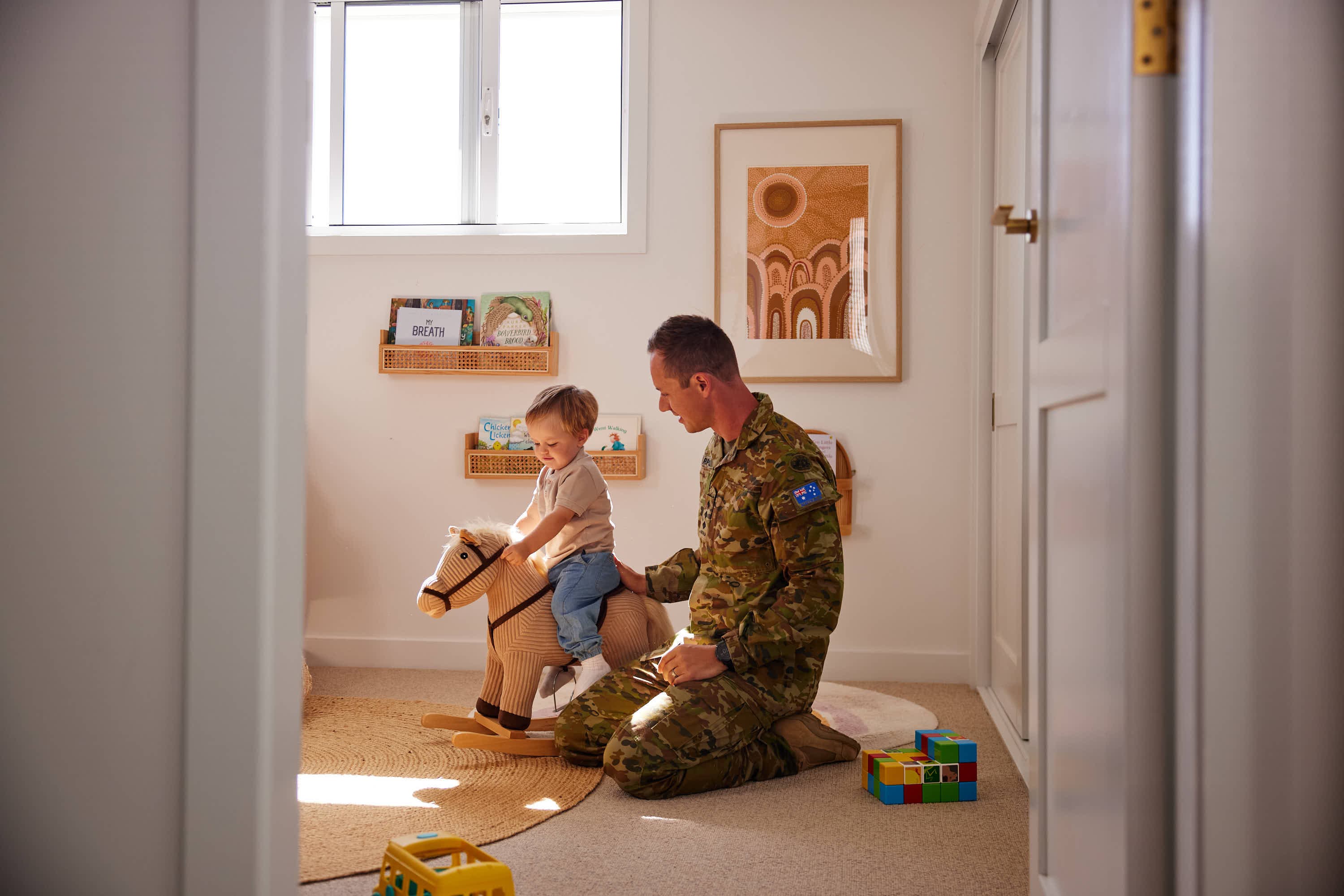
DHA
Andrew Jaggers was interviewed at DHA’s head office in Gungahlin, where we also filmed the investor support team on the phones in their DHA uniforms, and Luciano Galati, a business development manager in DHA’s leasing and acquisitions team, sat down a fortnight later in the kitchen of DHA’s Parramatta office. In between we picked up DHA’s developments around Canberra, The Crossing in Coombs from the drone and the new townhouses at Academy Close in Campbell from street level on a gimbal.
The testimonials
Susan, Phil, the Hennessys and the Meikles each also have a film of their own, cut from the same interviews to run on its own, and the two family films go out to investors under DHA’s line “DHA is your tenant, but Defence families live in the home.” DHA has since started cutting 15 and 30 second social ads out of the same footage, including answers from Luciano that never made it into the main film.
Cast and credits
- Defence Housing Australia: Andrew Jaggers, Managing Director; Luciano Galati, Business Development Manager
- Defence families: Squadron Leader Aimee Meikle and Nick Meikle, Royal Australian Air Force; Leading Seaman Tom Hennessy, Royal Australian Navy, and Jade Hennessy; the Rispoli family, Australian Army
- DHA landlords: Susan Longbottom; Phil Coe
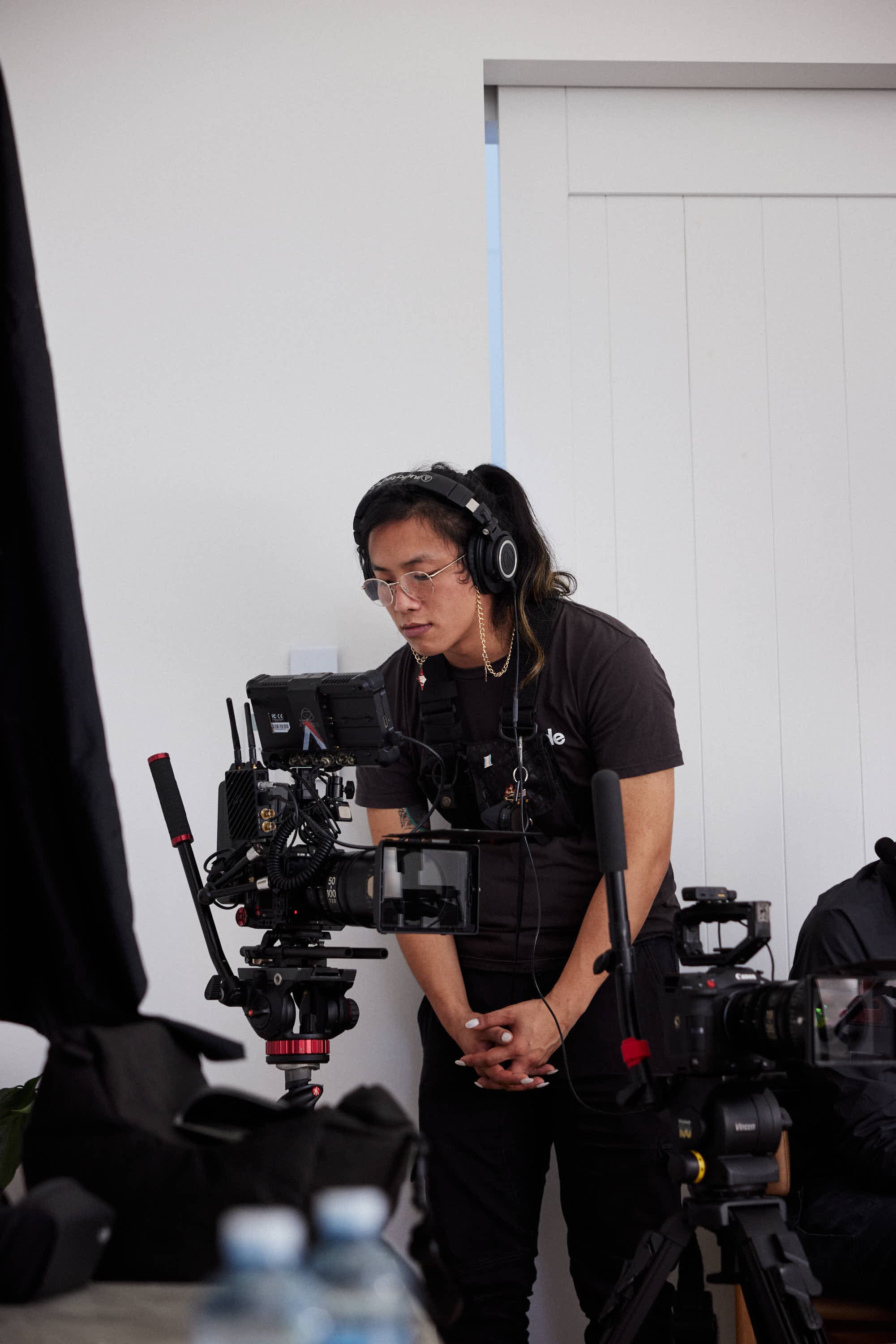
- Crew: Ben Develin, creative direction and cinematography; Benni Ling, producer and editor; Reece McMillan, photography; Nico Nalbandian, gaffer; Jesus Munoz, lighting assistant; Amanda Rieck, styling, hair and make-up; Sue Foster, hair and make-up
Mude was the creative, film and photography partner. The investment program and its terms are DHA’s.
Related Projects
View Project
Video, Campaigns
Department of Health, Disability & Ageing
View Project

Video, Graphic Design
Department of Health, Disability and Ageing
View Project

Video
Australian Government
View Project

Website
Tamworth Regional Council
View Project

Video, Photography
Department of the Prime Minister and Cabinet
View Project
Website
Australian Strategic Policy Institute
View Project
Video
Department of Health, Disability and Ageing
View Project
Video
Sport Integrity Australia
Frequently Asked Questions
You were going to ask anyway
A documentary-style brand film is a short film that makes the case for an organisation through interviews with people who have a real stake in it, filmed in their own surroundings and cut together with observational footage. The argument comes from what those people say and the order the edit puts it in, so the film plays as evidence from the people involved.
Most documentary-style brand films run for a few minutes, which gives an argument room to build and still suits a website or an event screen. The interviews usually run far longer than the finished film needs, so the same shoot tends to supply testimonials and social cutdowns as well.
The Why invest with DHA film for Defence Housing Australia is built on interviews with DHA landlords and Defence families, with DHA’s Managing Director and one of its business development managers speaking for DHA. It runs four minutes and eleven seconds, and DHA published it on its DHA Invest YouTube channel in August 2026.
Real landlords can describe what owning an investment property has been like over years, including the problems, which is evidence a spokesperson can’t give about their own product. A landlord comparing two of their own properties side by side gives viewers a specific comparison they can weigh up for themselves, and that detail is what makes a testimonial persuasive.
Landlord testimonials need written consent covering every place the footage will run, and the claims in them should be checked against the product’s terms before the edit is approved. It’s common to add a disclaimer stating that the views are the landlord’s own, so the testimonial stays accurate if the terms change later.
In the Why invest with DHA film, Phil Coe talks about renting one property through DHA and another commercially at the same time, and Susan Longbottom has been a DHA landlord since 1996. Both also have their own testimonial films, which close on the same end frame and disclaimer as the main film.
Filming Defence families for a government video means working within Defence’s rules on public comment by serving members, so the agency’s communications team usually reviews what each person says before it goes into the edit. Uniforms need to be worn correctly, and everyone on screen needs a signed talent release, with a parent or guardian signing for any children.
Filming serving members both in uniform and in their own clothes gives the edit footage that reads as a family at home as well as a Defence family, and solid colours keep logos and busy patterns out of shot. A hired house can stand in for a real home when filming inside the agency’s own properties isn’t an option.
For the Why invest with DHA film, DHA’s marketing team went through the families’ interview transcripts and marked which lines could be used. DHA chose not to film inside the homes it leases, so the three families were filmed over one Sunday at a house hired in Emu Plains, with two of them interviewed and the Army family there for photography and b-roll.
Making a brand film for a government agency follows the usual production stages with a longer approval chain on top, since interview lines and final cuts are usually reviewed by the agency’s legal team and its senior executives before release. Captions and transcripts are standard requirements for most government video, so they should be planned and budgeted from the start.
Interview transcripts speed up approvals, because reviewers can mark up exact wording without rewatching footage, and spokespeople usually get talking points in advance so their answers stay accurate. Building review rounds into the schedule from day one keeps the edit moving, since each version may need to pass several people before it’s signed off.
For the Why invest with DHA film, we supplied transcripts of every interview, which DHA asked for so it could use quotes in articles and media releases, and which its marketing team used to mark the lines that could go in the film.
Brand films made for websites and events usually run somewhere between two and five minutes, and the social cutdowns made from them run from 15 seconds to about a minute. The right length depends on how much argument the film has to carry and where people will watch it.
Length is usually decided in the edit, because interviews produce far more good material than one film can hold. Starting from a long assembly and cutting down in stages shows which lines carry the argument, and the material that doesn’t fit can go into testimonials and shorter ads.
DHA’s brief for the Why invest with DHA film suggested two to three minutes. The first assembly ran about half an hour, and over three months of editing it came down to four minutes and eleven seconds, with much of what didn’t fit going into the four standalone testimonials.
A good property investment video explains how the investment works in plain language and backs it up with people who have owned it. Every claim about rent or returns has to match the terms investors will sign, because viewers are deciding where to put a large amount of money, and specifics like lease length and what happens when a property sits empty carry more weight with them than lifestyle footage.
A structure that works well explains why the product exists before it explains how it works, then lets owners talk about their experience before the video moves on to how to get started. Any guarantee needs its conditions stated, and the disclaimers the organisation’s legal team requires usually sit on the end frame and in the description wherever the video is published.
The Why invest with DHA film starts with why Defence Housing Australia needs investors’ homes at all, then covers DHA’s history and the size of its portfolio. The middle of the film belongs to two landlords talking about rent and vacancy, and the end frame carries a disclaimer from DHA’s legal team setting out when the rent DHA pays can be reduced.
People who aren’t used to being on camera give their best answers when the interview runs as a conversation, with the interviewer sitting beside the camera so they’re talking to a person. Sharing the topics beforehand helps them think about their story, as long as there’s no script to memorise, because a memorised answer usually comes out flat.
Asking about the same subject in a few different ways tends to get past the first, rehearsed answer, and pauses can be left alone because the edit will tighten everything later. Hair and make-up and a small crew both help people settle into the room before the questions start.
For the Why invest with DHA film, we sent the Defence families a short list of topics before the shoot and no questions, and each interview ran as a conversation in the house where they were being filmed. The main film uses a few lines from each of the two interviewed families, and their testimonial films carry much more of what they said.
One shoot can produce a brand film and a set of standalone testimonials when both are planned before filming starts. That means interviewing each person for long enough to carry a film of their own, and filming each person on their own so their testimonial doesn’t have to borrow shots of someone else.
Shooting every interview on a wide and a close-up angle makes recutting easier, because the join between two answers can be hidden by switching angles. Each testimonial also needs its own opening and ending, so it takes its own edit time even though the footage already exists.
We filmed the Why invest with DHA project over three and a half days in Sydney and Canberra. Alongside the main film, the same footage produced a cutdown of about a minute and four standalone testimonials, two with DHA landlords and two with Defence families.
A brand film is turned into social media ads by cutting 15 and 30 second versions around single lines that make sense without the rest of the film, with each version opening on enough context for someone who has never heard of the brand. Every version needs burned-in captions for viewers watching with the sound off, and vertical versions need text kept inside each platform’s safe zones.
The lines that work best in ads are usually the specific ones, like a number or a comparison from someone who has lived it, with footage chosen to match what’s being said. A consistent end frame across every version keeps the call to action and any disclaimers the same wherever the ad runs.
Defence Housing Australia’s brief for 15 and 30 second social ads draws on Susan Longbottom’s and Phil Coe’s lines from the Why invest with DHA film, along with answers from Luciano Galati that didn’t make the final cut. Every ad closes on the film’s end frame, since it carries DHA’s most recent disclaimer.
Defence Housing Australia (DHA) is an Australian Government Business Enterprise that provides housing and housing-related services to Australian Defence Force members and their families. It was established in 1988 under what is now the Defence Housing Australia Act 1987, and took its current name in 2006.
According to DHA, it manages around 17,000 properties, about 12,000 of which are leased from private investors, and it looks for homes within about 30 km of a serviced Defence base. An investor can lease a property they already own to DHA. They can also buy or build a property to lease to DHA, or buy one with a DHA lease already in place.
We made the Why invest with DHA film for DHA’s investor marketing, along with a cutdown and four testimonial films, and DHA published the main film on its DHA Invest YouTube channel in August 2026. In the film, Luciano Galati explains that DHA keeps paying the rent while a property sits vacant and pays it a month in advance, and the conditions on that rent are set out in DHA’s lease terms.