Sport Integrity Australia
A brand film teaching young athletes about doping by making them laugh first
Do It Without Doug is an educational short-film produced in collaboration with
The purpose of this film is to expose young athletes to the negative consequences of using performance enhancing substances, without lecturing or antagonising them.
Using comedy, sometimes absurdly, we can connect with our audience and share important messaging in a way that never makes them feel defensive or disconnected.
The brief: An anti-doping film that works because it never once feels like an anti-doping film
The standard anti-doping film looks like an anti-doping film. A serious narrator. Archival footage of broken careers. A list of consequences delivered with a furrowed brow. The audience most likely to be considering performance-enhancing drugs has also seen enough government PSAs to tune out before anything important gets said.
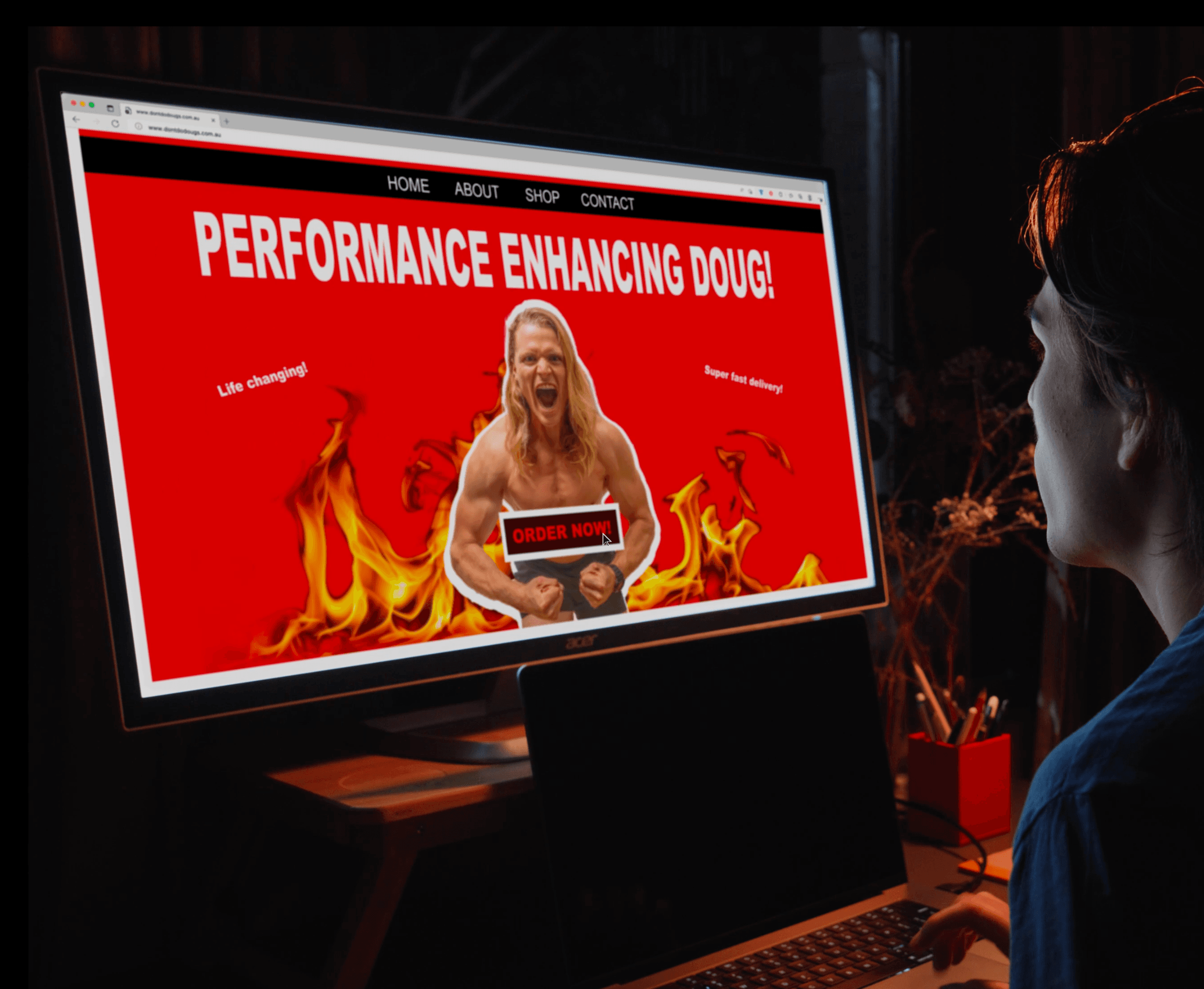
Sport Integrity Australia, the federal authority responsible for anti-doping in Australian sport, needed something else. We made them a short film about a man named Doug.
Reach young athletes who are weighing up whether to dope. Increase awareness of how that decision plays out across the rest of their lives. Move them to pursue their goals without drugs. Two cuts: a 90-second hero piece and a 30-second edit.
The brief left room for comedy. We built the whole thing around it.
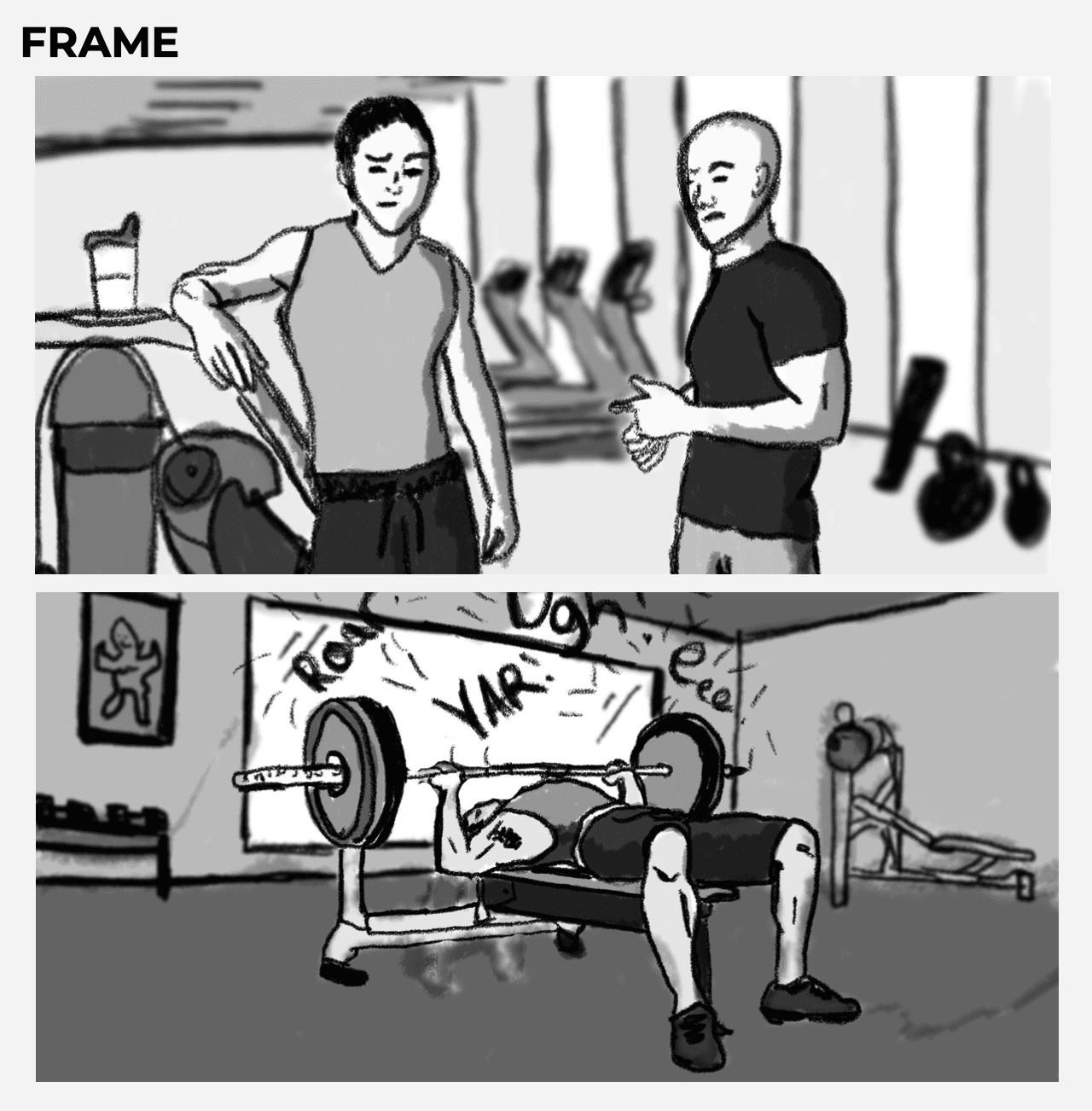
Doug
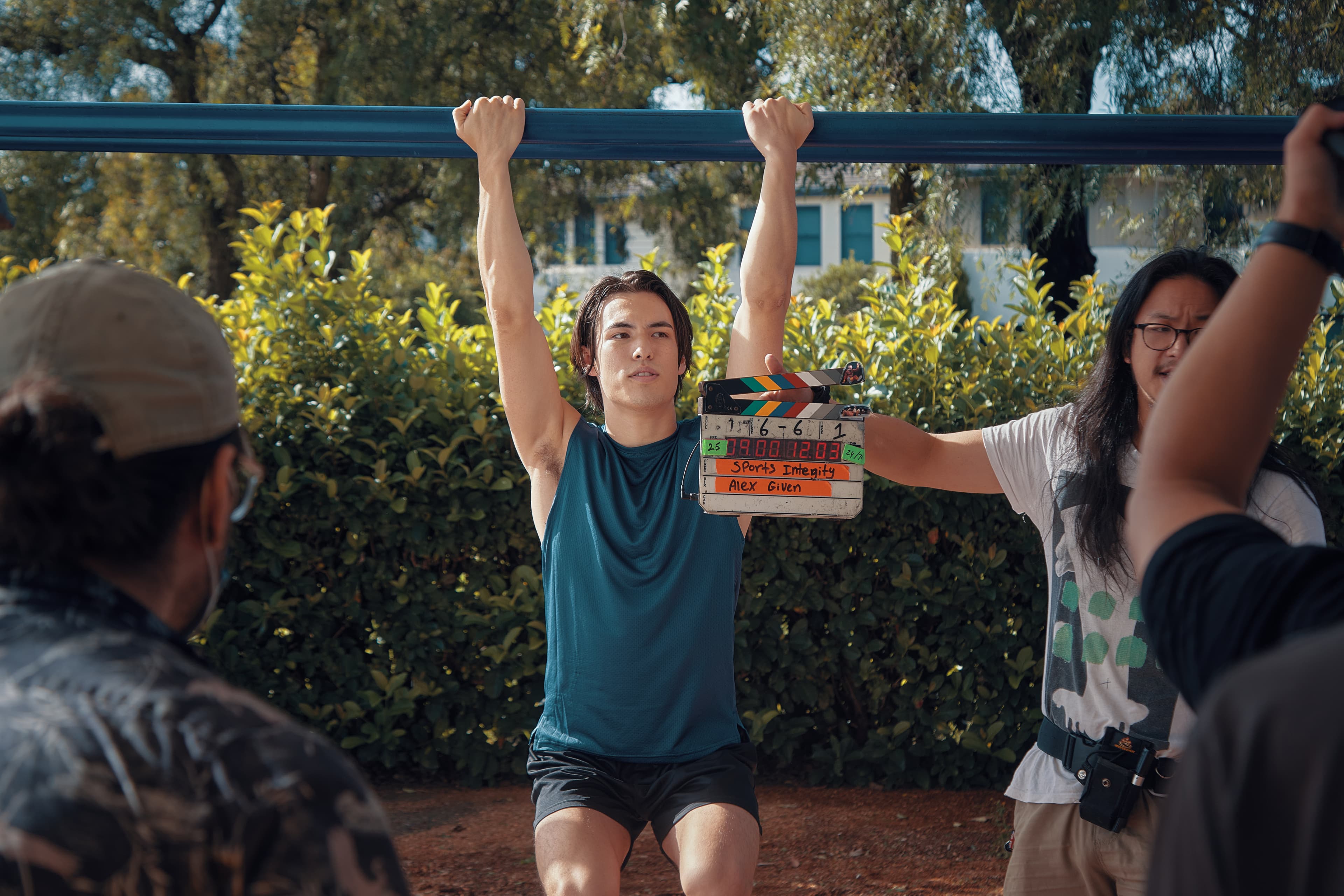
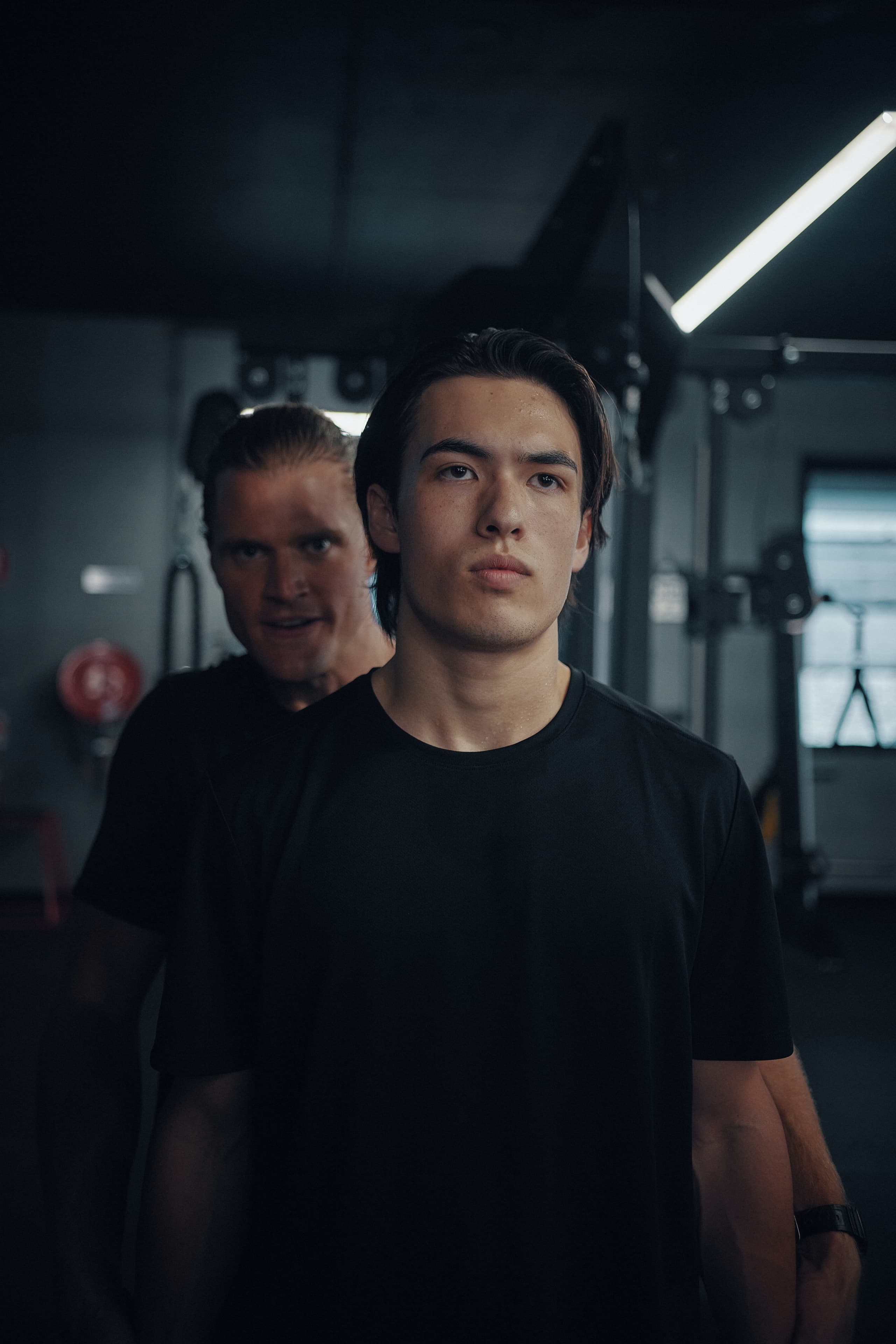
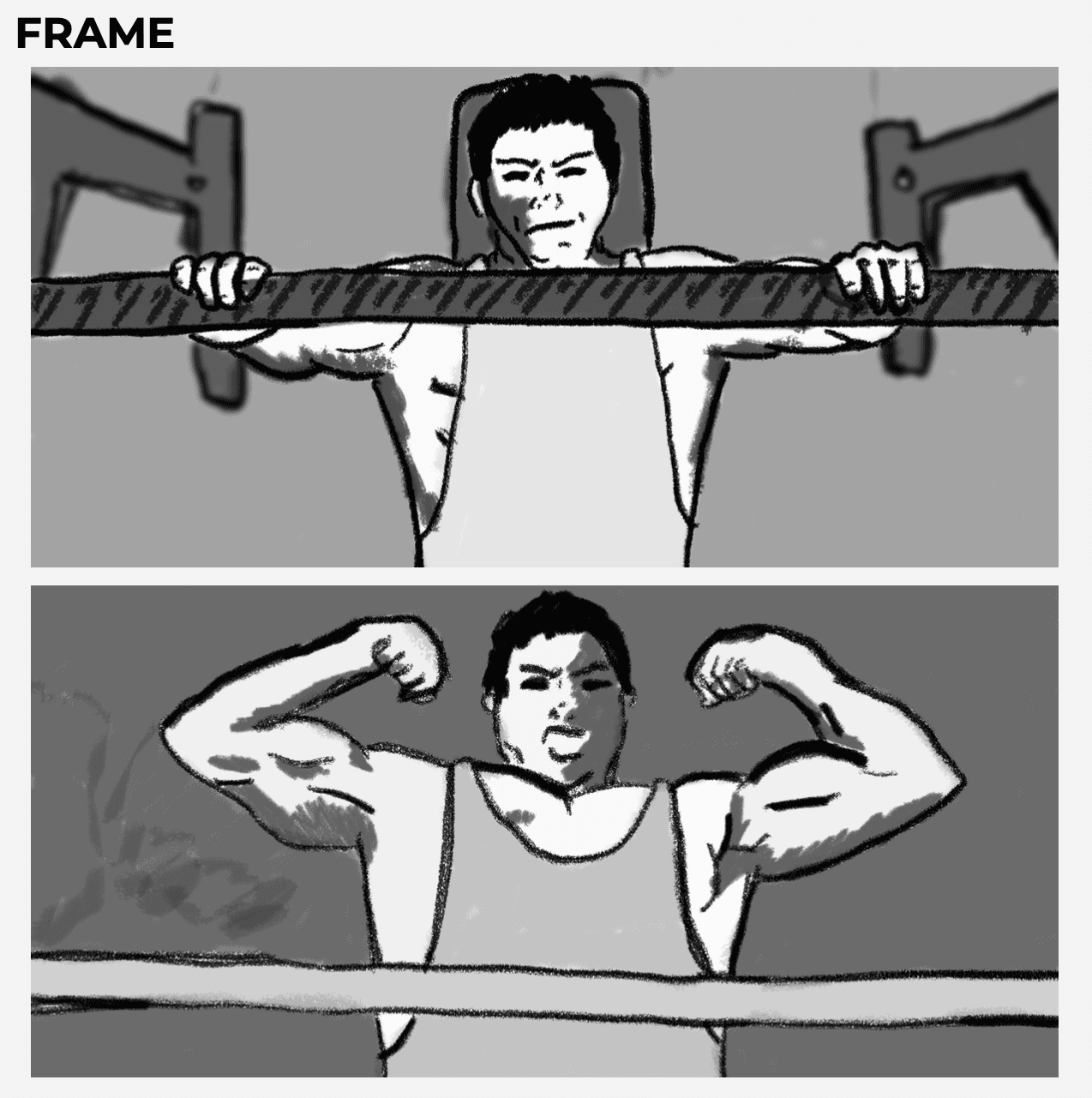
Doug is performance-enhancing drugs as a houseguest you cannot get rid of. He is large, loud, obnoxious, wears uncomfortably tight t-shirts and obscenely short shorts, and is prone to face-grabbing the moment he is invited inside. He kicks plates of healthy food out of athletes’ hands. He helps with pull-ups whether you want him to or not. He stands behind the Athlete in the kitchen and guides his hand while he pours milk on his oats. He breaks up with the Athlete’s girlfriend on his behalf and mentions it in passing on the way to answer the door. He screams at joggers in the park.
There is no point in the film at which the Athlete delivers a monologue about the cost of doping. The audience watches him slowly lose autonomy, his girlfriend, and the satisfaction of having earned anything on his own.
The bystanders
In nearly every scene with Doug, someone else is also in shot — a couple watching with mild concern from a grassy knoll, three gym-goers exchanging a look across the floor, a kid at the playground who stops to watch, the jogger who gets screamed at and flinches into the bushes clutching his chest. They are the running commentary the film does without using voiceover, and they are clocking things several minutes before the Athlete does.



Craft
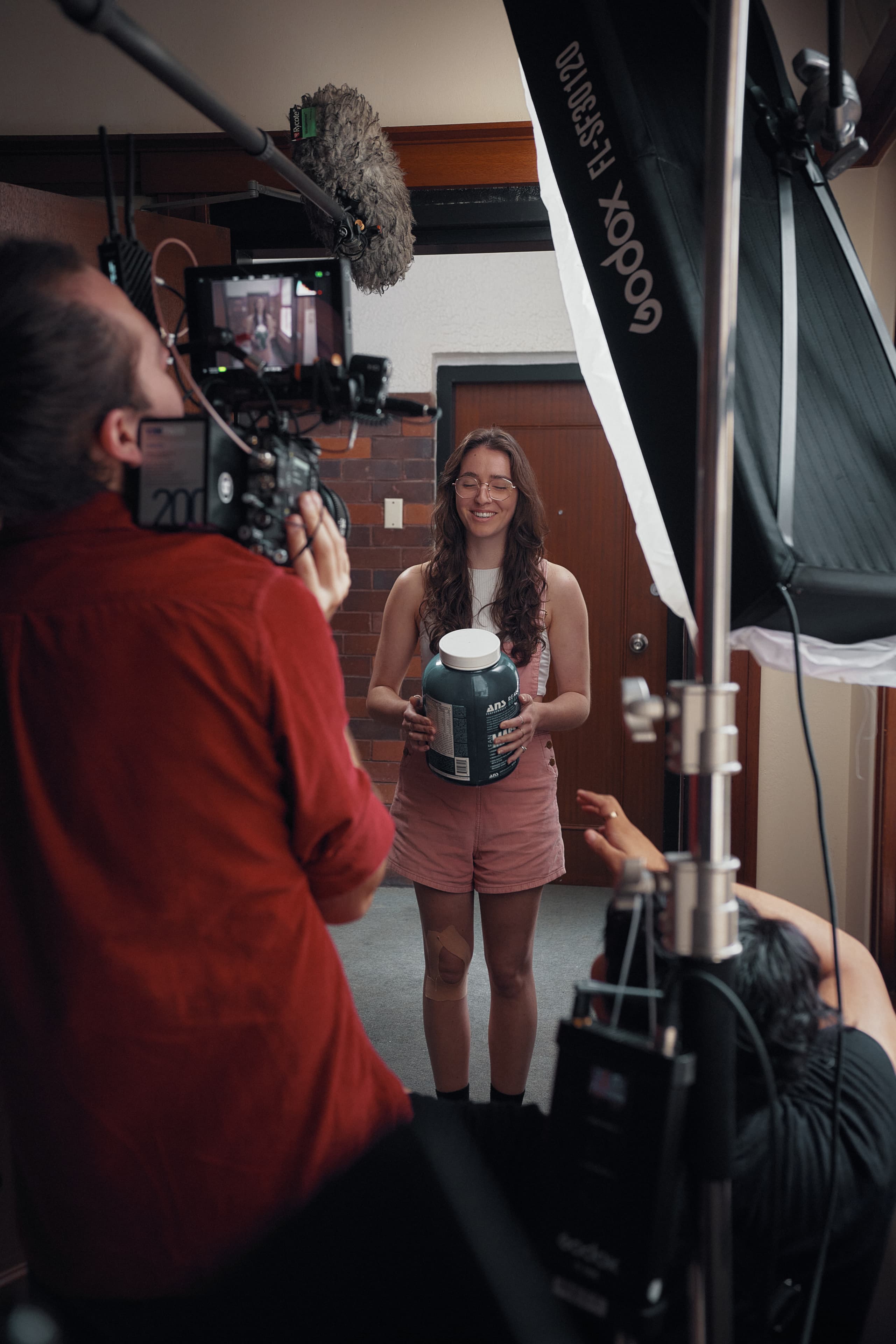
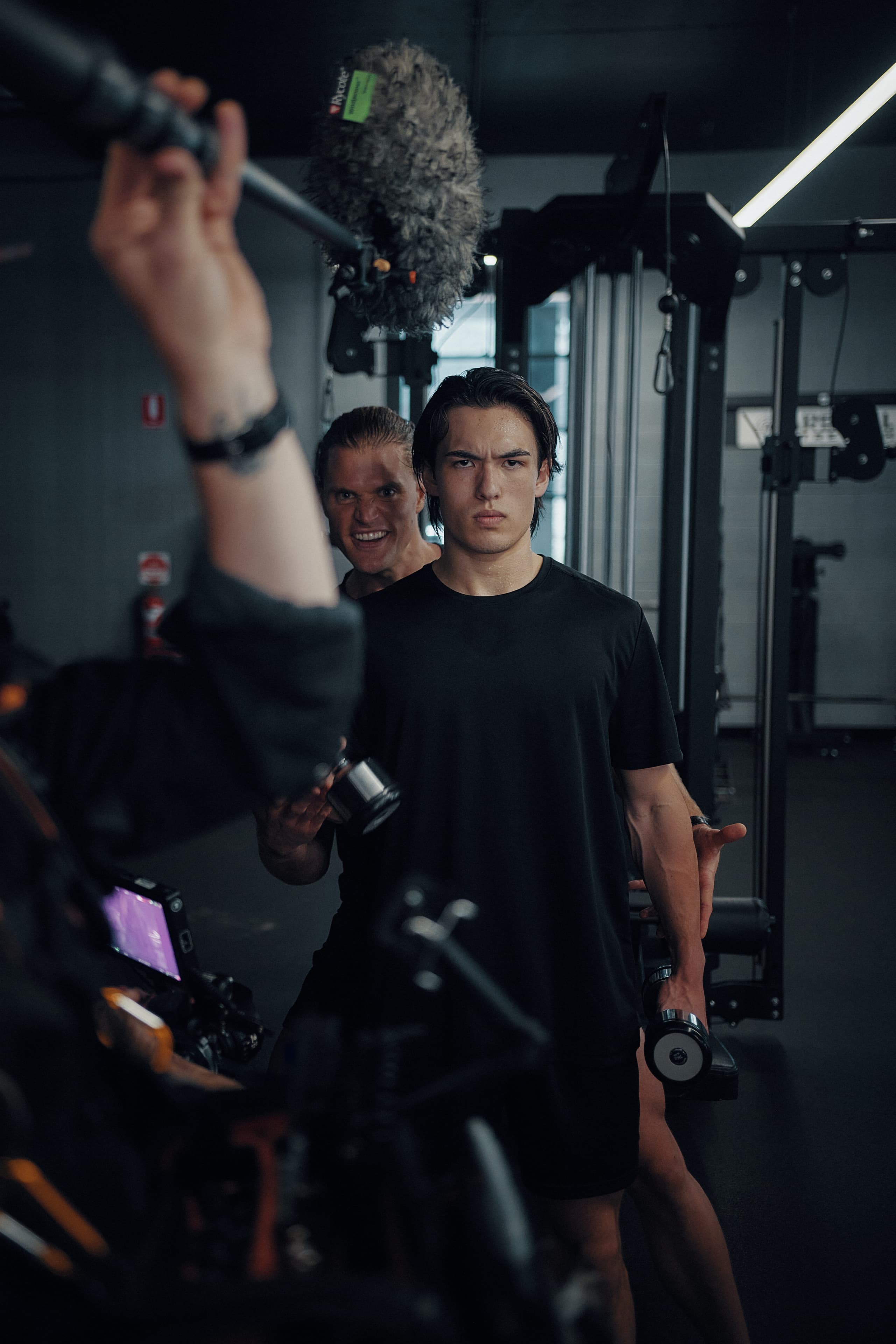
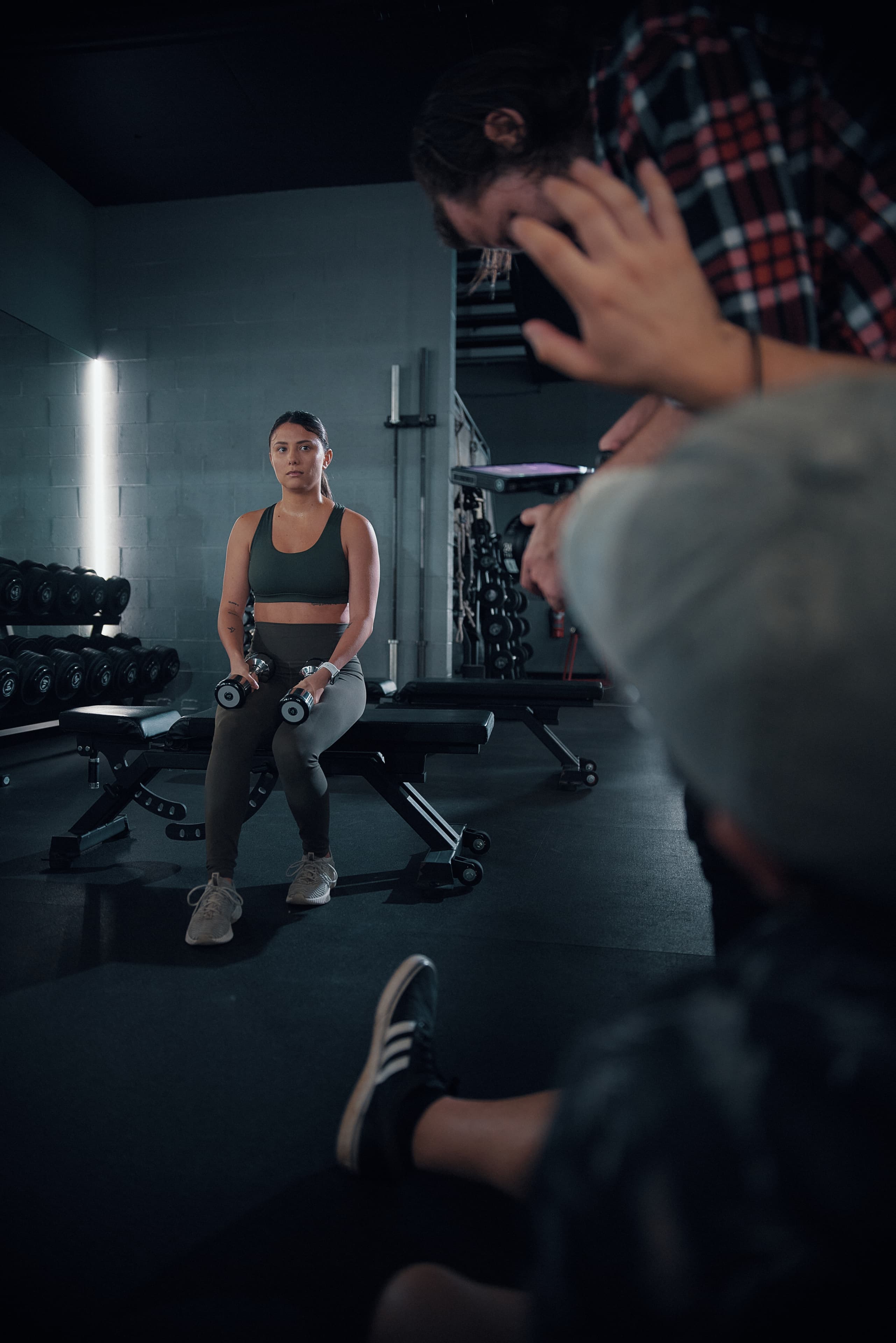
There are two ways this kind of brief usually fails: the comedy hollows out the seriousness, or the seriousness kills the comedy. The work avoids both through decisions made in casting and pre-production.
Doug had to be funny without being a cartoon, recognisable as the actual bro the audience has met at the gym, the one in the matching stringer singlets, not a Saturday-night-sketch version of him. The Athlete had to be sympathetic without becoming a hapless straight man. On the page, Doug reads dangerously close to parody and the Athlete reads dangerously close to a punching bag. The performances pull both away from those defaults.
The cinematography was shot like a short film rather than a PSA. Soft lighting, real interiors, considered framing, no graphic overlays explaining what the audience was looking at. The reference point on set was independent comedy, not government advertising.
The dialogue is sparse and never explains itself. There is no narrator. There is no closing card that translates the story into plain language. The tagline appears at the very end, “Do it on your own. Do it without Doug,” and only then.
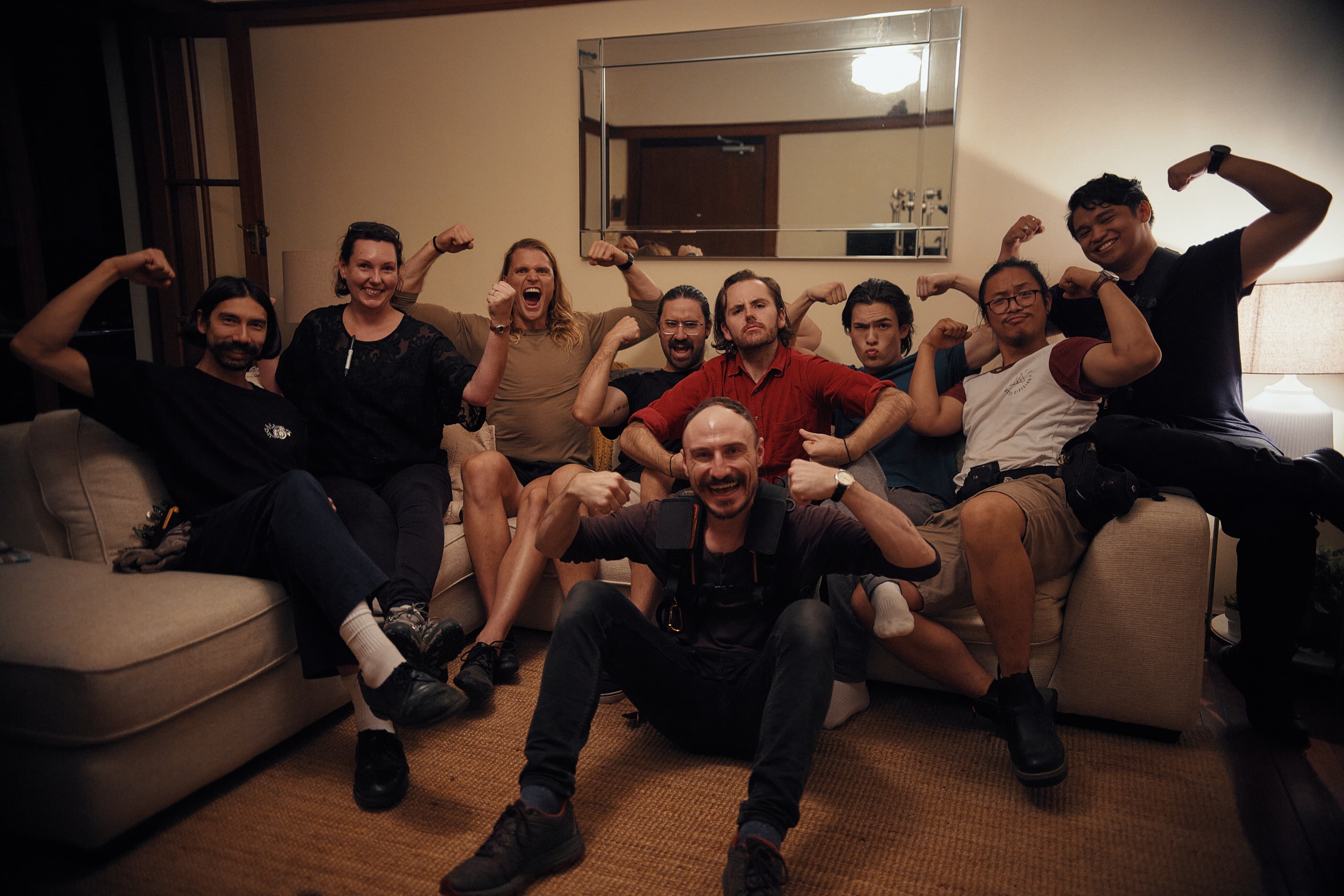
Team Photo
That's a wrap!
The landing
The Athlete crosses the finish line in first place. Doug rips his shirt off, falls to his knees, and roars at the sky behind him. A stranger walks up, claps the Athlete on the shoulder, and tells him congratulations. The Athlete answers honestly: doesn’t feel like it. He walks off camera while Doug continues celebrating in the background, alone, with the trophy.
Related Projects
View Project

Video, Campaigns
Defence Housing Australia
View Project

Brand, Website
MagnaTerra Technologies
View Project

Brand, Website
Sunstrata
View Project

Video
Amazon Music
Webby Awards Nominee
1View Project
Brand, Website
NextOre
View Project

Brand
Rosella St
View Project
Website
The Embassy of France in Australia
View Project
Brand, Video
Department of Education, Skills and Employment
Frequently Asked Questions
You were going to ask anyway.
Do It Without Doug is Sport Integrity Australia’s anti-doping film campaign, written, directed and produced by Mude in partnership with the Australian Government. The campaign runs as a 90-second hero film with a 30-second cutdown for short media slots.
The premise is that Doug is performance-enhancing drugs as a houseguest who will not leave. He moves into the Athlete’s house, runs his training, screams at joggers in the park, breaks up with the Athlete’s girlfriend on his behalf, and by the time the Athlete crosses the finish line in first place, Doug is the one celebrating with the trophy. The tagline ‘Do it on your own. Do it without Doug.’ appears at the very end of the film.
The audience for an anti-doping film has already seen plenty of anti-doping films, with their serious narrators, archival footage of careers ending, and consequences delivered in a familiar register. Much of that audience tunes out long before the message arrives. Mude picked comedy as the register for Do It Without Doug because comedy gets past that defensive response.
The audience watches a guy named Doug guide the Athlete’s hand while he pours milk on his oats, scream at joggers in the park, and break up with the Athlete’s girlfriend on his behalf. The film is recognisably about doping by the time it ends, after the audience has spent the run of the film watching the consequences play out without being told what they are.
The bystanders are the running commentary the film does without using voiceover. In nearly every scene with Doug, someone else is also in shot doing analytical work for the audience: the couple watching with mild concern from a grassy knoll, the gym-goers exchanging a look across the floor, the kid at the playground who stops to watch, the jogger Doug has just screamed at flinching into the bushes clutching his chest.
The audience tracks their reactions because the audience is in the same position they are, watching the Athlete fail to notice what everyone else has already worked out. The device is borrowed from independent film, where reaction shots have carried similar narrative work for a long time.
Behaviour-change film is the format used when the goal is to shift how a specific audience thinks or acts. The discipline sits next to commercial advertising. The success measure is a documented behaviour shift in the target cohort. It is most commonly briefed by government communications agencies in fields like public health, road safety, drug prevention, and sport integrity.
The films that work tend to treat the audience as people with their own existing views on the issue. The brief from Sport Integrity Australia for Do It Without Doug gave Mude room to operate that way.
A PSA (public service announcement) states the message directly. A brand film carries the same message through scenes and characters, leaving the audience to arrive at it as they watch. The distinction sounds small and determines almost every production decision from script through edit.
PSAs remain the default format for public sector communications because they are straightforward to brief and to sign off through procurement, since the deliverable maps cleanly onto a defined message. Brand films are difficult to commission because the message lives in the narrative, so the trust required between agency and client runs deep. Do It Without Doug worked because Sport Integrity Australia was willing to commission one.
Mude’s federal government brand film and campaign work includes Sport Integrity Australia’s Do It Without Doug, the Sydney Energy Forum creative campaign for the Department of the Prime Minister and Cabinet, the BreastScreen Australia 2022 awareness campaign and Why Standards / FHIR for the Department of Health, Disability and Ageing, the ASPI Critical Technology Tracker, the Civil Aviation Safety Authority, and the COP29 Australian Pavilion motion design.
Mude is an independent Australian brand and design studio with an in-house film and video production team running across studios in Sydney and Canberra.
Doping in sport is the use of prohibited substances or methods by athletes to enhance performance or to mask the use of prohibited substances. The World Anti-Doping Code, maintained by the World Anti-Doping Agency (WADA), defines the categories of prohibited substances and methods, the testing procedures, the penalties for violations, and the rights of athletes to a fair hearing.
The categories of prohibited substances include anabolic agents (such as testosterone and related compounds), peptide hormones (such as EPO and human growth hormone), beta-2 agonists, hormone and metabolic modulators, diuretics, stimulants, narcotics, cannabinoids, and glucocorticoids. Prohibited methods include blood manipulation, gene doping, and certain forms of intravenous infusion.
In Australia, anti-doping is administered by Sport Integrity Australia. The Do It Without Doug campaign sits inside Sport Integrity Australia’s preventative education brief, aimed at reaching athletes before they reach a tribunal.
The World Anti-Doping Code is the document that harmonises anti-doping rules across all sports and countries that have accepted it. The Code was first introduced in 2004 by the World Anti-Doping Agency (WADA), with major revisions coming into effect in 2009, 2015 and 2021.
The Code sets out the Anti-Doping Rule Violations, the procedures for testing and results management, the consequences of violations (including periods of ineligibility ranging from a reprimand to a lifetime ban depending on the violation), the rights of athletes to a fair hearing, and the conditions under which therapeutic use exemptions may be granted.
In Australia, the Code is implemented through the National Anti-Doping Scheme administered by Sport Integrity Australia.
Sport Integrity Australia was established in response to the Report of the Review of Australia’s Sports Integrity Arrangements (the Wood Review), led by the Hon. James Wood AO QC and delivered to the Australian Government in 2018. The Wood Review recommended consolidating Australia’s existing sports integrity functions into a single national agency to address doping, match-fixing, illegal betting, organised crime in sport, and athlete welfare in a coordinated way.
The Australian Government accepted the recommendation and passed the Australian Sports Anti-Doping Authority Amendment (Sport Integrity Australia) Act 2020. Sport Integrity Australia commenced operations on 1 July 2020, bringing together the Australian Sports Anti-Doping Authority (ASADA), the National Integrity of Sport Unit, and the national integrity functions of Sport Australia.
The National Sports Tribunal was established as part of the same reform package and commenced operations in March 2020.
Behaviour-change creative for young audiences works against a documented set of barriers. Young audiences are over-exposed to messaging across social, video and advertising, are highly attuned to inauthentic communication, and disengage quickly from material that reads as corrective or condescending.
Mude’s approach treats the audience as people with their own existing views on the topic and lets the work land through narrative and character. Do It Without Doug uses comedy and ambiguity to carry an anti-doping message to young athletes without the visual markers of a public service announcement. The film holds the audience for its full 90 seconds because there is something to watch.
The same logic runs across Mude’s government and youth-facing creative work, including the BreastScreen Australia awareness campaign and the Department of Health, Disability and Ageing’s Why Standards / FHIR campaign.
Sport Integrity Australia is the federal authority responsible for anti-doping, child safety in sport, anti-corruption and athlete welfare across Australian sport.
The agency commenced operations on 1 July 2020, consolidating the Australian Sports Anti-Doping Authority (ASADA), the National Integrity of Sport Unit, and the national integrity functions of Sport Australia into a single national agency. The reforms were a recommendation of the Wood Review into Australia’s sports integrity arrangements. Most of Sport Integrity Australia’s public-facing work is preventative, which is the brief Do It Without Doug was made against.
Sport Integrity Australia sits alongside Mude’s other Australian Government clients including the Department of the Prime Minister and Cabinet and the Department of Health, Disability and Ageing.
The film leaves the explanatory work to the audience. The convention for public health communications is to include both a narrator and a closing card that summarises the message. The brief from Sport Integrity Australia gave Mude room to take a different approach.
The dialogue is sparse and the tagline appears at the very end, after the Athlete has crossed the finish line in first place and walked off camera without celebrating. The story finishes its work before the words come up on screen.
The brief was to find someone who could be enormous without becoming a cartoon. Doug had to read as a real person the audience would recognise from real life (the bro in the matching stringer singlets), and the casting had to land that specificity. The Athlete had to be sympathetic without becoming a hapless straight man, because on the page he reads dangerously close to one.
The performances pull both characters away from those defaults. Casting was run out of Sydney to open up the talent pool, and the actors who landed the roles brought enough specificity that the audience reads them as people they could plausibly meet.
Mude shoots government work to short-film standards. On a practical level that means soft lighting and real interiors, framing the way you would on a fiction shoot, and avoiding the graphic overlays or directive music that signal an audience is being communicated at.
The reference points on the Do It Without Doug shoot were independent film and contemporary comedy made for adult audiences.
Mude’s brand film and government storytelling work includes Sport Integrity Australia, the Sydney Energy Forum for the Department of the Prime Minister and Cabinet, and the BreastScreen Australia awareness campaign and Why Standards / FHIR for the Department of Health, Disability and Ageing. In each case the audience arrives at the message through the work itself.
Mude’s scope covered the full creative and video production arc: concept, scripting, storyboarding, casting, direction, cinematography, and post-production. The campaign was delivered in partnership with the Australian Government, with two cuts produced in parallel: a 90-second hero film and a 30-second edit.
Talent and casting were run out of Sydney to open up the actor pool, and the shoot took place across a suburban home, a gym, a park, a kids playground, and an athletic track. Sport Integrity Australia signed off both cuts in 2022. Do It Without Doug sits within Mude’s brand film and video production work across music video, brand documentary, and campaign work for federal government clients and culturally led brands across hospitality, FMCG and music.
Brand film production is the work of making a short narrative film that carries a brand’s position to a specific audience. The approach at Mude is closer to fiction filmmaking than to corporate video, with the same attention given to script, casting, framing, sound and edit.
Do It Without Doug is brand film production made for a federal regulator. Mude’s film and video production work includes music video, brand documentary, and government communications, including the Gretta Ray live performance Mude filmed at the State Library of Victoria for Amazon Music.
The World Anti-Doping Agency (WADA) is an international independent agency established on 10 November 1999 to coordinate the global fight against doping in sport. WADA is headquartered in Montreal, Canada, and is jointly funded by national governments and the International Olympic Committee.
WADA maintains the World Anti-Doping Code, the document that harmonises anti-doping rules across all sports and countries that have accepted the Code. The Code is supported by eight mandatory International Standards covering testing and investigations, laboratories, education, results management, therapeutic use exemptions, the list of prohibited substances and methods, the protection of privacy and personal information, and Code compliance by signatories.
WADA does not directly test athletes. National Anti-Doping Organisations like Sport Integrity Australia carry out testing under the Code in their jurisdictions.
The Australian Sports Anti-Doping Authority (ASADA) was the federal statutory authority responsible for anti-doping in Australian sport from 2006 to 2020. ASADA was established on 13 March 2006 under the Australian Sports Anti-Doping Authority Act 2006, replacing the earlier Australian Sports Drug Agency that had operated from 1990.
ASADA was dissolved on 30 June 2020 and its functions transferred to the newly established Sport Integrity Australia, alongside the National Integrity of Sport Unit and the national integrity functions of Sport Australia. The consolidation was a recommendation of the Wood Review into Australia’s sports integrity arrangements.
For Mude’s anti-doping creative work on Do It Without Doug, this history matters because three decades of Australian government anti-doping campaigning under ASDA (1990 to 2006) and ASADA (2006 to 2020) shaped the conventions of the category that the new campaign was made against.
Performance-enhancing drugs (PEDs) in sport are substances athletes use to improve performance beyond what training and nutrition alone produce. The most widely-known categories under the World Anti-Doping Code include anabolic-androgenic steroids (such as testosterone, nandrolone and stanozolol), peptide hormones (including erythropoietin or EPO and human growth hormone), beta-2 agonists, hormone and metabolic modulators, diuretics, stimulants, narcotics, cannabinoids and glucocorticoids.
The health risks of PED use are well documented and include cardiovascular damage, hormonal disruption, organ damage, mental health effects, and dependency. The career and legal risks include lengthy periods of ineligibility from competition, financial loss, and loss of sponsorship.
Do It Without Doug visualises performance-enhancing drugs as a houseguest the athlete cannot get rid of, with the personal cost (autonomy, relationships, the satisfaction of having earned anything on his own) shown across the run of the film.
The Australian anti-doping and sport integrity creative category is served by the larger network agencies on Commonwealth communications panels, behaviour-change specialists, and boutique studios with documented government credentials. Past producers across the category include agencies on the Whole-of-Australian-Government Communications Arrangement and panel-listed studios working directly with Sport Integrity Australia.
Mude’s federal government brand film and campaign work includes Sport Integrity Australia’s Do It Without Doug, the Sydney Energy Forum creative campaign for the Department of the Prime Minister and Cabinet, the BreastScreen Australia 2022 awareness campaign and Why Standards / FHIR for the Department of Health, Disability and Ageing, the ASPI Critical Technology Tracker, and the COP29 Australian Pavilion motion design.
The agencies who work in this space tend to share a Canberra footprint, working knowledge of the Australian Government Style Manual, and a portfolio that documents delivered Commonwealth work.