Department of Health, Disability & Ageing
A production showing the art of the possible, and a vision for a more connected healthcare system.
An event film suite for the Department of Health, Disability and Ageing’s Connected Care Demonstrator
The Department of Health, Disability and Ageing came to us for as a continuation of the ‘Why Standards’ campaign behind Australia’s connected-care reform, the work to get a person’s health records to follow them through the system. Right now those records sit wherever they were first written down, and the patient has to keep retelling their story to every new clinician on their healthcare journey.
We built the Department the creative for their Connected Care Demonstrator at QT Hotel Canberra on 11 November 2025, held together by a suite of films we developed, shot, edited, animated and designed. Seventeen of the country’s senior digital health people sat for interviews, among them Grahame Grieve, who created the FHIR standards the whole reform is based on. Two more films followed a pair of patients, played by actors, through the system as it works now and as it would work once their healthcare records move with them.
The background
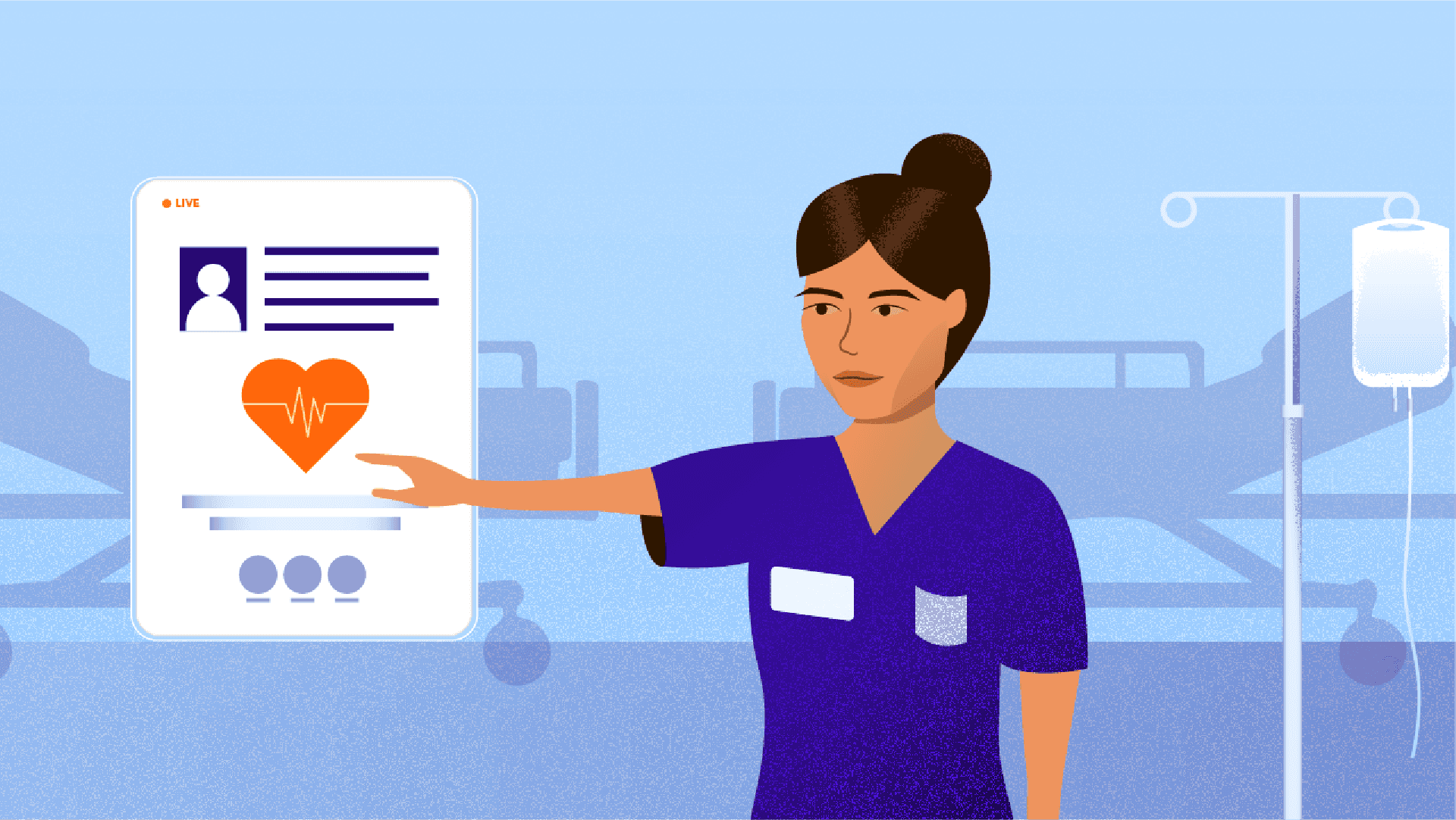
A quick version of the problem, because the films assume you don’t already have it. Your health information exists. It’s just spread across every place that has ever treated you, and none of those systems were built to share health data with the others.
Your GP has part of the picture; most of the rest is scattered across the other clinics and hospitals you’ve been to, and the pieces rarely move between them. So your file stays where it was made, and you become the one who retells your story from one waiting room to the next, usually while you’re unwell and least able to tell it accurately.
In practice that means repeating yourself at every new clinician and being sent for the same blood test or scan twice because nobody can find the first result. Referrals and discharge summaries still travel by fax (yes, seriously) and email, and can take days or weeks to arrive, if they arrive intact at all.
The people it costs most are the ones with the most to manage: the elderly, people with chronic and complex conditions, carers holding it together for someone else, and anyone who don’t have the mental or physical capacity to advocate for themselves.
Connected care is what the system looks like when that problem is solved. It means a person’s health information follows them through the system, so that every clinician treating them can see the history relevant to what they’re doing, right down to a surgeon having the scans and current medicines in front of them before an operation, and everyone involved works from the same shared care plan.
The information moves only where it’s needed, with the patient’s consent, and the patient, along with a family member or carer they nominate, can see the same record the clinicians do. The point of it is plain enough: care that’s safer and better coordinated, with the patient no longer acting as the courier for their own history.
Getting there is mostly a technical problem, and a fairly dull one. Every clinic and hospital runs software it bought from some vendor at some point, and each system stores information its own way, so a medication or a result written in one doesn’t reliably read in the next.
That is what standards fix. A standard sets a shared structure for clinical information, a common way to write down the basic units of care, a medication, an allergy, a result, a referral, so that a record created in one place can be opened and understood in another.
FHIR is the standard the Australian reform is built on, the agreed format for moving health information between systems. Alongside it sits AUCDI, the Australian Core Data for Interoperability, a national dataset that clinicians, industry, government and consumers have agreed on, so that everyone captures the same core information in the same way. Once it is in place, the infrastructure and everything built on top of it become possible.
Australia is further along with this than most countries. The groundwork is largely in place: a rebuilt My Health Record, an app people actually use, national identifiers for patients and providers, a national provider directory, and Sharing by Default legislation that pushes results into your record without anyone asking.
The infrastructure is the Australian Digital Health Agency’s work; the standards come out of an accelerator called Sparked, run jointly by the Department, the Agency, CSIRO and HL7. We had already made multiple films for this program, the explainer that introduced FHIR to the sector, and this work is the phase that followed it.
The Vision
The art of the possible, and the future of connected care
The brief
The earlier films had explained what FHIR is. This phase had to move past definition to consequence, to what the standards actually change for the people whose budgets and decisions keep the reform alive. The program had spent a lot of energy explaining how the standards work, and the people who fund them still couldn’t see what the standards were for. The risk in that was real: a reform on this scale runs on sustained funding and political will, and if the people holding both stopped seeing the point, its momentum could stall.
What the Department needed was for those people to want the thing built, and to see their own work somewhere inside it. That meant taking the campaign past the standards themselves to the people the standards are for, and adding the part the program had never had: a human story, someone you watch living inside the system as it is now and as it could be.
So the job was to show a connected health system clearly enough that wanting it became the obvious response, with the audience’s own work visible in the picture.
It began as the So What campaign, a set of films aimed at moving those internal audiences. The films came first, and the event grew up around them: the Department staged a full day, and the campaign became the way people walked into it.
Demonstrator Event Video
Showcasing why the status quo is not acceptable
The films
There are five core films, running to about twenty-nine minutes together, and the event played them in a set order. Those five also sat alongside an invitation film built to tell people plainly what the day would be and why it was worth their time, a short what-to-expect film for the entry, event-highlight cuts, and a run of vox pops with people from across the sector.
Where Are We Now communicated how far this program had come in such a short amount of time. It interviews the people building the reform and how far Australia has progressed. Behind the standards is Sparked, the accelerator that has pulled hundreds of experts together through its technical and clinical reference groups, more than twenty-four thousand hours of donated work by the film’s count. Kate Ebrill, from CSIRO’s Australian e-Health Research Centre, says other countries keep asking how Australia has moved this quickly, and puts it down to government, industry, clinicians and consumers working together: “Australia is getting it done.”
The Vision video opens with Louise Schaper (Department of Health, Disability & Aging) “we have a healthcare system that doesn’t remember us”. Ryan Mavin (Australian Digital Health Agency)talks about his son, who lives with chronic conditions, and the “manilla folder” the family carries to every clinician in their care team. Nicole Gartrell (Australian Digital Health Agency) carries the same kind of folder for her elderly mother, taking notes and advocating at each appointment, and what’s at stake for her is plain: if the reform stalls, she says, “we’re really abandoning people like my mother, because she’s not able to advocate for herself.”
Seventeen of the most senior people in Australian digital health agreed to appear, up from ten on the first film, and one of them is Grahame Grieve, who created FHIR.
The health consumer stories coming to life
Two of the films follow patients through the system, intercut into a single film that runs a little over eight minutes. Both characters come straight out of the Department’s own user research, and the demonstrator opened by telling the room they were actors, playing stories common to many Australians. Both journeys were also reviewed for clinical accuracy before anything was shot, and that rigour is what lets them name real settings and real clinical steps without overstating any of it.
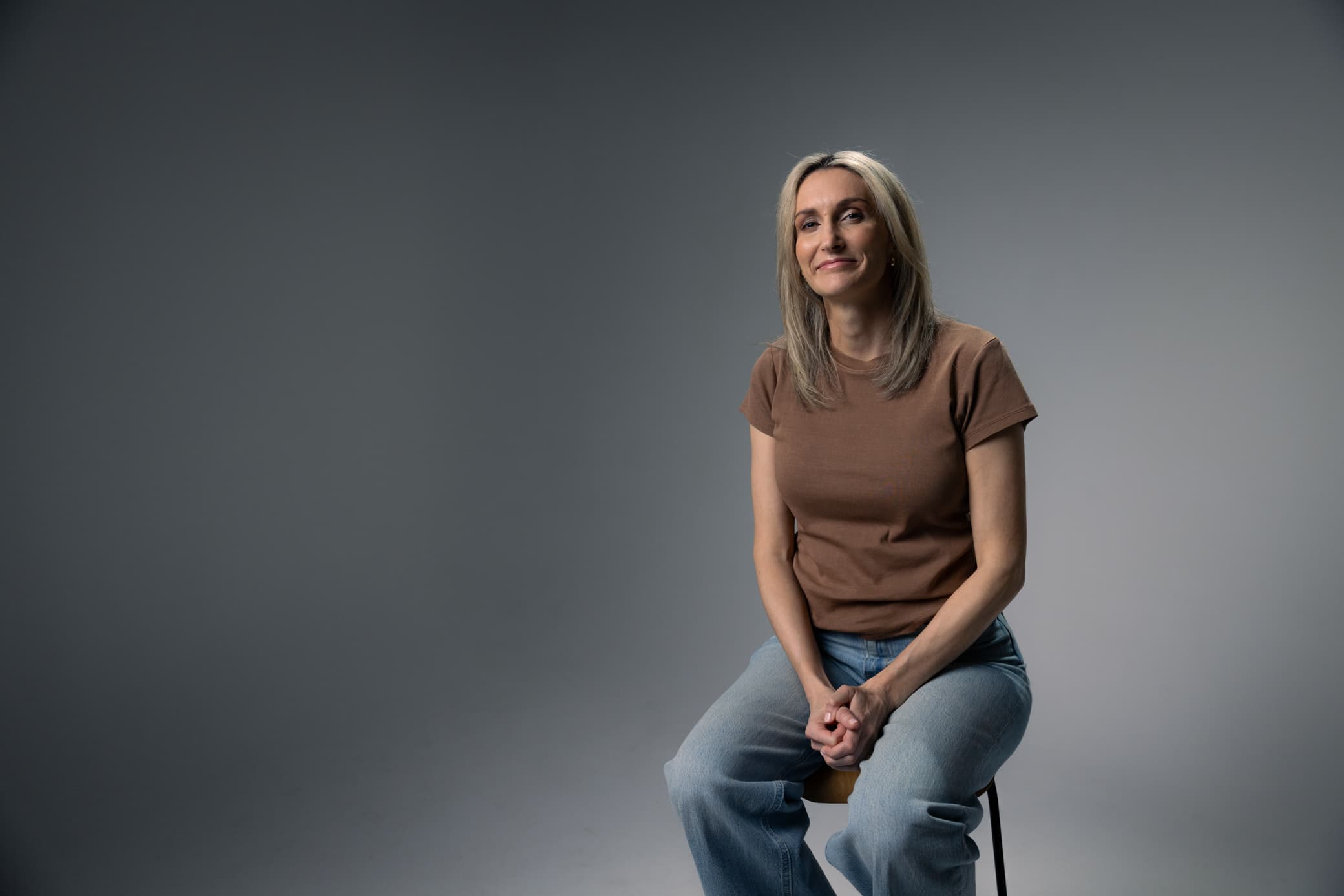
Alex runs a café in Bathurst and has two school-age kids: early mornings at the café, school drop-off, weekend sport. In her early twenties she went in for something minor, a specialist connected the dots, and within two weeks she was in surgery.
What followed was years of disjointed care, moving between GPs who each had part of her history and none of whom had all of it, telling the story again at every appointment and never quite sure she’d got it right. In the film she says plainly that she isn’t the doctor, and that “I can’t just carry around all this information all the time.” What she wants is to know what’s happening and be able to plan around it. In the connected version of her story the file is already open on the screen of whichever clinician she’s seeing, and she isn’t the one carrying it between rooms.
The actor who played Alex has lived with a serious health condition of her own. During the shoot it surfaced, and the emotion in her takes was real. We stopped, asked her, and with her agreement cut a second version of the film that drew on her own experience alongside the script. We’d cast her to make the story believable, and with her consent her own life went into the version we cut.
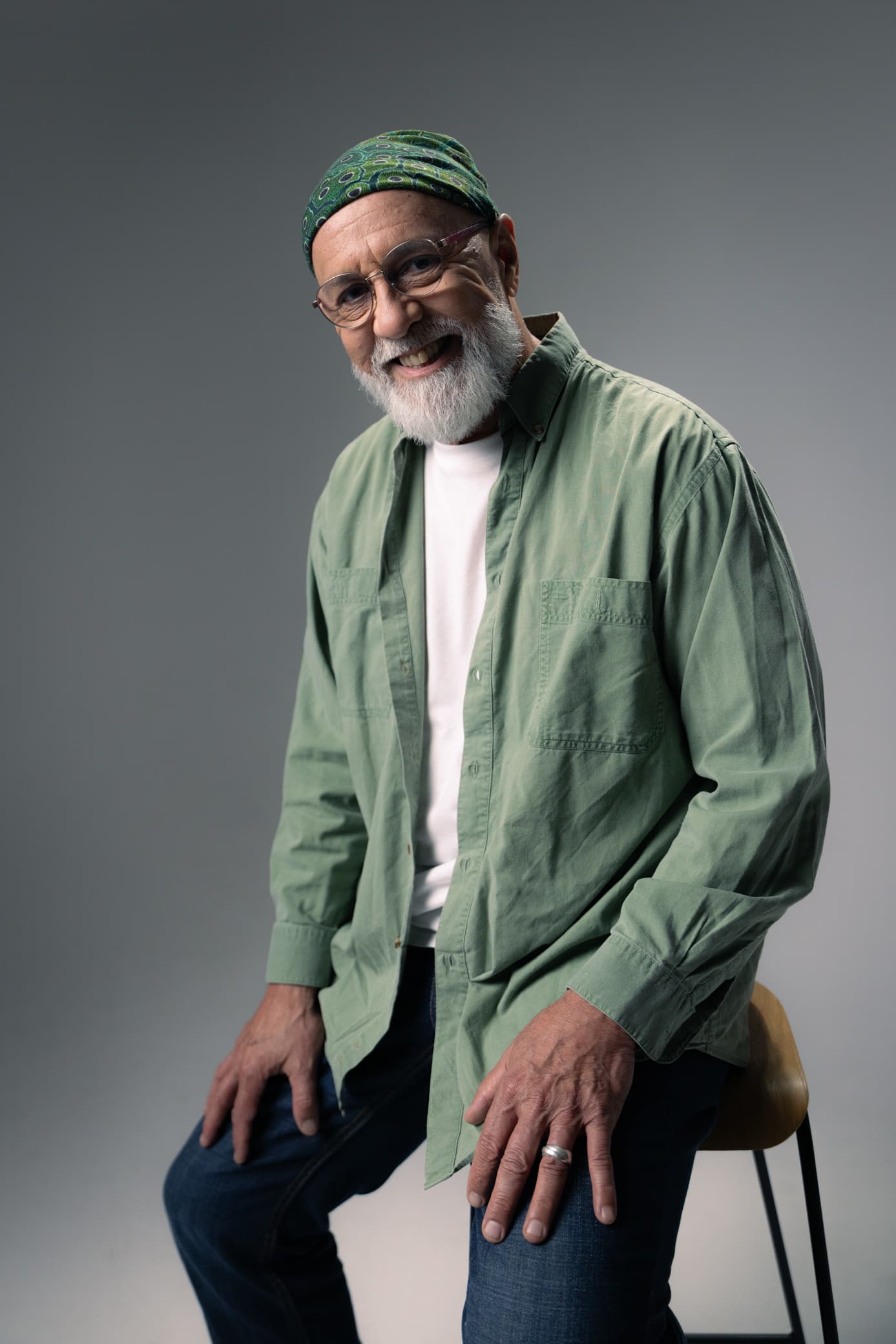
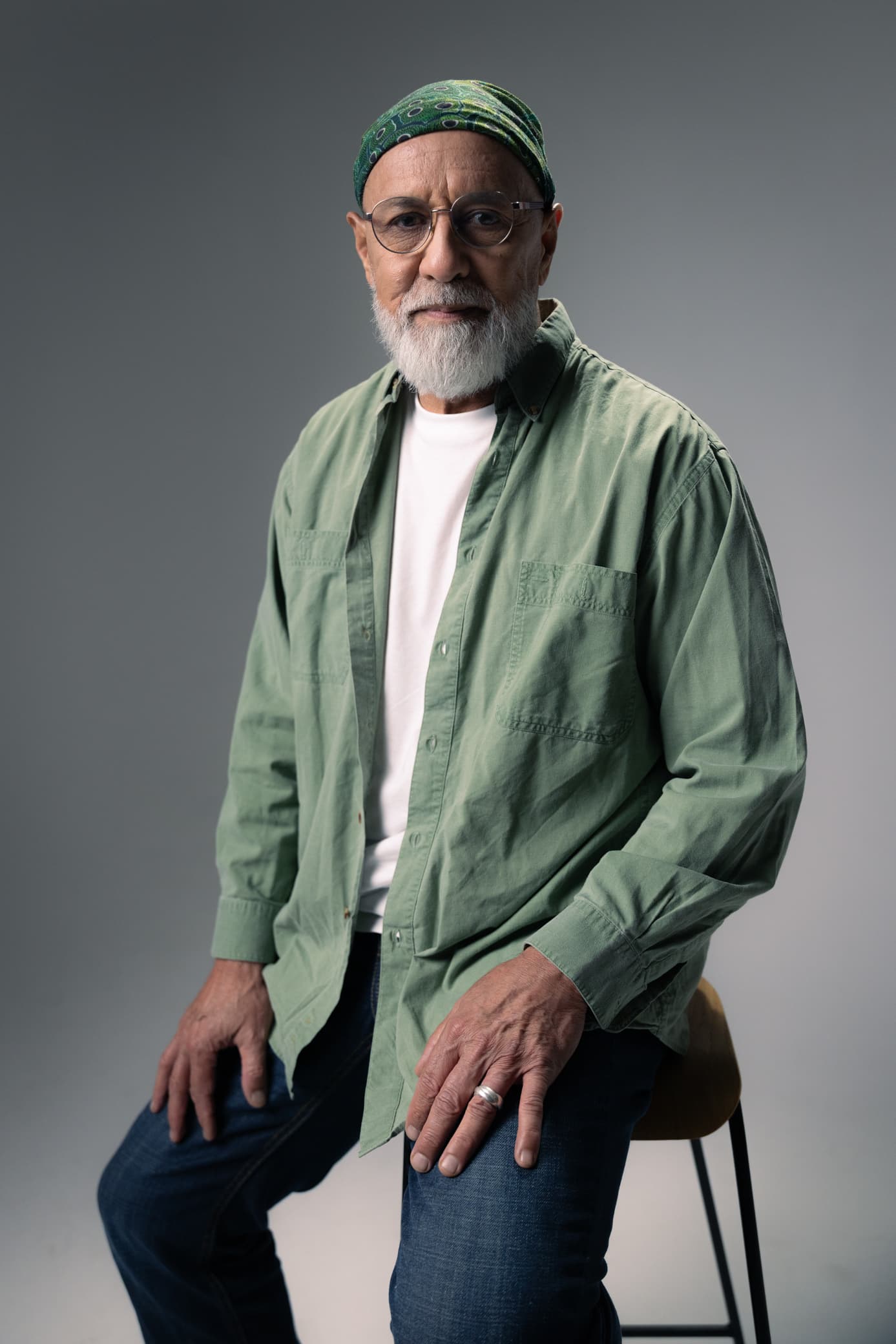
Yuri came to Australia in the late 1980s to work the gold fields around Kalgoorlie as a mining engineer, and it’s been home ever since. He cared for his wife through her final illness and let his own health slide while he did, and was later diagnosed with diabetes and kidney disease. His daughter lives in Perth and keeps an eye on him from there. English is his second language, and when a clinician speaks too quickly the detail that matters to him can be lost in translation.
Yuri is the case for records that cross state lines, because his life already does. His specialists are in Perth, and he has been hospitalised suddenly in Adelaide, repeating his story over and over to people who couldn’t see what his GP and specialists already held. In the film he asks the plain question, “how come you don’t have that information?”
The connected version of his story would mean the the hospital treating him can pull the scans he’d had in Western Australia, the discharge it writes is visible in real time to his GP back in Kalgoorlie, and his daughter in Perth sees the same record. He doesn’t have to tell his whole story again from a hospital bed, and, in his words, his daughter isn’t so anxious.
The whole event was pitched as the art of the possible, a way to show a future that doesn’t fully exist yet without dressing it up as a finished product or a business case. The room was full of people who have sat through a lot of confident promises about technology, and they were more likely to trust a demonstration that admitted it was only that.
How we made it
The films were shot across three cities and pulled together over about two months. The leadership interviews were filmed in Brisbane in early October 2025, the two consumer films in Sydney a few days after that, the event coverage and the jurisdictional interviews in Canberra in November 2025, and one final interview back at our own studio in Sydney after that. None of it was a single neat shoot. It came together in pieces, each one set up to be the least disruptive way to get the people we needed on camera.
The leadership interviews were the biggest single capture, and we got them in one day by riding a meeting that was already happening. The cross-agency group, people from the Department, the Agency, CSIRO and Sparked, had gathered at the Agency’s Brisbane office, to plan the event, so we set up there, booked three rooms so makeup and lighting had space to work, and filmed around the planning sessions.
The two consumer films were a separate shoot, a single weekend in Sydney, one actor on the Saturday and the other on the Monday. Most of that was casting. We cast from self-tapes and kept the brief to the actors loose, asking them to make the health story feel true and not to worry about the exact wording, which was going to change anyway. On the day we directed for that same truth and gave them room to improvise, shooting in real domestic settings and taking the stills of both characters while we were there.
We were on site for the Demonstrator Event at QT Canberra from early morning, recording the live clinical walkthroughs that we later rebuilt into films, and gathering the jurisdictional interviews for the state-interviews film. The event was a showcase and a set at the same time.
Not all of those interviews happened on the day. John Lambert, Tasmania’s Chief Clinical Information Officer, was a late addition, and when his flights fell through we filmed him at our own Sydney studio a couple of weeks after the event, at short notice, the same day.
Then it came together in the edit. The animation was built in the few weeks before the event, and the rest of the suite was finished off that December. The interview films were assembled as much as they were captured: each leader supered by name and organisation, their answers cut against animation that carries the legislation and the figures the interviews didn’t always reach.
The outcome
The films kept being used after the event finished. In the months that followed, the Department drew on them in other presentations and ran a second demonstrator off the back of the existing suite, and it commissioned new patient stories to extend the set. That reuse was built into how we made the films.
Cast and credits
Seventeen senior digital health leaders appeared in the interviews, including Grahame Grieve, who created FHIR.
- Australian Digital Health Agency: Ryan Mavin, Nicole Gartrell, Darian Eckersley, Megan Doherty, Dr Chris Moy
- Department of Health, Disability and Ageing: David Heacock, Jeremy Sullivan, Dr Louise Schaper
- CSIRO (Sparked FHIR Accelerator and the Australian e-Health Research Centre): Kate Ebrill, Danielle Tavares-Rixon, Kylynn Loi
- HL7: Grahame Grieve
- Australian Institute of Health and Welfare: Dr Zoran Bolevich
- Telstra Health: Rupert Lee
- Tasmanian Department of Health: Dr John Lambert, Chief Clinical Information Officer
- eHealth Queensland: Tanya Kelly, Acting Deputy Director-General
- Health consumer leadership: Harry Iles-Mann
The clinical walkthroughs were led by practising clinicians across general practice, hospital medicine, pharmacy, allied health, aged care and emergency care.
Mude was the creative, campaign, film, animation and design partner. The standards and the policy work are the Department’s, with the Australian Digital Health Agency, CSIRO and HL7.
Related Projects
View Project
Video, Graphic Design
Department of Health, Disability and Ageing
View Project

Brand, Graphic Design
Sun Baby
View Project

Brand, Video
Dr Aya Naj
View Project
Brand, Graphic Design
Australian Medical Council
View Project

Website, Photography
Cosmetic Connection
View Project
Video
Department of Health, Disability and Ageing
View Project
Video, Campaigns
Defence Housing Australia
View Project
Video
Australian Government
Frequently Asked Questions
You were going to ask anyway
Event films can be reused after the event when they are planned for it from the start. That means filming interviews as separate close-ups and wides so they can be recut, and shooting the live scenarios station by station. The entry films are built to work in a briefing or on an intranet. Mude built the Connected Care Demonstrator suite this way, and the material was used to brief other groups after the event, with a second demonstrator running on the existing films. Reuse depends on the footage being captured in usable pieces on the day, because material shot for a single fixed edit is hard to repurpose later.
A live event works for a government reform when the benefit is real and hard to convey in a written briefing. Putting people through a walkthrough of the future state creates pull, because they can see the reform doing something for their own work. The Connected Care Demonstrator did this for connected health data, moving policy officers, program teams and executives through simulated clinical settings alongside films that showed what a connected system changes for a patient. An event reaches only the people in the room on the day, so Mude built the films to carry the case beyond it.
Immersive event storytelling for government puts decision-makers inside a future service so they can picture their own work in it. The format combines a live walkthrough of simulated settings with films that carry the wider story, so the audience experiences the idea directly. Mude made the films for the Department of Health, Disability and Ageing’s Connected Care Demonstrator, where practising clinicians guided small groups through simulated settings such as a GP clinic, a hospital and an aged care service, and the films held the event together. The format suits a reform that is abstract on paper, such as health data following a patient between care settings.
A creative partner for a government demonstrator event makes the films, the narration, the animation and the graphic system that hold the day together. The work covers scripting, shooting, editing, animation and design, plus filming the live scenarios as they happen so they can be reused later. For the Connected Care Demonstrator, Mude was the creative, campaign, film, animation and design partner, with a suite built around five core films and interviews across seventeen digital health leaders, including Grahame Grieve, the creator of FHIR. The standards and the policy behind the event belong to the Department of Health, Disability and Ageing, the Australian Digital Health Agency, CSIRO and HL7. The creative partner is responsible for the communication and the films.
A patient story can be told without filming real patients by building personas from user research and performing them with actors, with the audience told clearly that the people are characters. This protects real patients’ privacy and lets the film cover a full path through the system that no single person’s footage would hold. In Mude’s Connected Care Demonstrator films, Alex and Yuri are personas from the Department’s research, played by actors, and the narrator says so at the start. The films carry the emotional case for connected care and stay plain that they are a demonstration.
Using actors to tell patient stories is sound when the film is honest about it and the stories are grounded in real research. The disclosure has to be plain and early, so no viewer mistakes a performance for testimony. Mude’s Connected Care Demonstrator films name the two patients as characters played by actors in the narrator’s opening, and the personas come from the Department’s own user research. The films also state that the event is a demonstration and a sketch of what is possible, which keeps the whole piece honest with a senior audience.
State and territory interoperability in health means a person’s records can move across state borders so the clinician treating them can see their history. Each state runs its own electronic medical records, and those systems do not routinely share across borders today. Mude’s Connected Care Demonstrator films make this case through Yuri, who lives in Western Australia, has specialists in Perth and Adelaide, and has a fall while visiting Canberra. When the systems share, the hospital that treats him can see records his clinicians at home hold, so he does not have to retell his history from a hospital bed.
The films in a government event suite are usually a few minutes each, sized to the job each one does in the room. Short entry films set tone and vision, and a consumer story runs to several minutes because it follows a full patient arc. Mude’s Connected Care Demonstrator suite runs around twenty-nine minutes in total across five core films, with the consumer intercut at about eight minutes and the state interviews at about three. The length of each film is set by what it covers, so a suite does not have one fixed length.
A single shoot day can cover a sequence of short piece-to-camera interviews, with the number set by each person’s available time and the depth of each interview. Back-to-back filming in one room and questions fixed in advance keep the day moving. For the Connected Care Demonstrator, Mude filmed a cross-agency group of digital health leaders in one day in Brisbane, part of a suite that features seventeen leaders across the films. Some interviews still happen separately, such as the Tasmanian one filmed later in Mude’s Sydney studio, so a single day does not capture the whole cast.
Technical infrastructure lands with the people who fund it when the communication shows what it does for their own work, in their own language. Funders and executives respond to the consequence of a system, such as a patient who stops retelling their history at every appointment. Mude made this shift in the So What phase of the Connected Care work, moving policy, program and executive audiences from the definition of FHIR to its effect on their decisions. The films keep the claims within what the reform sets out to do, because a funding audience trusts a case that does not oversell.
A health story that asks people to trust it needs a real, directed performance and an honest disclosure that the people on screen are actors. Performers take direction to make a moment ring true, and a film can name them as characters so no viewer mistakes the story for testimony. Mude cast and directed the Connected Care Demonstrator consumer films for this reason: Alex and Yuri are played by actors briefed to make the health story believable, and the narrator introduces them as hypothetical Australians. AI video generation has a place in production for rough drafts and simple motion, and the human story at the centre of a health film still calls for a real performance and a clear disclosure.
Immersive event storytelling for government puts decision-makers inside a future service so they can picture their own work in it. The format combines a live walkthrough of simulated settings with films that carry the wider story, so the audience experiences the idea directly. Mude made the films for the Department of Health, Disability and Ageing’s Connected Care Demonstrator, where practising clinicians guided small groups through simulated settings such as a GP clinic, a hospital and an aged care service, and the films held the event together. The format suits a reform that is abstract on paper, such as health data following a patient between care settings.
Event films can be reused after the event when they are planned for it from the start. That means filming interviews as separate close-ups and wides so they can be recut, and shooting the live scenarios station by station. The entry films are built to work in a briefing or on an intranet. Mude built the Connected Care Demonstrator suite this way, and the material was used to brief other groups after the event, with a second demonstrator running on the existing films. Reuse depends on the footage being captured in usable pieces on the day, because material shot for a single fixed edit is hard to repurpose later.
A live event works for a government reform when the benefit is real and hard to convey in a written briefing. Putting people through a walkthrough of the future state creates pull, because they can see the reform doing something for their own work. The Connected Care Demonstrator did this for connected health data, moving policy officers, program teams and executives through simulated clinical settings alongside films that showed what a connected system changes for a patient. An event reaches only the people in the room on the day, so Mude built the films to carry the case beyond it.
A persona-based film tells the story of a representative person built from user research, so an audience can follow one human path through a system. The persona is drawn from real research findings and given a name, a place and a set of circumstances, then performed for camera. Mude made two persona films for the Connected Care Demonstrator: Alex, a café owner and mother of two in Bathurst, and Yuri, a former mining engineer in Kalgoorlie. Both personas came from the Department’s own user research, and the films state plainly that they are representative stories played by actors.
A persona film suits a story that needs to cross years, settings and outcomes that no single real patient could safely or practically film. It also suits sensitive subjects where a real person’s privacy matters. Mude used personas for the Connected Care Demonstrator because the story had to follow a patient from a first GP appointment through to aged care, across state borders, in one arc. Real testimony has its own strength for stories that sit in one person’s lived experience, and the films are explicit that Alex and Yuri are performed by actors.
A film discloses that it uses actors by stating it in the narration or on screen, early enough that the audience knows before any story begins. The wording should be direct, naming the people as characters or as performed stories. In the Connected Care Demonstrator consumer film, the narrator introduces Alex and Yuri as two hypothetical Australians played by actors, with stories common to many people. Mude keeps this disclosure in the body of the film, so it travels with the footage wherever the film is later used.
An event film suite is a set of films built to a shared system, each covering a different part of one story, made to run together at an event and to work on their own afterward. A single video covers one message in one piece. Mude built the Connected Care Demonstrator as a suite of five core films: a progress film, a future-state film, two audience films and an eight-minute consumer story, held together by a shared colour and graphic system. A single video covers a narrow brief well, and the Demonstrator needed films for several audiences and a live event, so the work was built as a suite.
Filming senior government officials efficiently means going to where they are already gathered and locking the interview questions before the day. Booking a single room and running piece-to-camera interviews back to back keeps each person’s time short. Mude shot the Connected Care Demonstrator leadership interviews in a single day at the Australian Digital Health Agency’s Brisbane office, on the seventeenth floor, because the cross-agency group was already there for event planning, so nobody travelled twice. The questions were locked two days out. A schedule like this depends on the group being in one place, so a backup plan matters when travel falls through.
An internal-engagement campaign moves the people inside an organisation from knowing about a piece of work to wanting it built. It targets internal audiences such as policy teams, program teams and executives, and it speaks to what the work changes for their own jobs. Mude ran this for the Department of Health, Disability and Ageing’s connected-care reform through the So What phase, which set out to move audiences from “what is FHIR” to “what FHIR does for my work”. The campaign creates pull from inside, and it works only when the underlying reform genuinely does something for those audiences.
Healthcare video production adds clinical accuracy, patient privacy and the handling of sensitive subjects to the usual work of scripting, filming and editing. The medical detail in a script gets checked, real patients can be represented by personas built from research, and a film states clearly when the people on screen are actors. Mude produced the consumer films for the Connected Care Demonstrator on these terms: Alex, a café owner in Bathurst, and Yuri, a former mining engineer in Kalgoorlie, are personas from the Department’s user research, played by actors and named as characters by the narrator. Healthcare video also answers to clinical and legal sign-off, so the schedule follows those approvals.
The cost of a multi-film video suite comes from how many films it holds, how many shoot days they take, where the filming happens, the balance of animation and filmed footage, the talent on screen, and the work needed in post-production. Mude produced the Connected Care Demonstrator as five core films running to around twenty-nine minutes, with the leadership interviews filmed in a single day in Brisbane so nobody travelled twice, one interview captured later in Mude’s Sydney studio, and the event’s clinical station slides rebuilt in post where fonts broke or files went missing. There is no single price for a suite, because each film’s scope sets what it takes to produce.