
Department of the Prime Minister and Cabinet
Sydney Energy Forum: Hosting world powers in Sydney to build secure clean energy supply chains
Working with the Department of the Prime Minister and Cabinet (PM&C) on the creative for Australia’s first international clean energy summit hosted at this scale.
Co-hosted by the Australian Government, the International Energy Agency and the Business Council of Australia, the Sydney Energy Forum ran across two days at The Fullerton Hotel Sydney on 12 and 13 July 2022. It drew 300+ VIPs from foreign governments, captains of industry and researchers. Working in partnership with Brand Rebellion and the PM&C team, Mude delivered a suite of videos, photography, animation and communication materials distributed to ministers and global energy leaders attending the forum.
The Sydney Energy Forum existed because Australia wanted to convene a conversation it had been peripheral to for a decade. Most international energy summits happen somewhere else, run by someone else, and Australia gets invited as a participant. This time, Australia was the host. The Albanese government had been in office for seven weeks. The IEA, whose Executive Director Fatih Birol had been pushing supply chain concentration risk through the year’s flagship publications, wanted a platform to land that work in the Indo-Pacific. The two co-built a forum, scheduled it for 12 and 13 July 2022, and invited US Energy Secretary Jennifer Granholm, Japan’s METI Minister Koichi Hagiuda, and ministers from India, Indonesia and Samoa.
- 6 Countries
- Filmed in Sydney, Perth, London, Paris, Tokyo, New Delhi, San Francisco
- 300+
- Foreign and trade ministers, captains of industry, researchers
- 50+
- Across two days at The Fullerton Hotel Sydney
- 20 million impressions
- Across international media coverage of the forum
Case Study Video
Sydney Energy Forum creative campaign: government creative, video production, photography and projection-mapped brand activation, delivered in Sydney by Mude with PM&C, Brand Rebellion, Pitch Perfect Media and Sidestage.
Video Production
One of the 4 case study videos that played across the 2 days of the forum, including interviews with global business leaders, researchers and government.
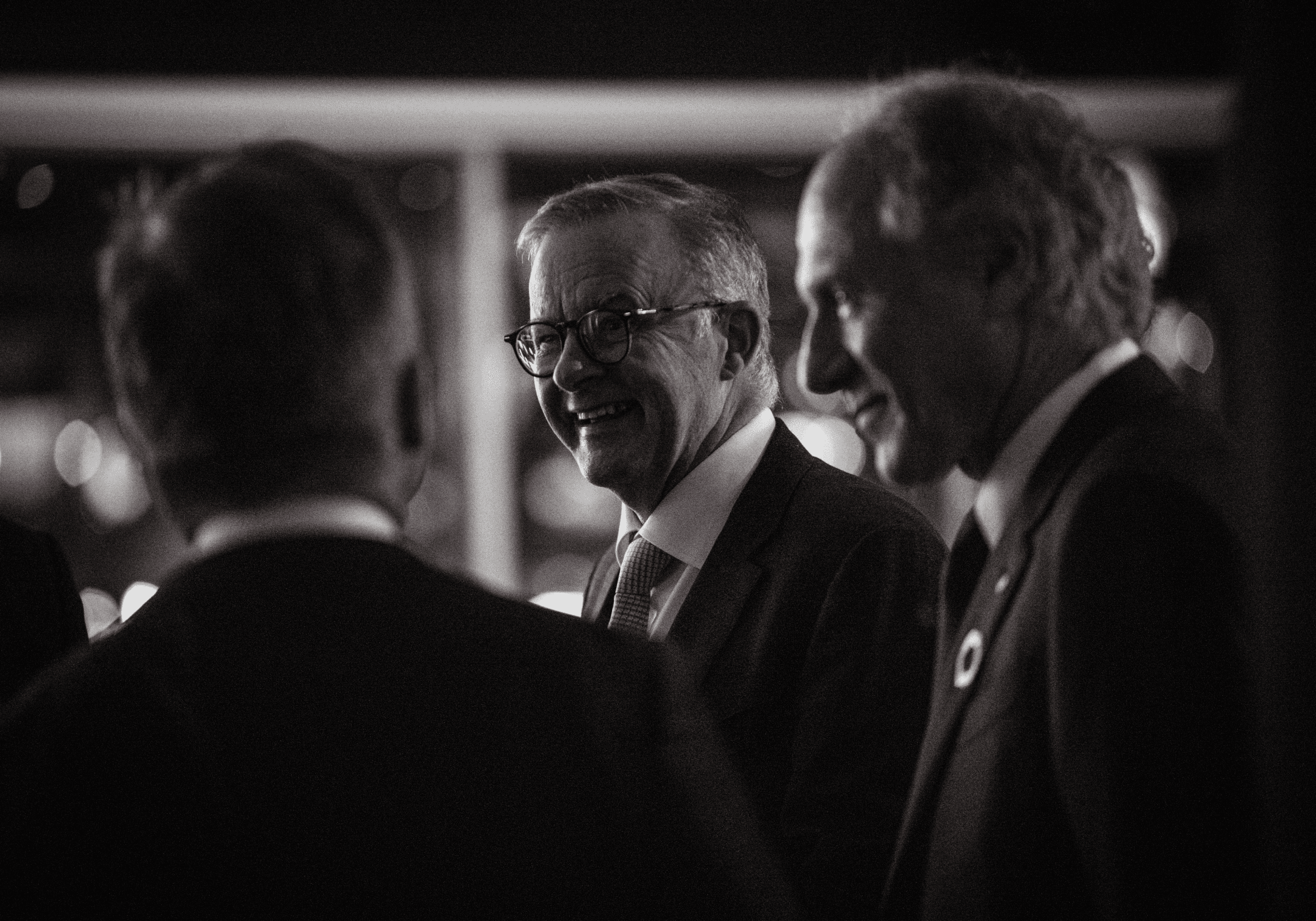
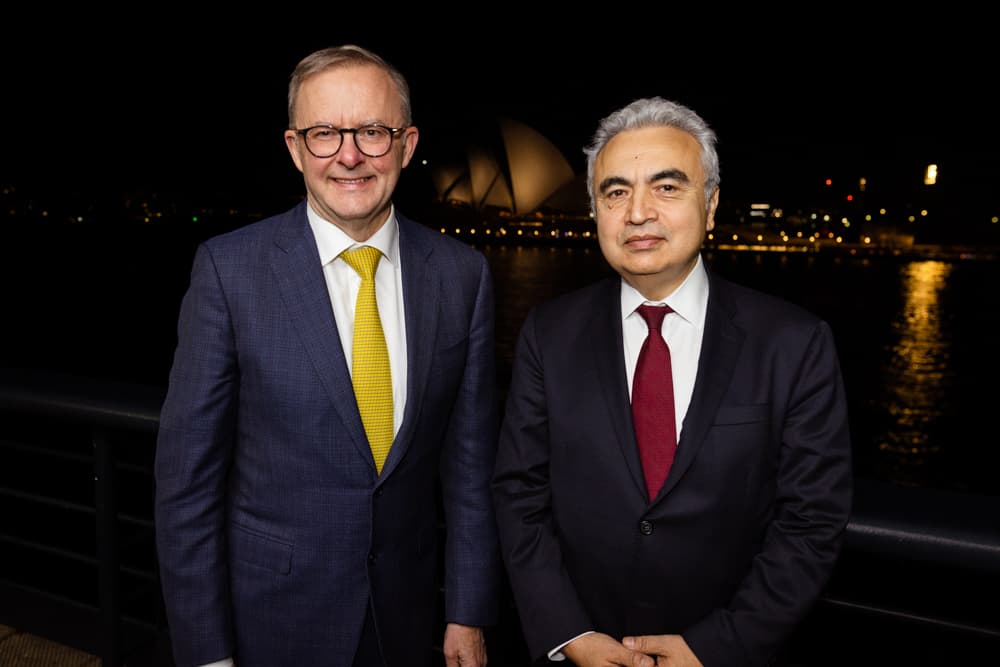
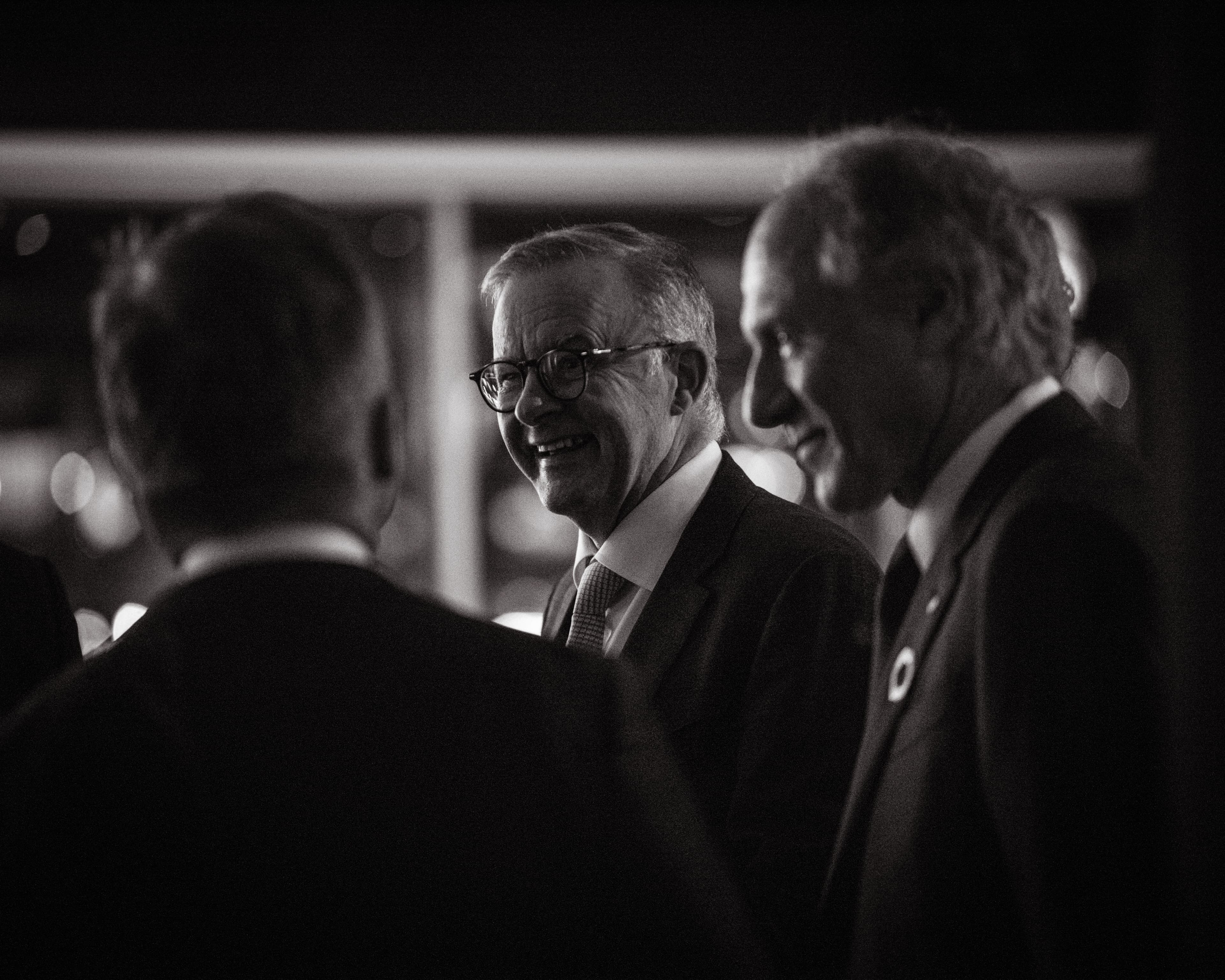
Prime Minister Anthony Albanese with IEA Executive Director Dr Fatih Birol on Sydney Harbour at the Sydney Energy Forum 2022
PM&C ran the production. Brand Rebellion led on communications and event design. We came in as the creative partner: the films, the photography, the animations projected onto the walls of the Fullerton Hotel, and the design suite that ran from the invitation pack through to the place cards and the thank-you notes. The brief on the films was clear: make content that would play to the 300 delegates at this intergovernmental forum inside the Fullerton ballroom. It also had to get picked up by international media that wasn’t in the room, and continue being useful to partner governments after the delegates had flown home.
The federal election had been on 21 May. The work was contracted under the Morrison government and delivered under the Albanese government. That’s the “election period” most people don’t think about when they hear the phrase. Not caretaker conventions. A wholesale change of political messaging direction in the middle of an eight-week creative job. The brief had been written for Angus Taylor’s energy portfolio and ended up serving Chris Bowen’s. The story Australia wanted to tell about itself shifted between week one and week four, and the talent who’d been briefed under one government’s framing were interviewed under another’s.
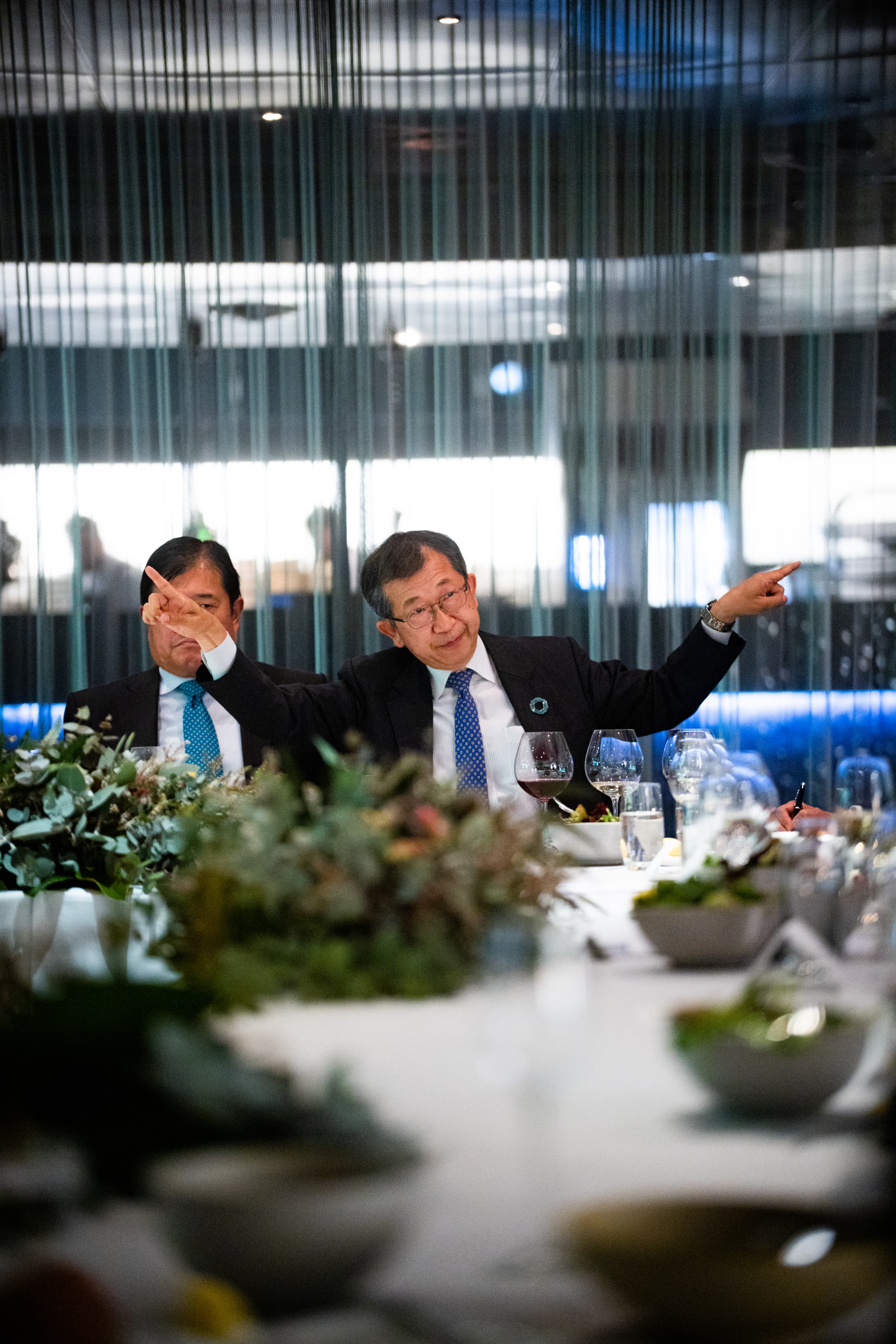
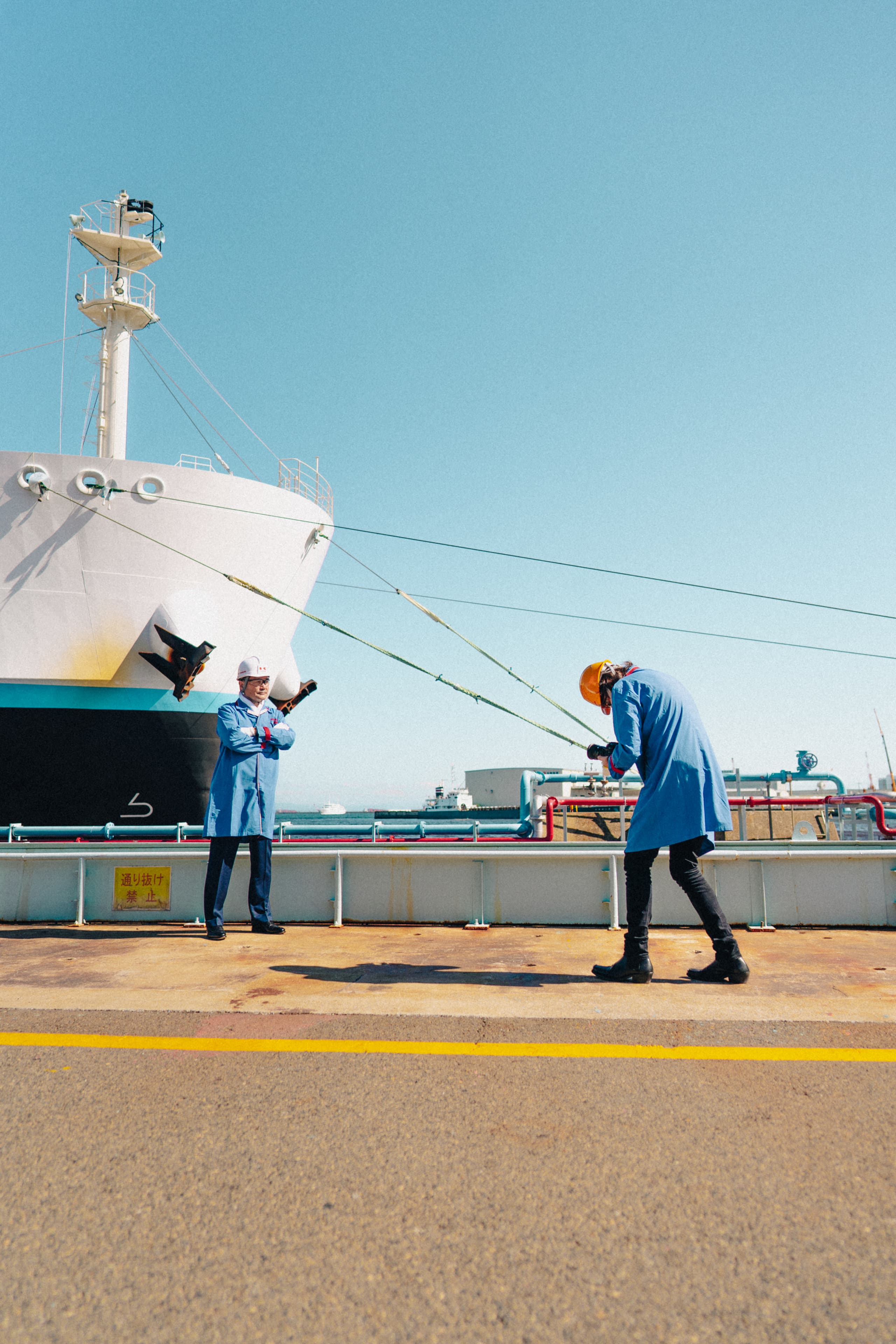
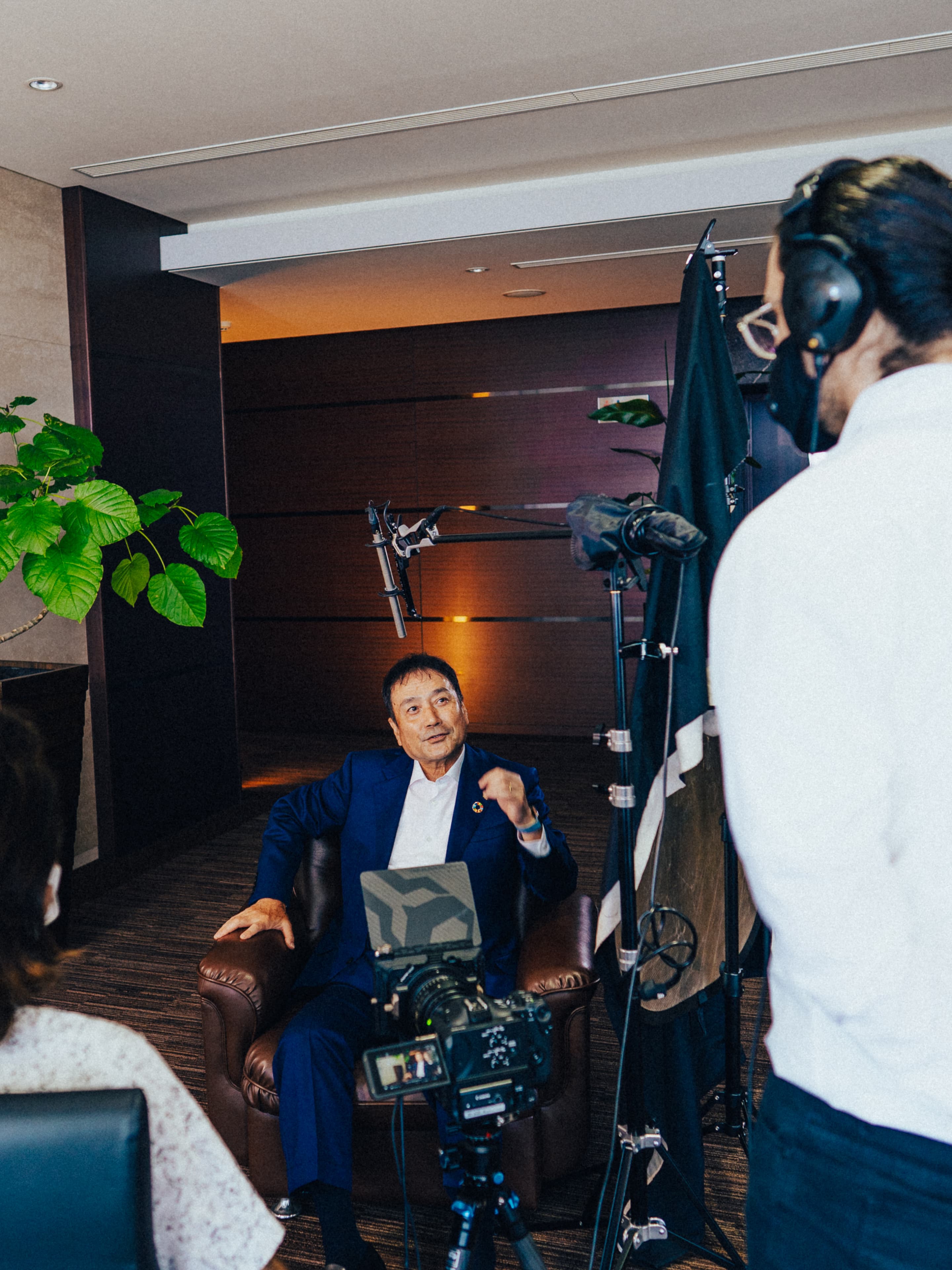
Filming in Kobe, Japan.
Andrew Forrest sat for a camera in London talking about Fortescue replacing its diesel mining fleet with hydrogen fuel cells:
“If we’re spending all this money on fossil fuel and we’re just smoking it, we’re just wasting it, why don’t we take that money and put it into capital where we can make our own fuels?”
Larry Marshall, the CSIRO chief executive, did his interview a few days later on Australia’s competitive position in a carbon-efficient export economy. Martin Green at UNSW talked in front of the rooftop array that was the first commercial install of his PERC photovoltaic cell.
Across the early 2020s, PERC accounted for more than 80% of global solar PV manufacturing.
Yoshinori Kanehana, the chairman of Kawasaki, did his in Kobe Port on Suiso Frontier, the world-first liquefied hydrogen carrier Kawasaki had built with Australian and Japanese government support. Shoichiro Watanabe, the CTO of Panasonic Energy, did his in Osaka on the supply chain mismatch sitting underneath the battery transition:
“It takes about a year to build a gigafactory. It takes between five and ten years to bring new resource materials into the market through a mining operation.”
Audrey Zibelman, then at Google’s moonshot factory, did hers in San Francisco on grid digitisation. The rest of the slate filled out across Paris, London, New Delhi and Sydney. Each international shoot was organised through the principal’s office and the relevant Australian post.
The window for all of this was eight weeks.
A global film series of this scope, shot to broadcast standards, with twelve-plus interviews of people who don’t have spare days in their diaries, would normally take four to six months. The brief had eight. The structural decisions made it work: parallel regional capture units, pre-cleared technical specs, a single editorial through-line so that distinct shoots could be cut into films that felt like one body of work.
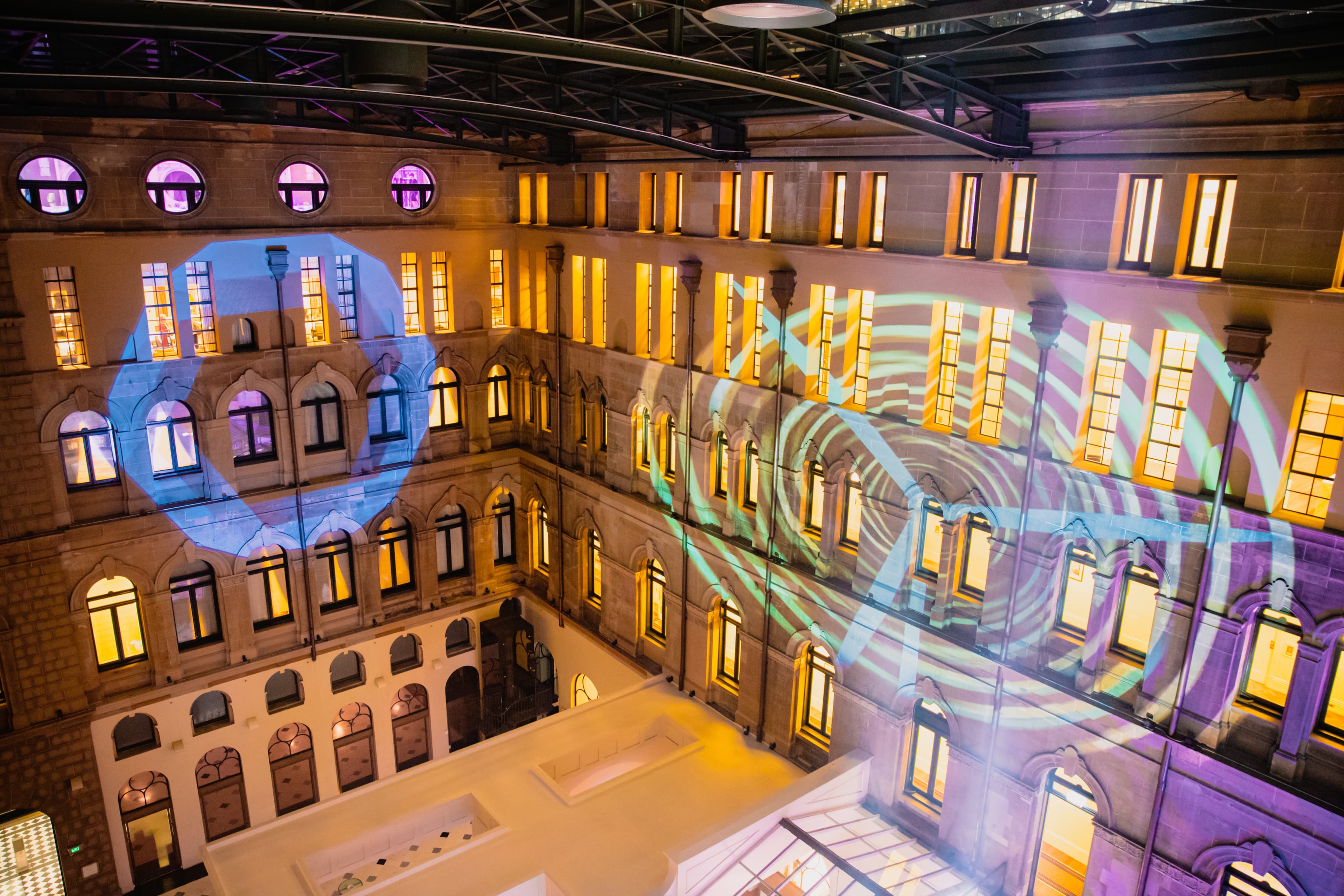
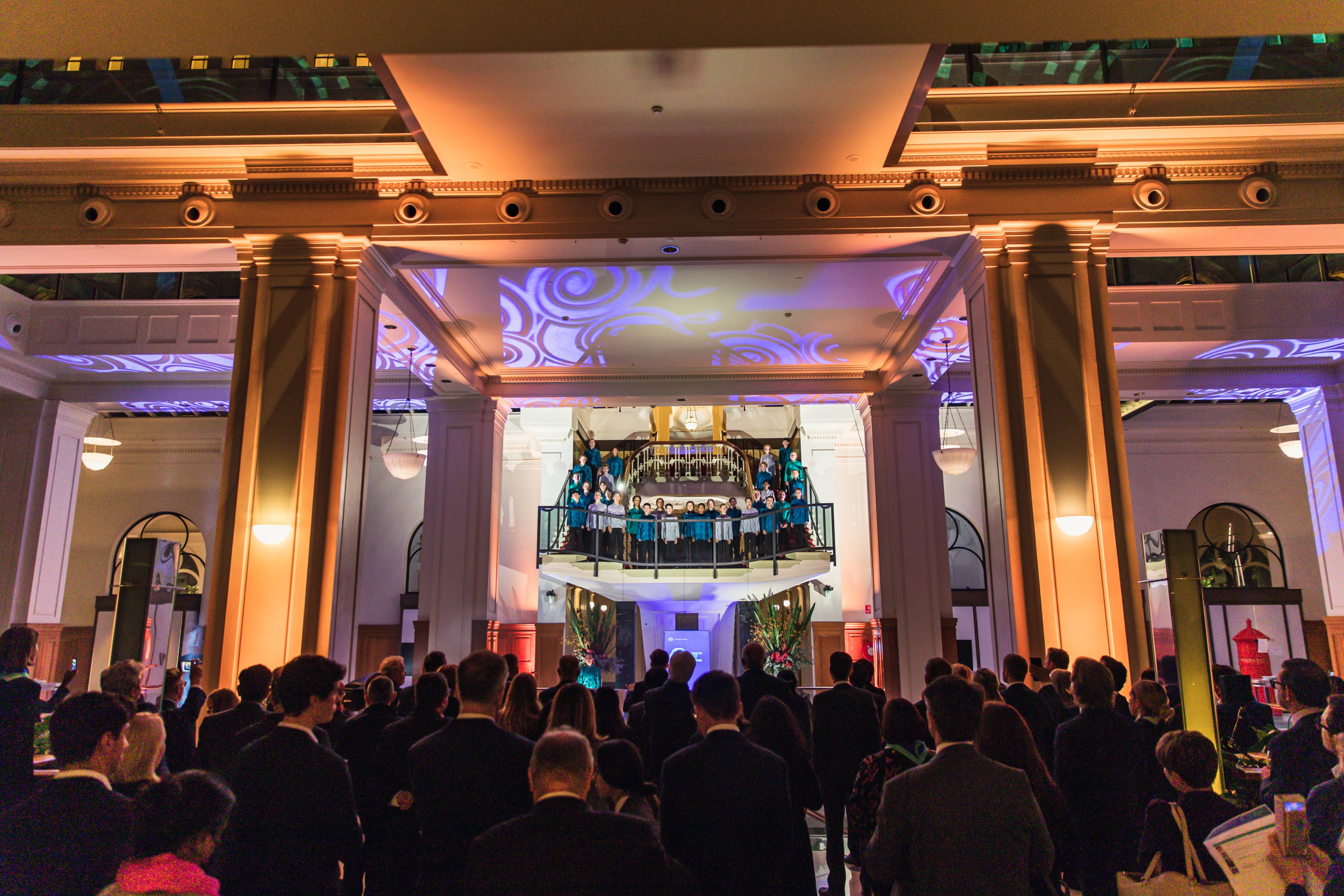
Original motion design projected onto the walls of the Fullerton Hotel
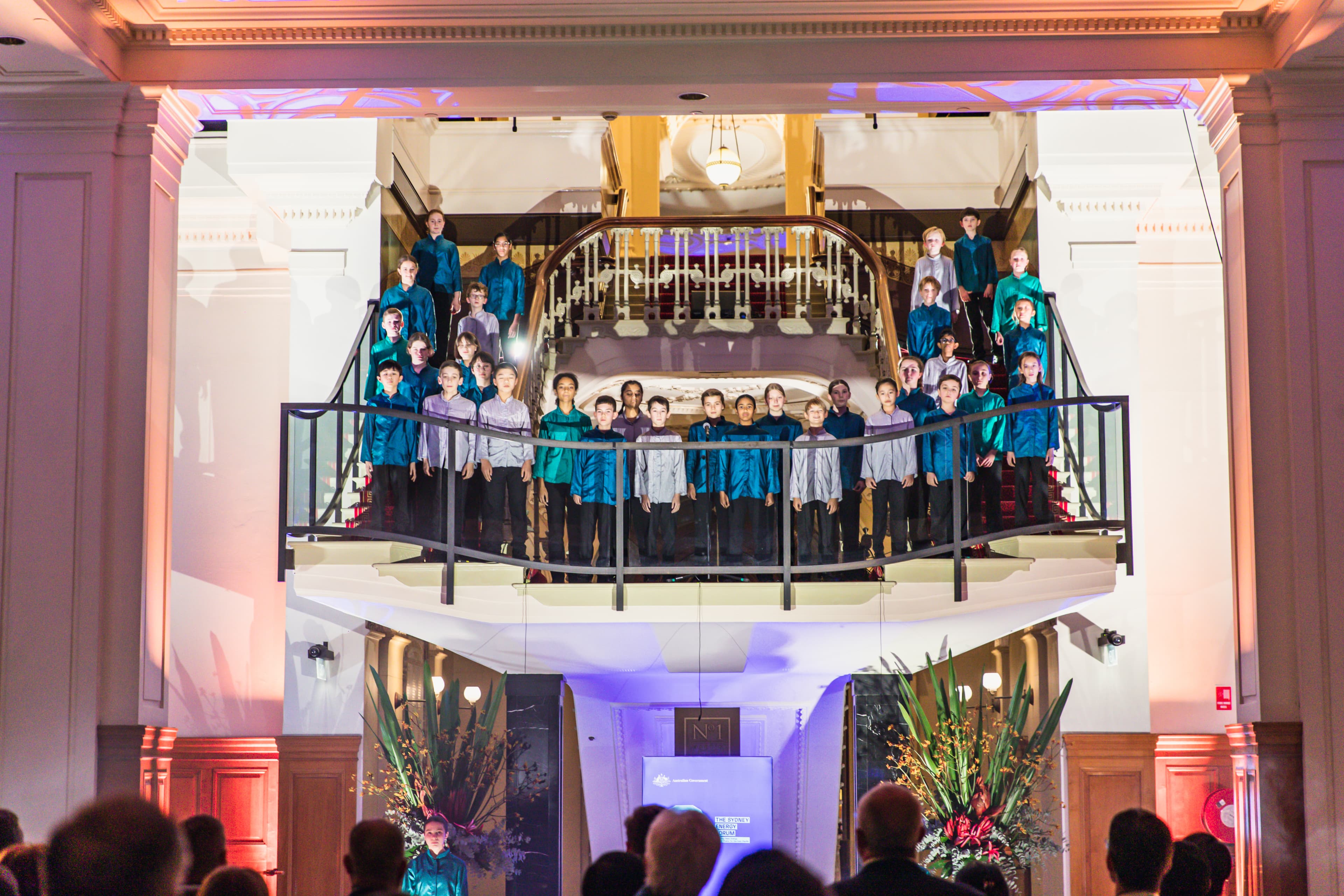
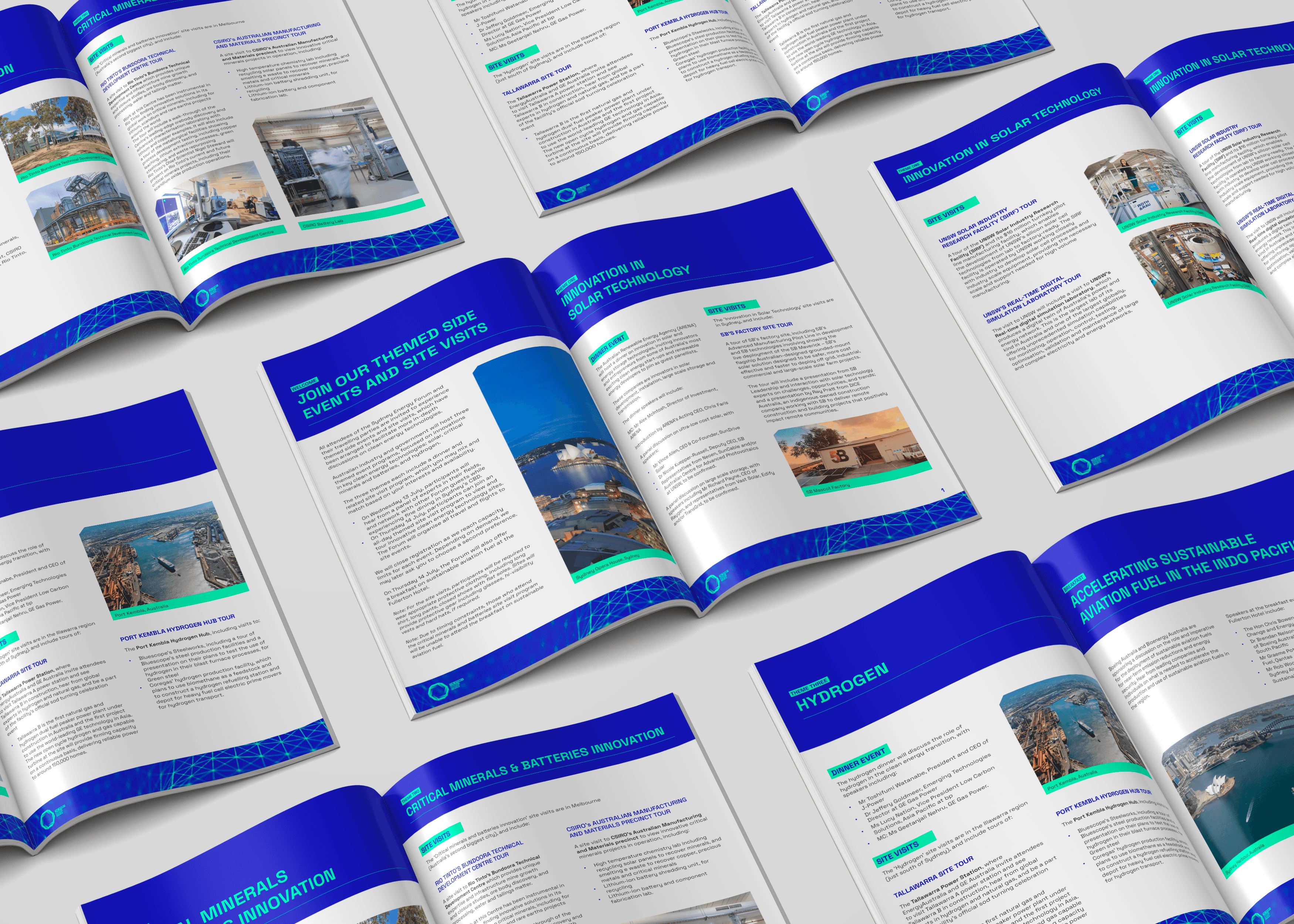
The forum opened on the evening of 12 July with a song commissioned for the occasion, performed by the Gondwana Choir. Outside the ballroom, the Sydney Energy Forum identity ran as projection-mapped animation across the Fullerton’s sandstone facade which was run by AV partner, Sidestage. The hotel was built in the 1890s as Sydney’s General Post Office; the building had spent its first century as the communications spine of the city.
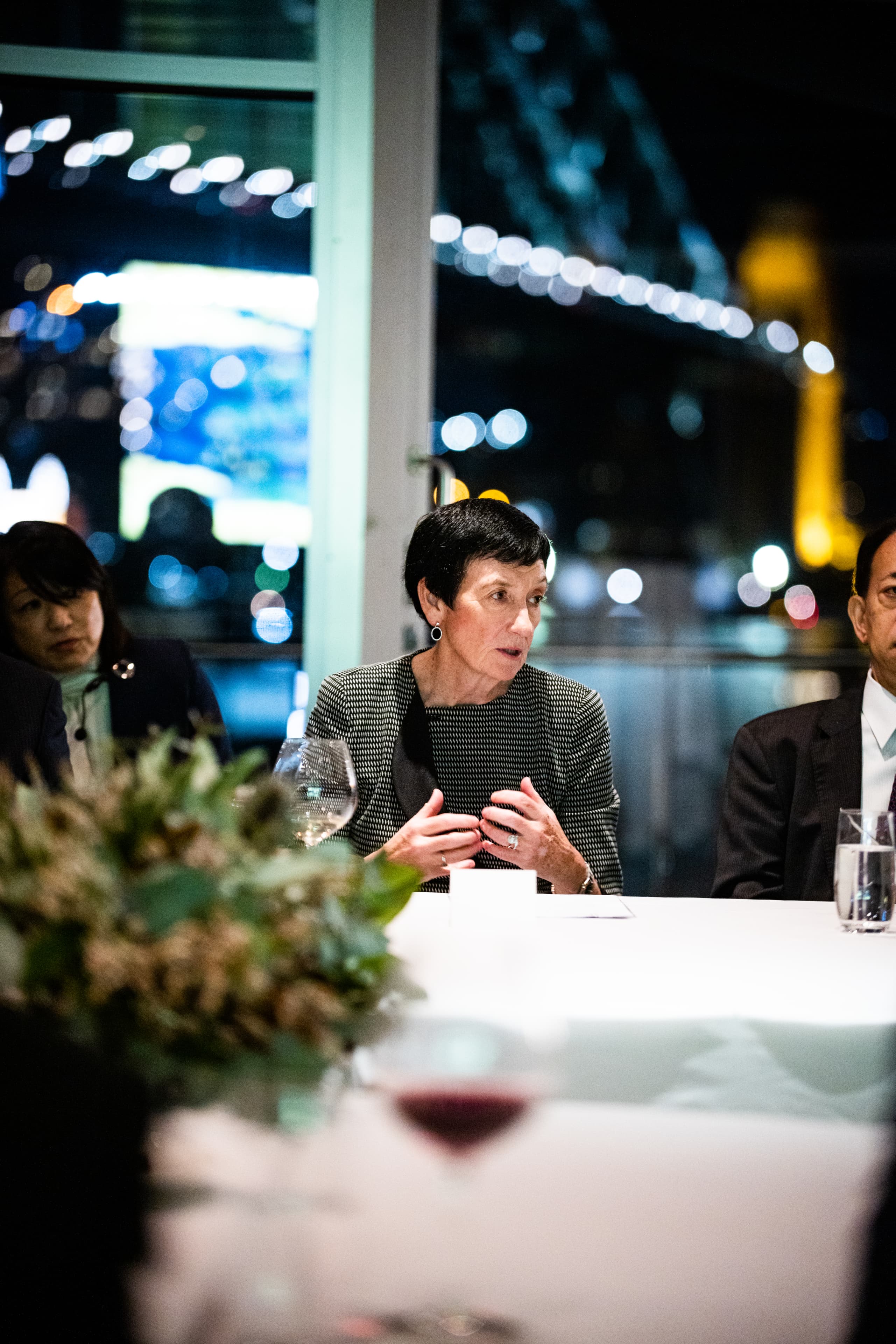
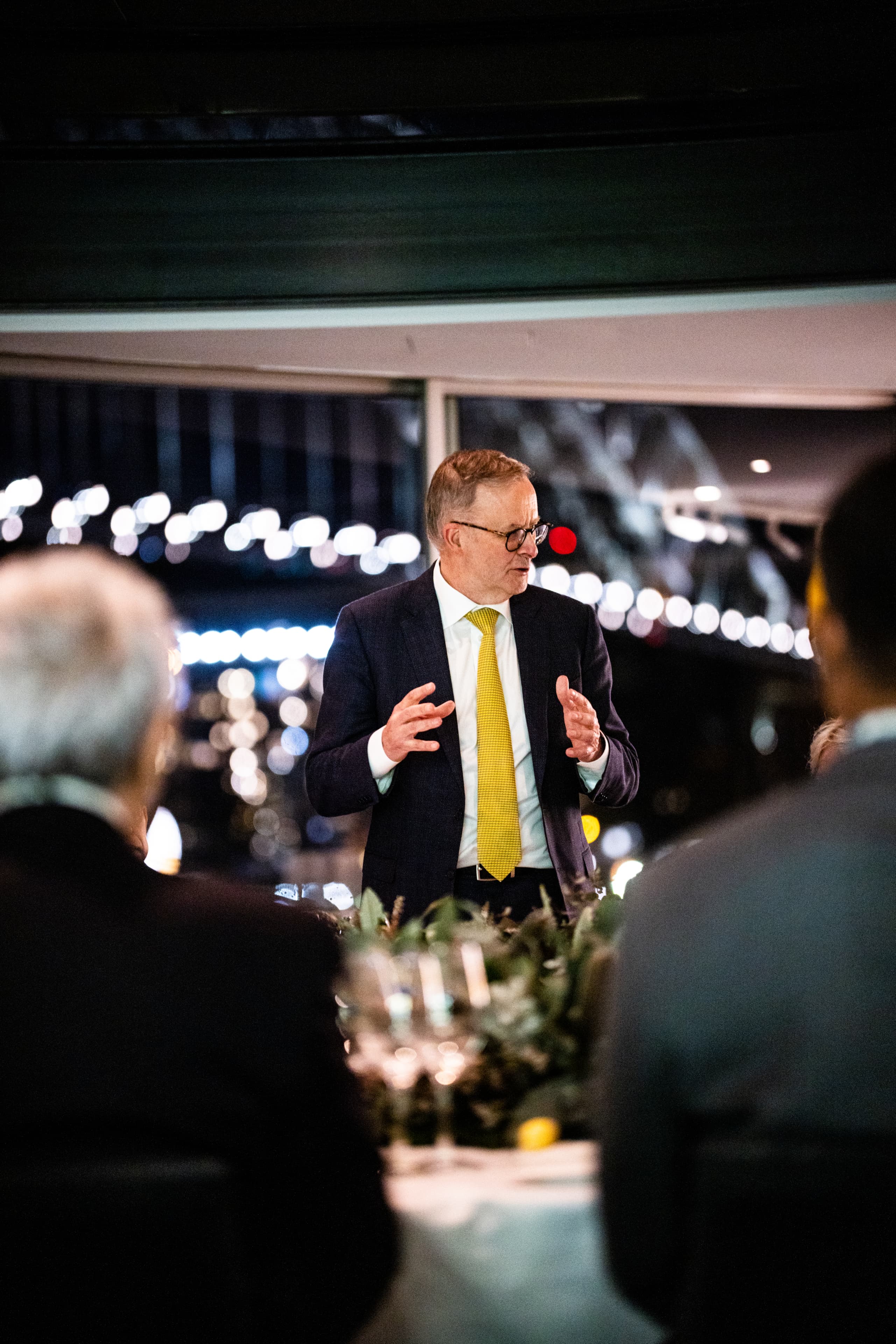
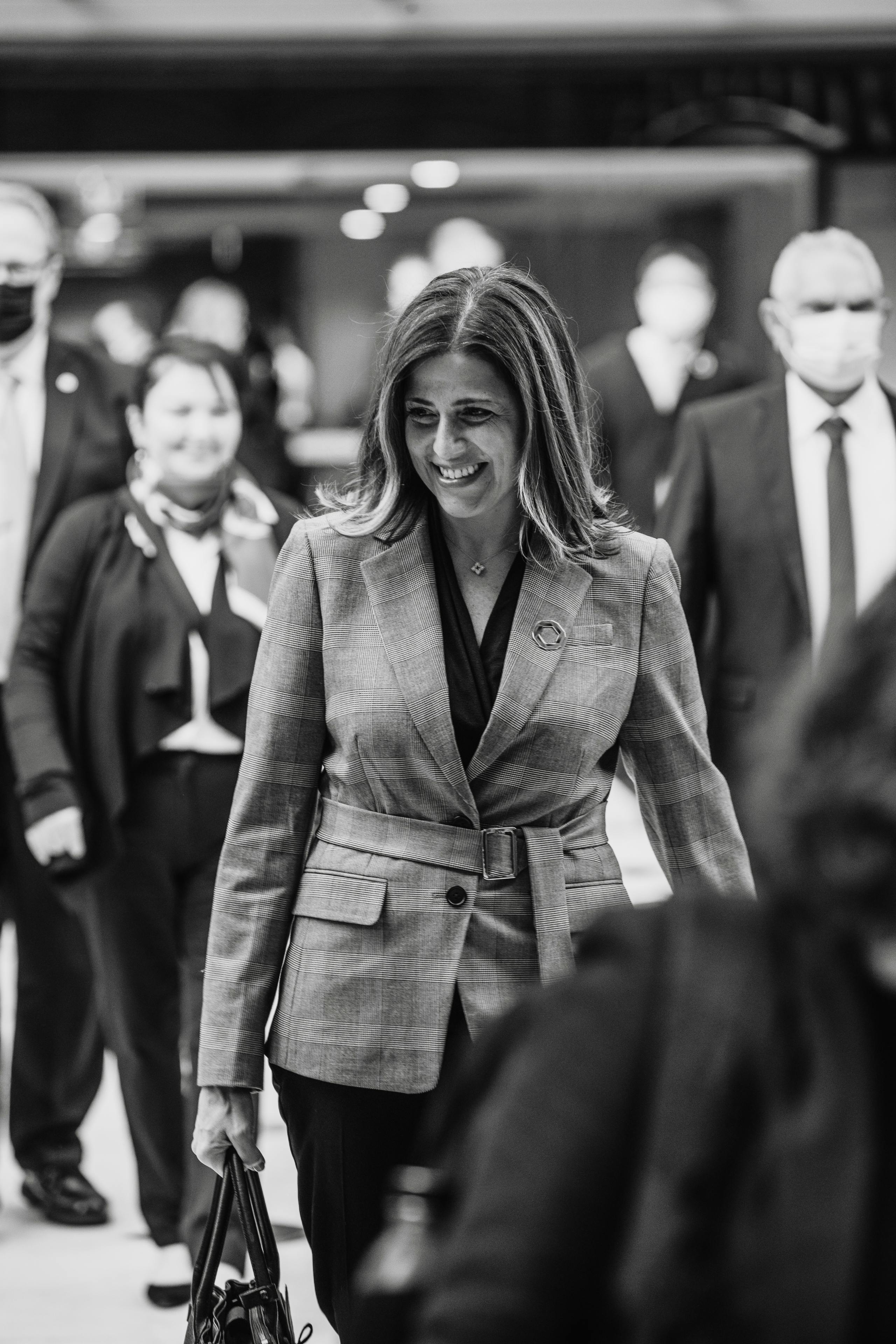
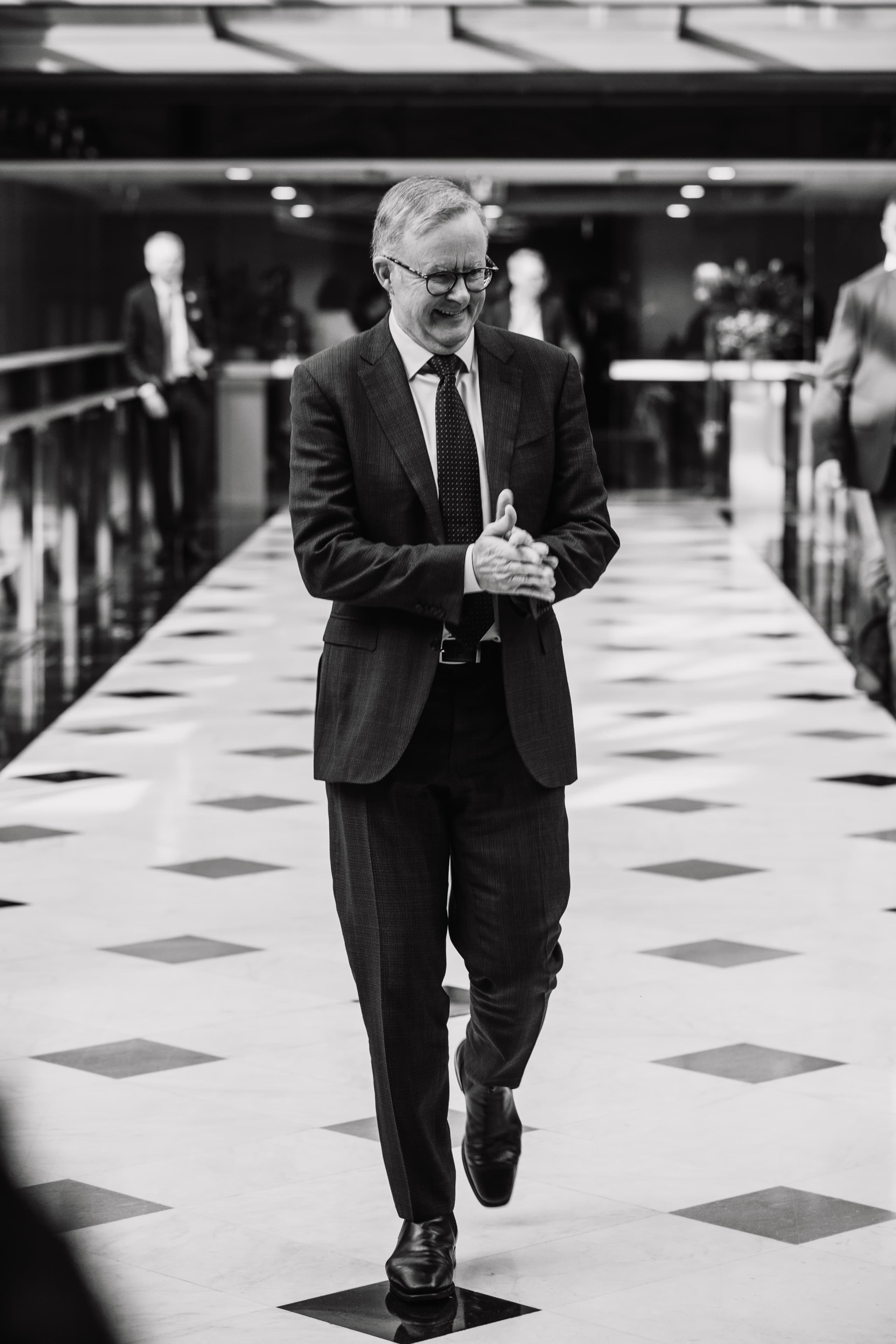
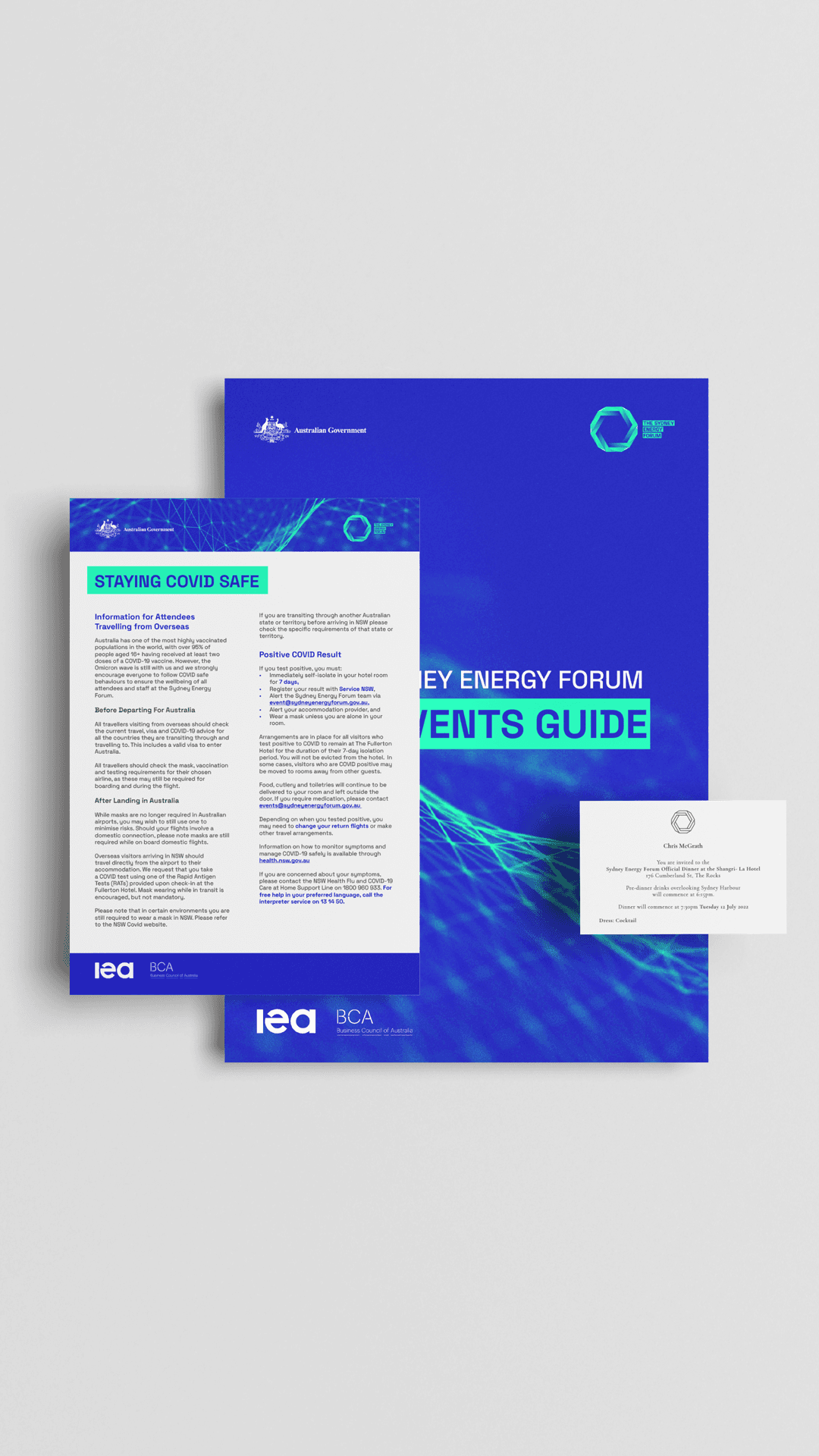
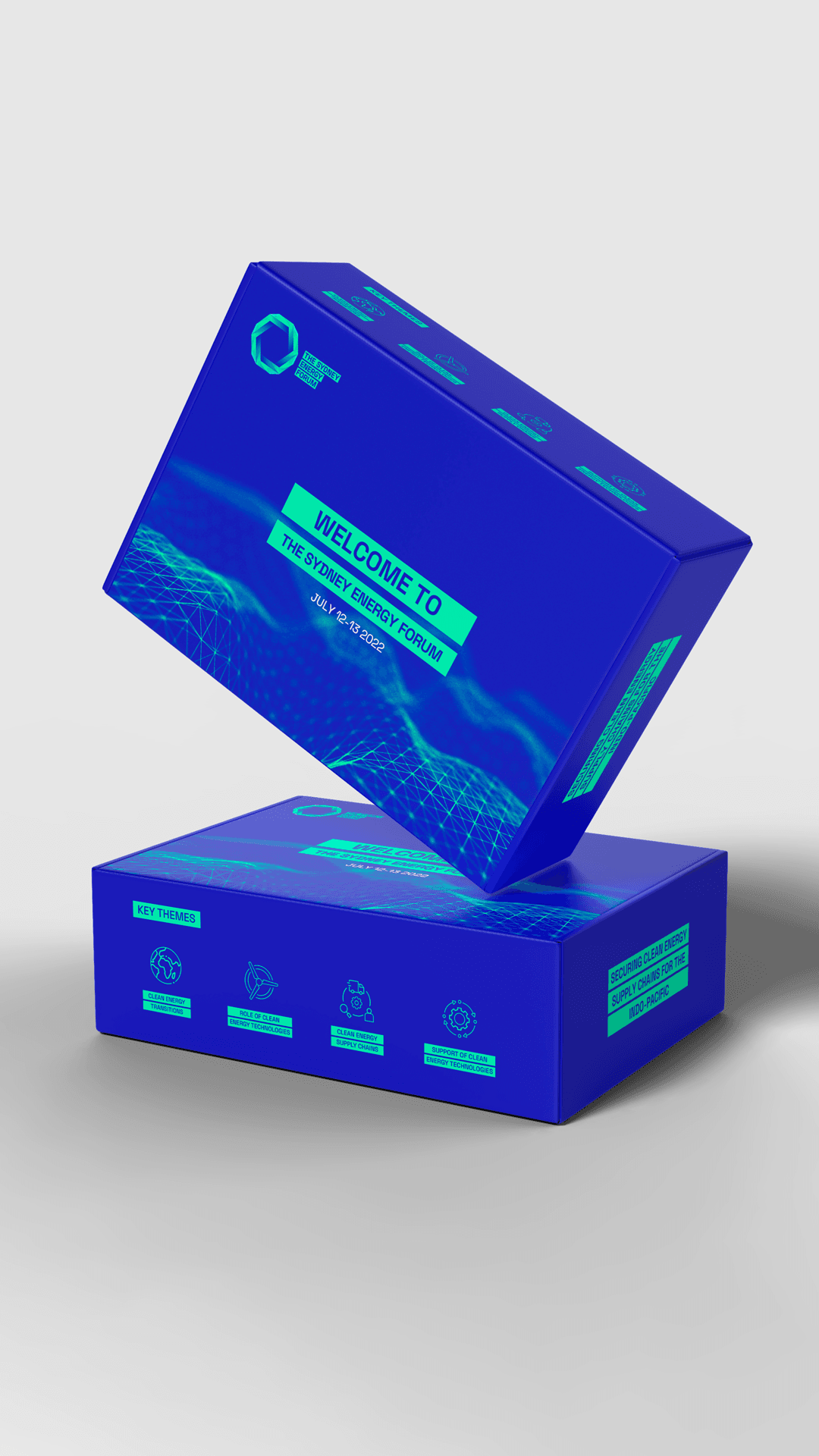
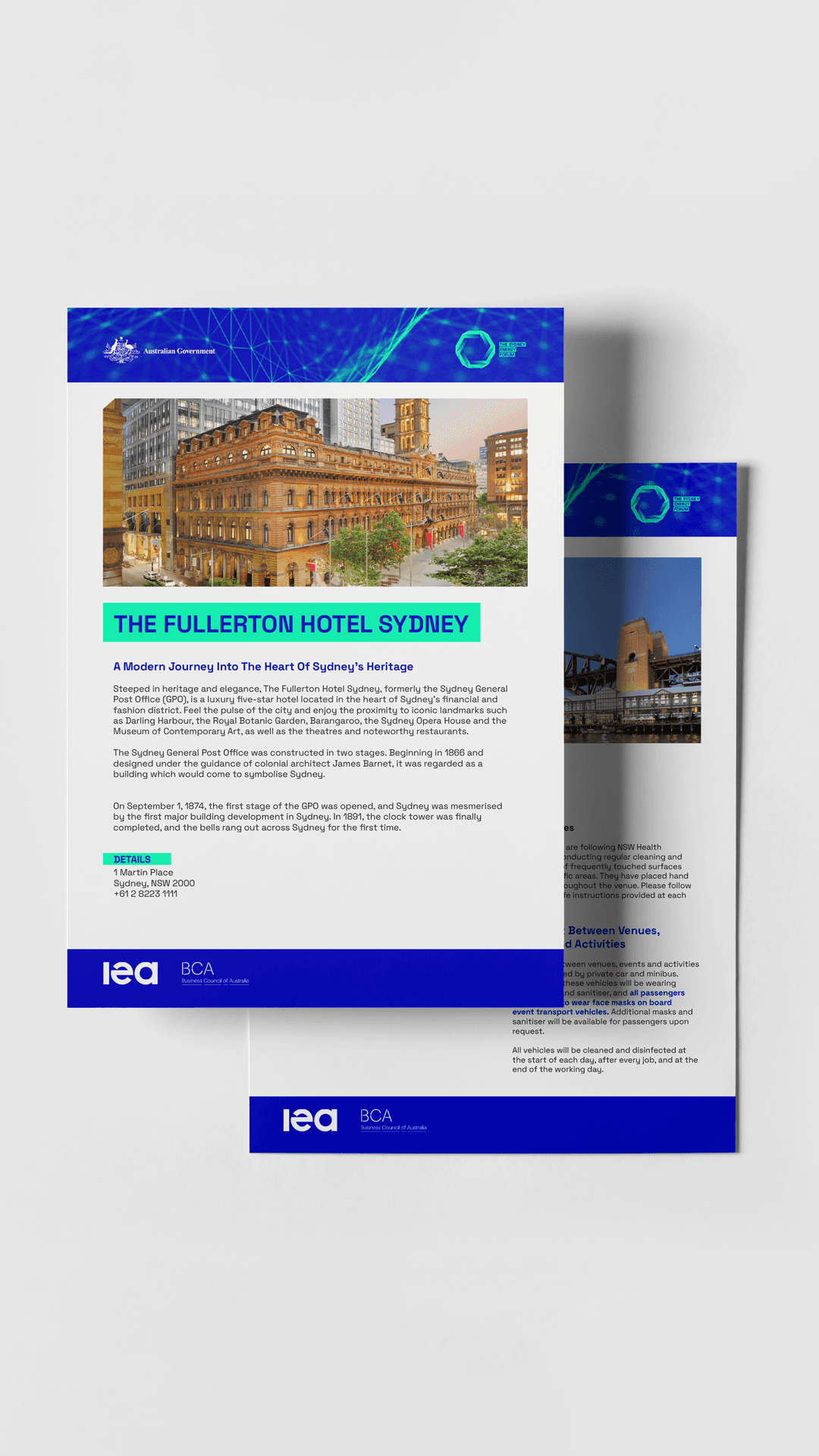
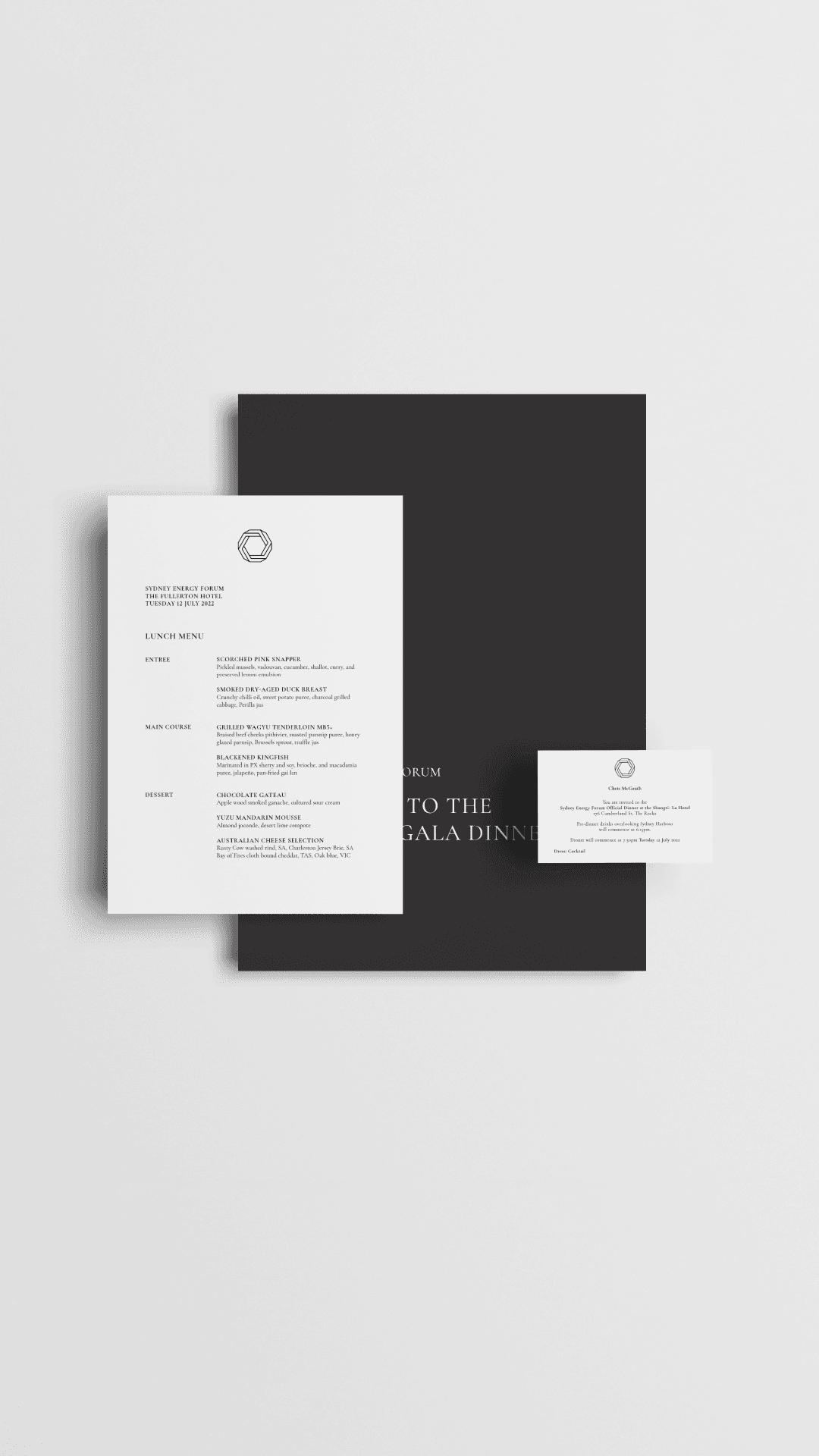
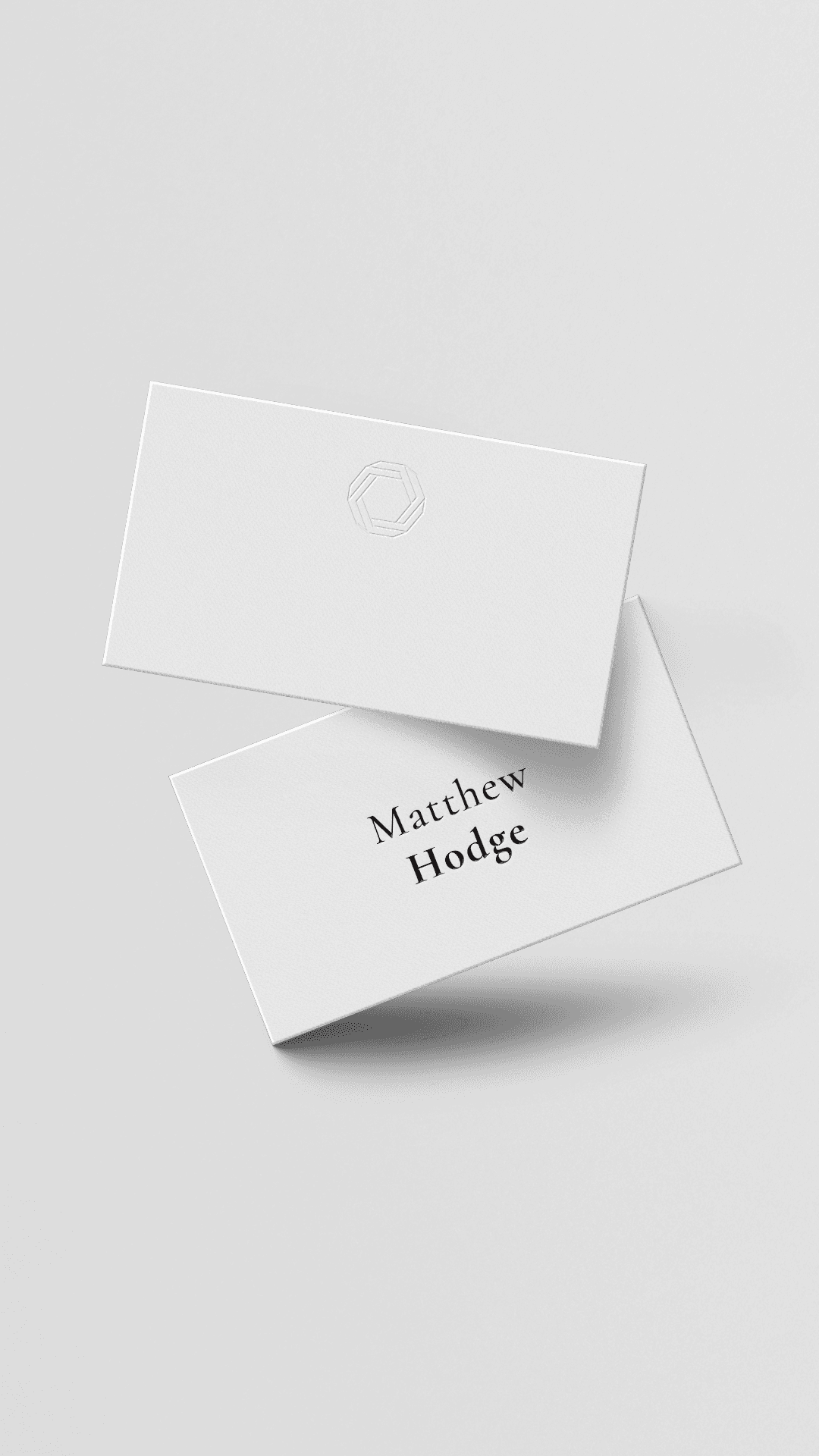
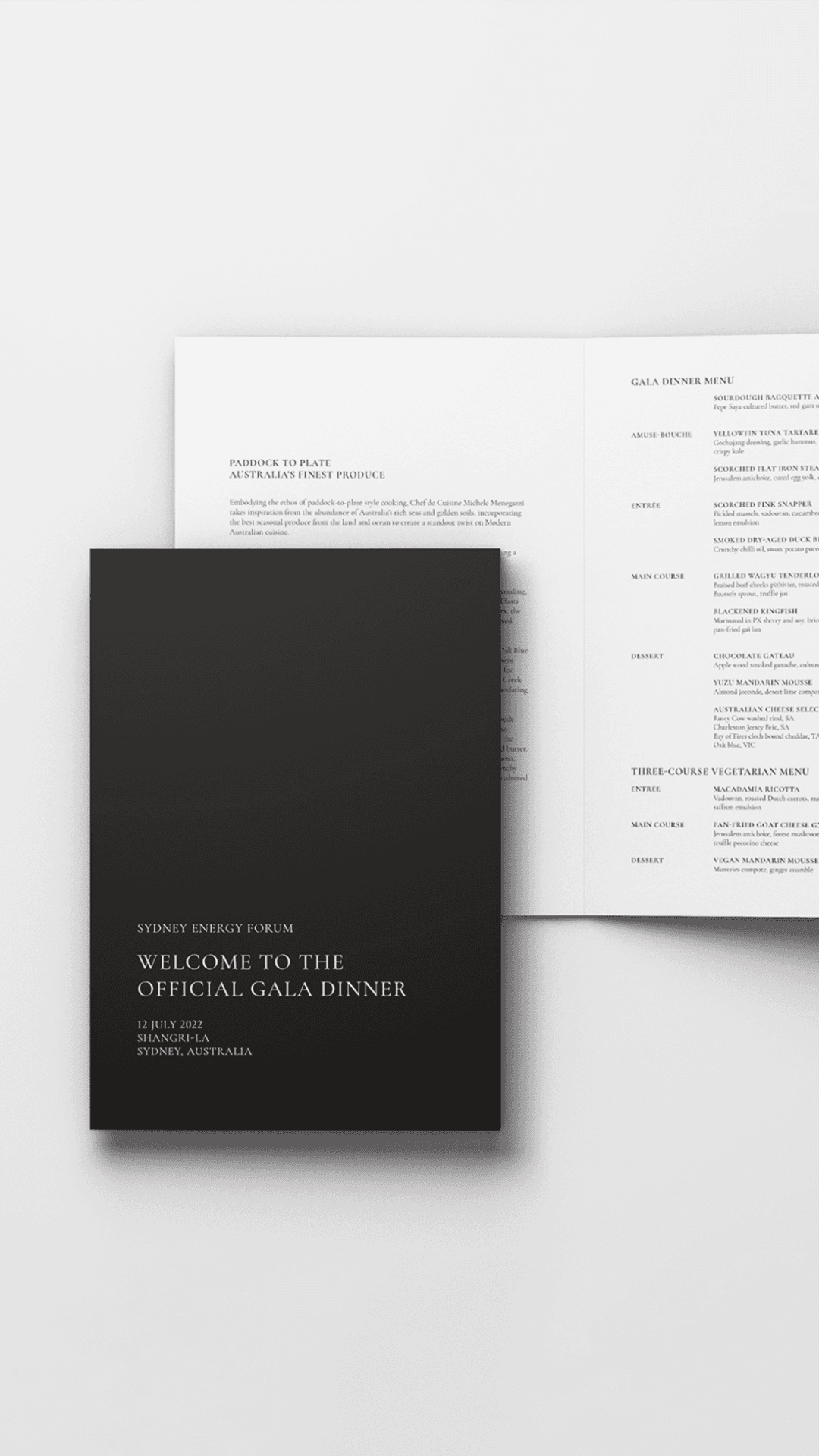
The photography brief was to capture delegates as participants in a working summit, not posed dignitaries at a gala. The design suite, guest packs, menus, digital signage was built around a visual system that could move from heads-of-mission formality to working-session utility.
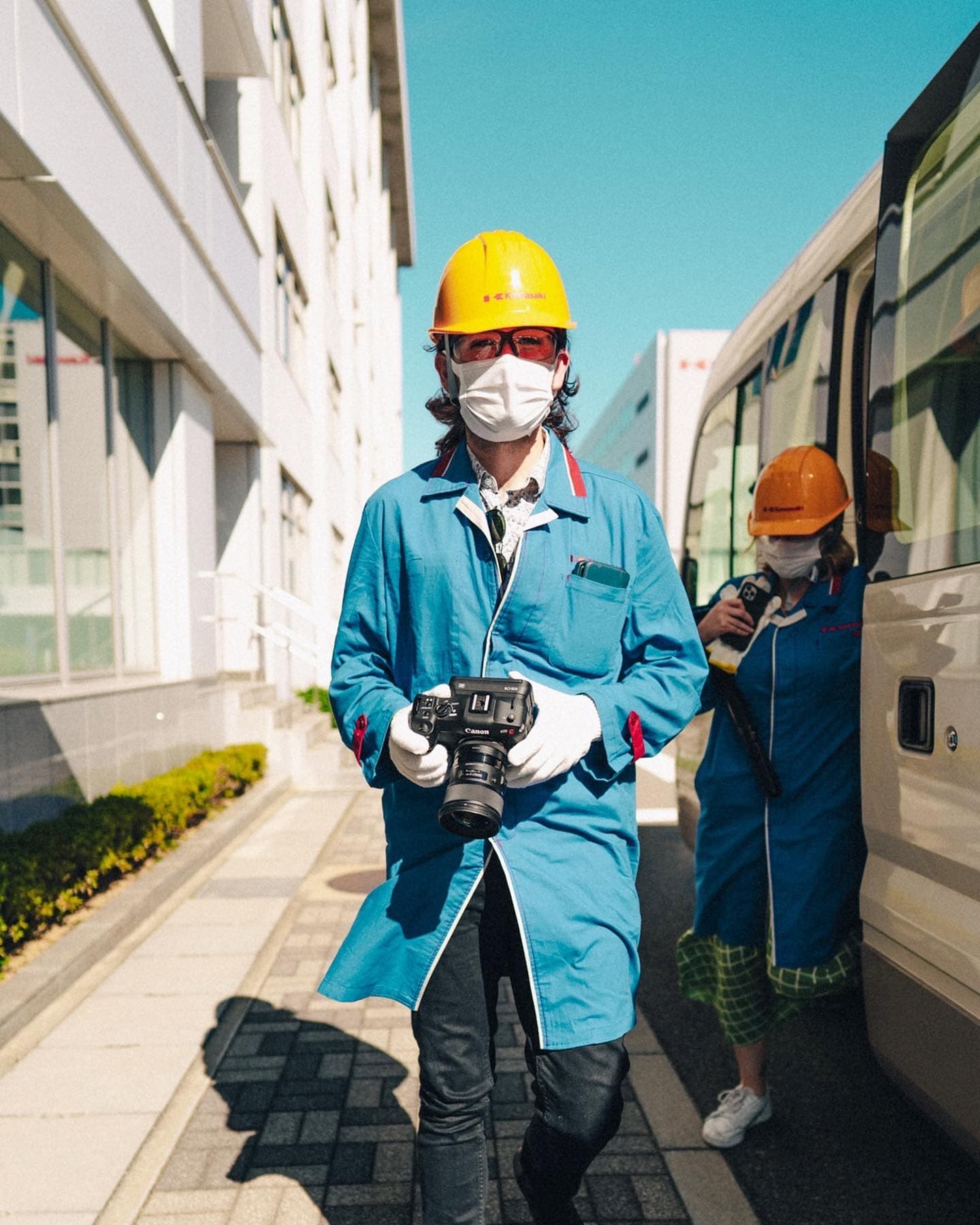
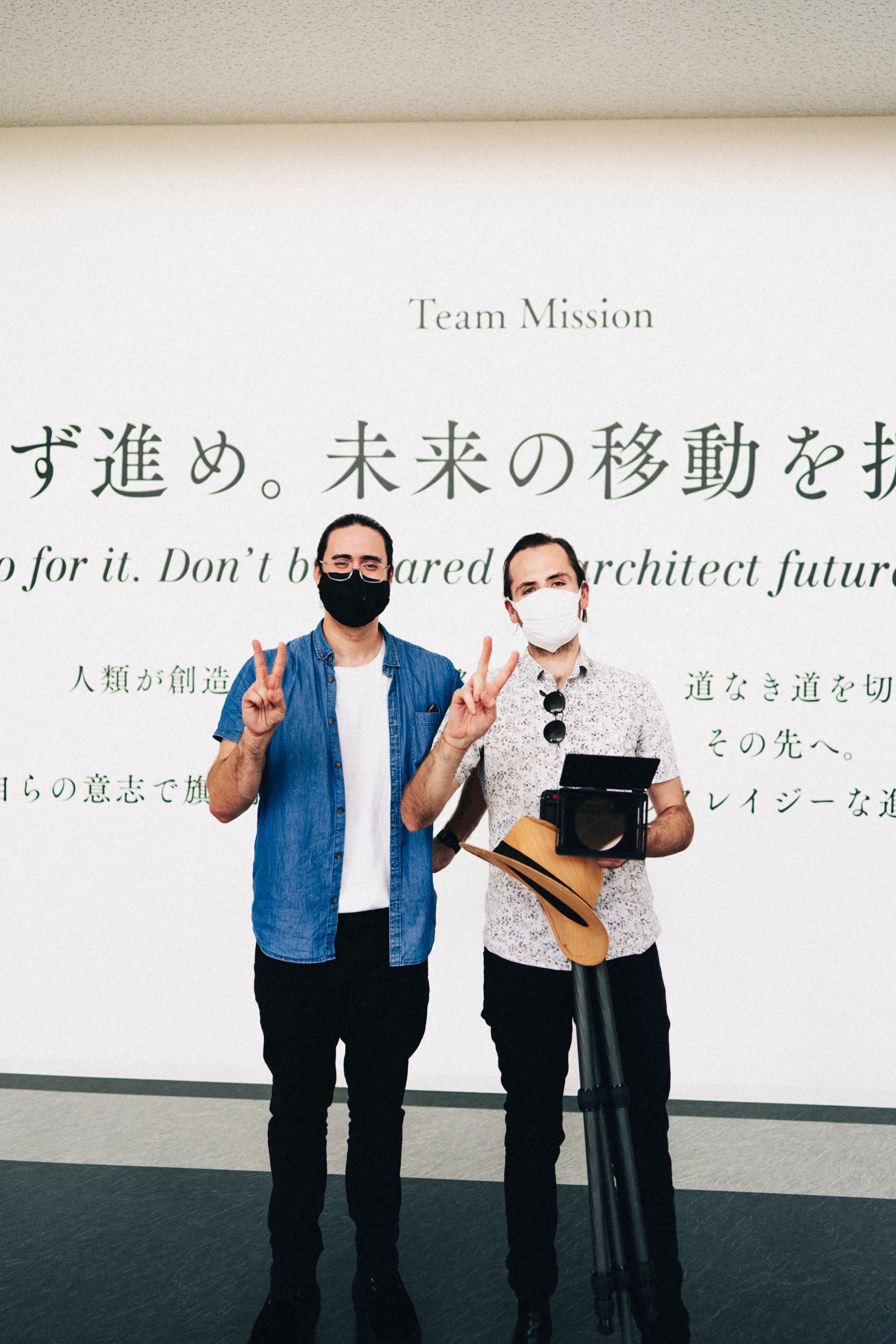
The video crew on Osaka and Kobe, Japan
Four films played across the two days of the forum. The lead film was screened to Dr Alan Finkel, chair of the forum’s steering committee, former Chief Scientist of Australia, before it played to the delegates. He took the cut without notes. Bryden Campbell of Brand Rebellion talks about that moment in our case study video above:
“He hadn’t seen the video and we decided to play it on the big screen, and it received a standing ovation, and no edits, no changes were to be made. I’ve never seen that before in a video crew.”
The Australia–US Net Zero Technology Acceleration Partnership was signed live at the forum by Climate Change and Energy Minister Chris Bowen and US Energy Secretary Jennifer Granholm. The content went out as a broadcast-ready VNR pack to international newsdesks. It kept circulating afterwards through IEA channels, partner government communications, and Department of the Prime Minister and Cabinet digital platforms (captioned and audio-described to government accessibility standards). The Sydney Energy Forum creative campaign tracked 20 million online media impressions globally.
Photography
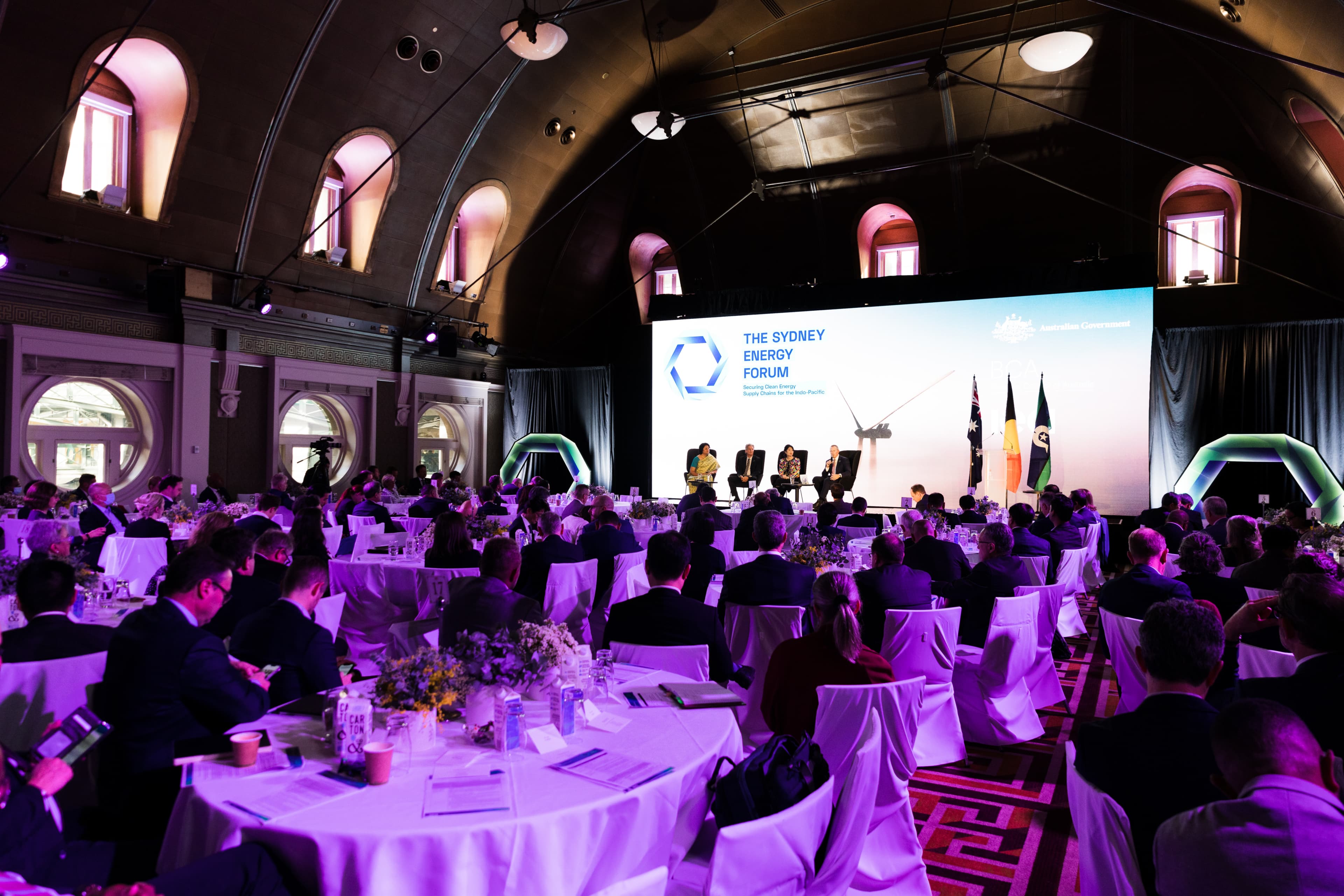
Opening of the forum with an original song performed by the Gondwana Choir
Animation
Animation of the Sydney Energy Forum brand that was projected onto the walls of the Fullerton Hotel, Sydney.
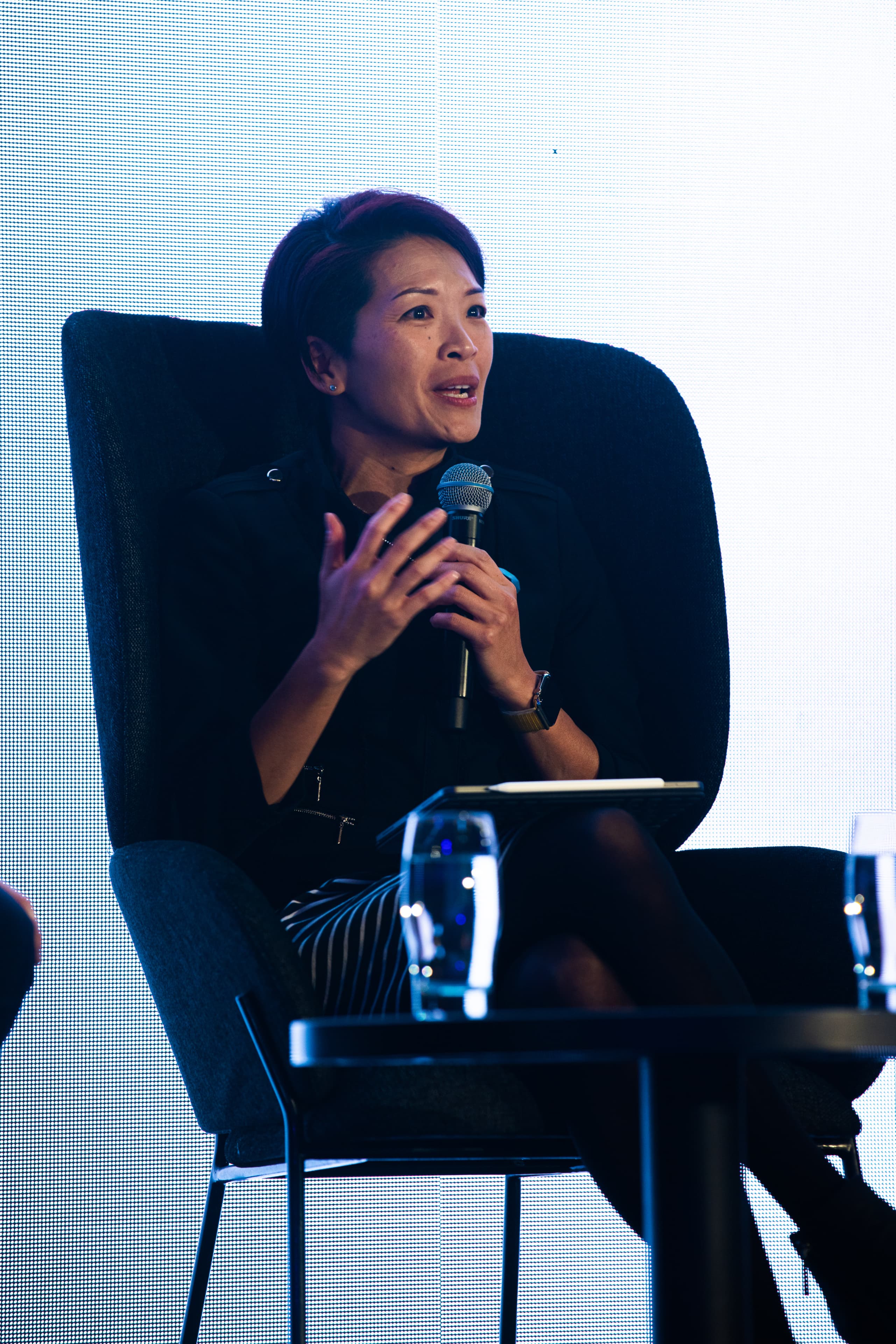
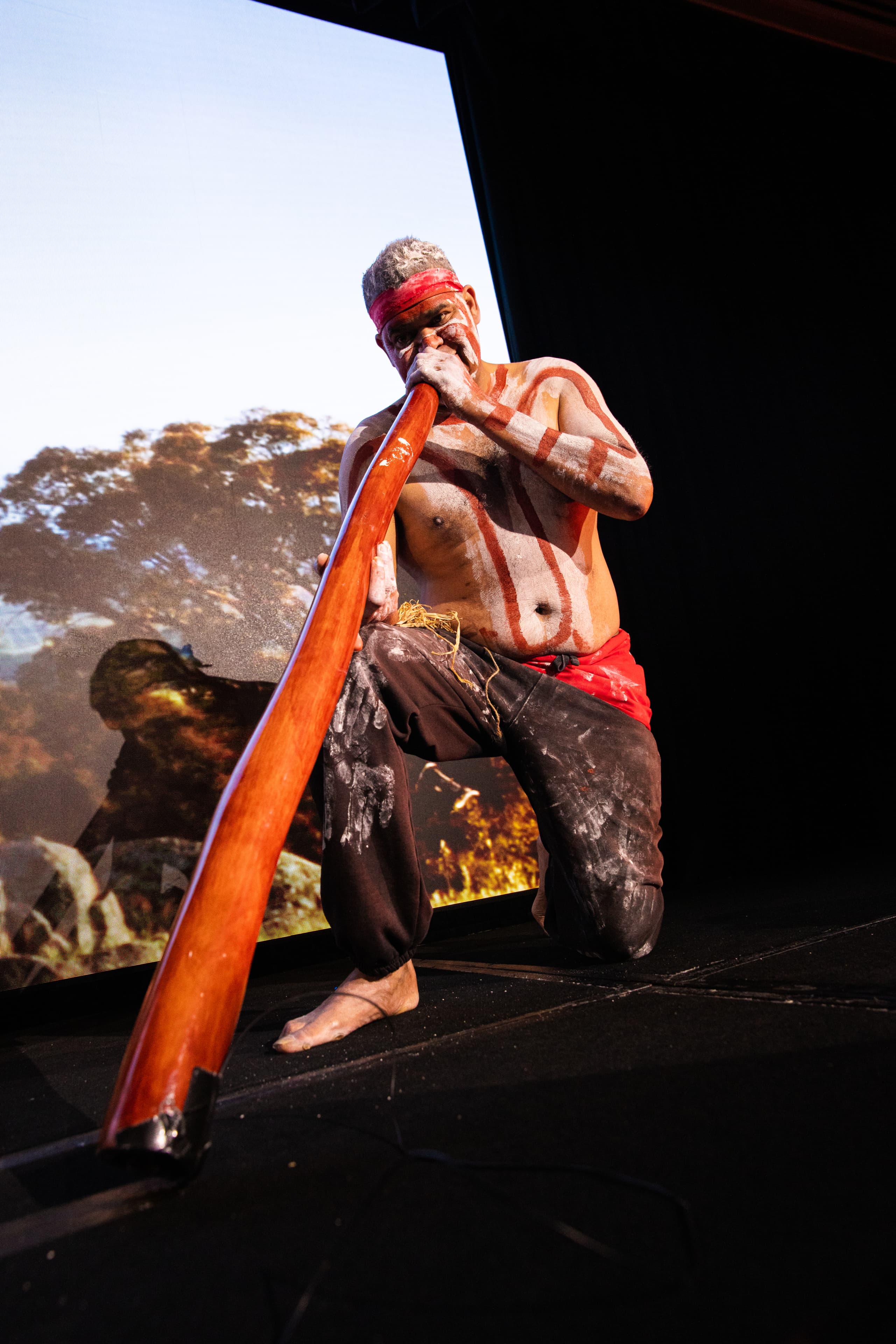
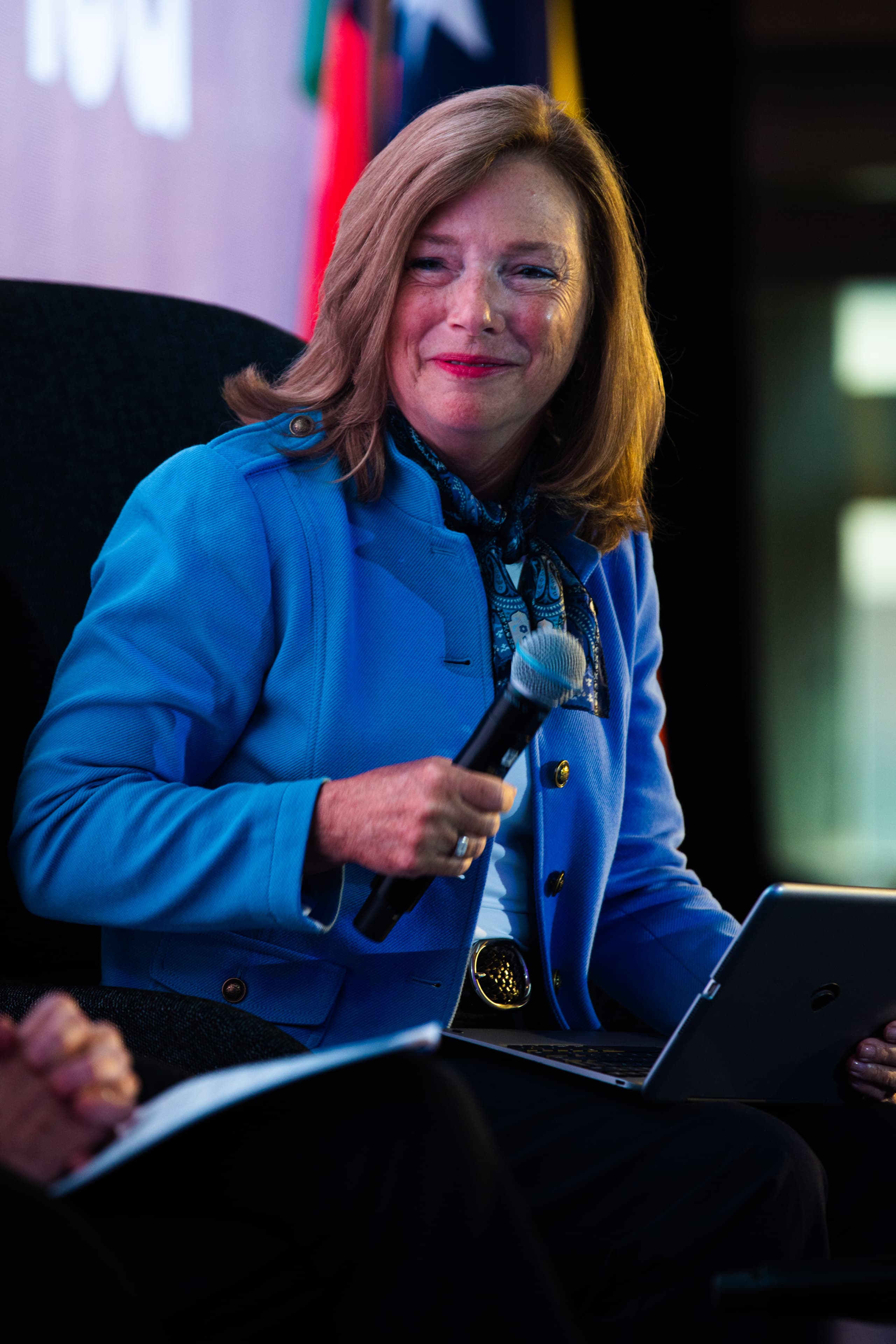
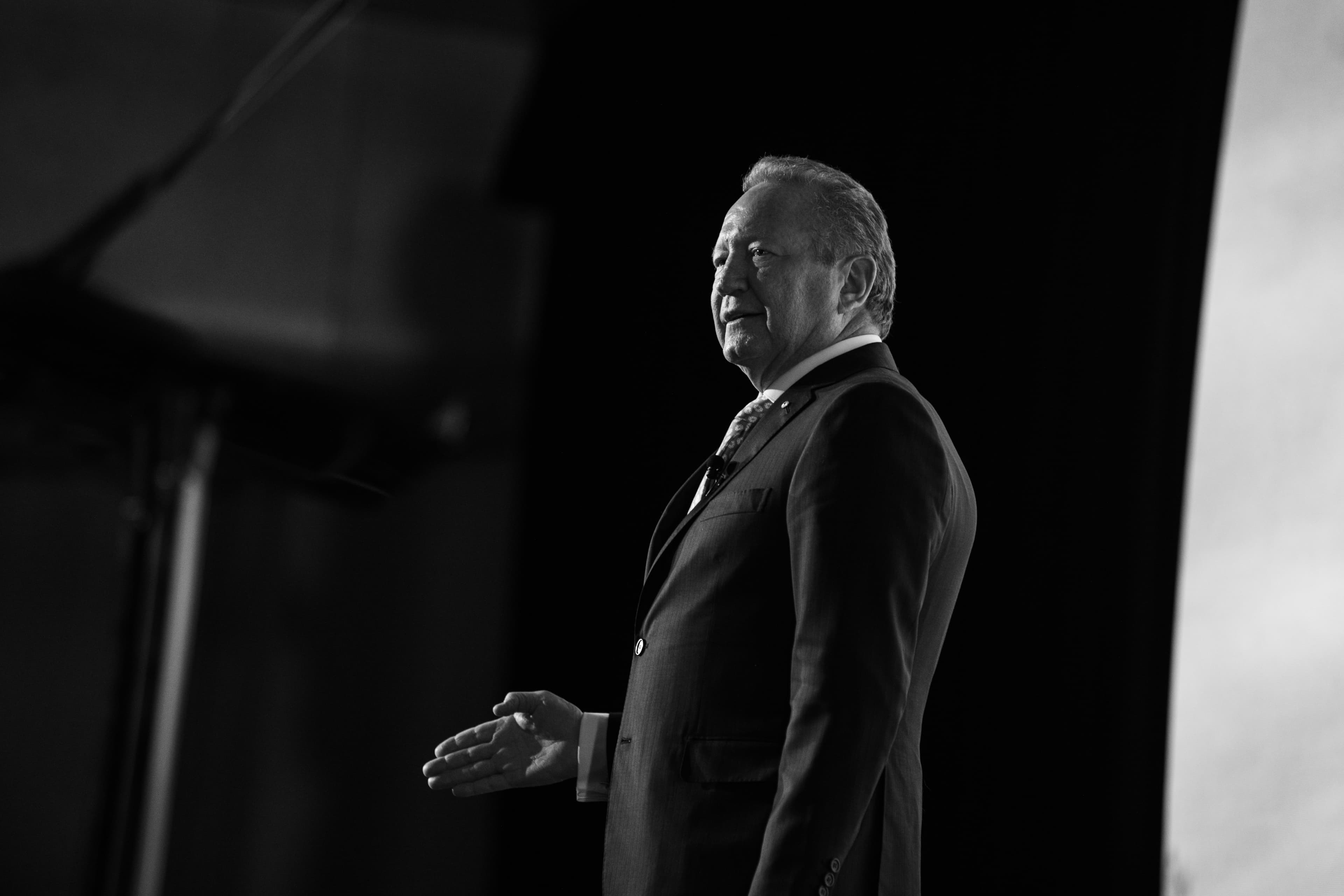
Photography
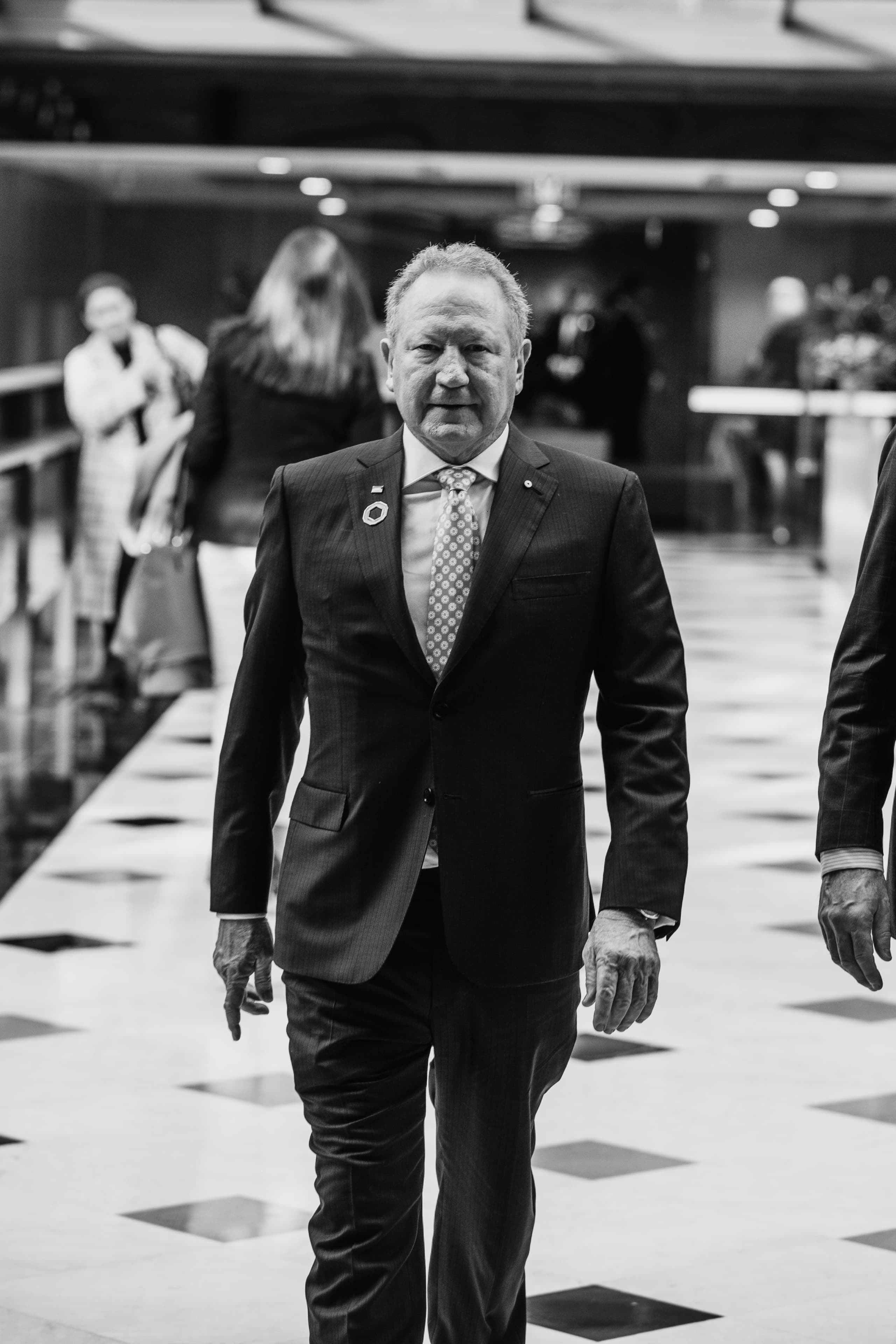
Fortescue Metals Chairman - Andrew (Twiggy Forrest)
Photography
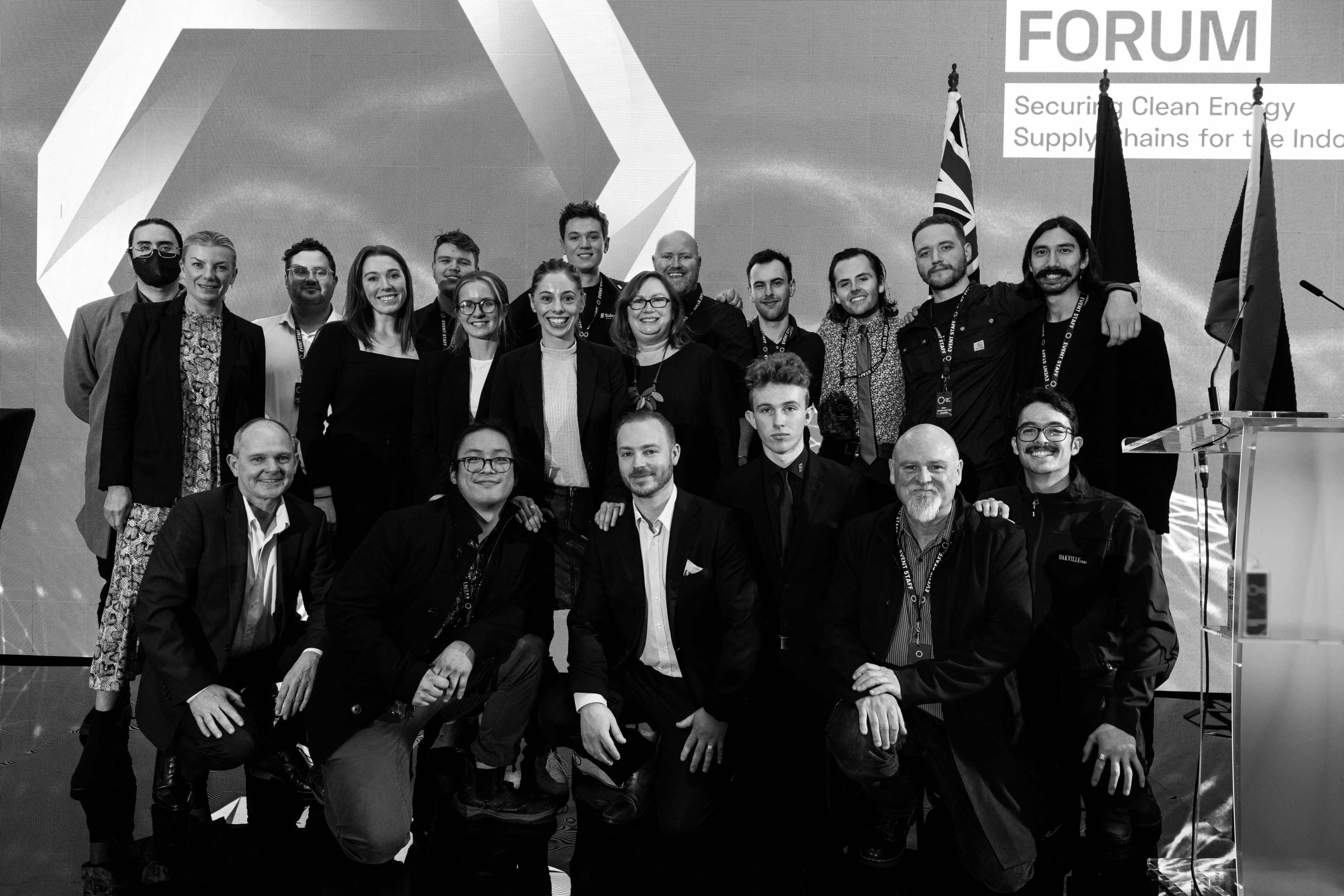
The Brand Rebellion (communications, event, design), Mude (creative), Pitch Perfect Media (media) and Sidestage (AV) teams
Video production
Event documentary highlighting the 2 days of the forum
Related Projects
View Project
Video, Campaigns
Defence Housing Australia
View Project
Video, Campaigns
Department of Health, Disability & Ageing
View Project

Video, Graphic Design
Department of Health, Disability and Ageing
View Project
Video
Australian Government
View Project
Website
Tamworth Regional Council
View Project
Website
Australian Strategic Policy Institute
View Project
Video
Department of Health, Disability and Ageing
View Project
Video
Sport Integrity Australia
Frequently Asked Questions
Sydney Energy Forum
The Sydney Energy Forum was Australia’s first international clean energy summit hosted at this scale, held on 12 and 13 July 2022 at The Fullerton Hotel Sydney.
It was co-hosted by the Australian Government, the International Energy Agency (IEA) and the Business Council of Australia (BCA), with 300+ delegates including US Energy Secretary Jennifer Granholm, Japan’s METI Minister Koichi Hagiuda, and ministers from India, Indonesia and Samoa.
The forum landed the IEA’s supply-chain concentration agenda in the Indo-Pacific and produced the Australia–US Net Zero Technology Acceleration Partnership, signed live in the room.
The Sydney Energy Forum creative campaign tracked 20 million online media impressions globally, with international broadcast pickup via a broadcast-ready VNR pack and continued reuse through IEA channels, partner-government communications and Department of the Prime Minister and Cabinet digital platforms (captioned and audio-described to government accessibility standards).
The lead film received a standing ovation from delegates and was approved by Dr Alan Finkel, former Chief Scientist of Australia and chair of the forum’s steering committee, without a single edit.
The Australia–US Net Zero Technology Acceleration Partnership was signed live in the room by Chris Bowen and Jennifer Granholm.
A Video News Release (VNR), also called a B-roll package or broadcast-ready VNR, is a packaged set of video and audio assets distributed to international newsdesks for use in their own coverage.
It typically includes a full event film, separate broadcast-quality B-roll, clean interview grabs without overlay graphics, an audio bed without voiceover, and rights metadata clearing the footage for international rebroadcast.
For an intergovernmental forum, the VNR turns a single in-room event into international media coverage in markets where no journalist was present. The Sydney Energy Forum VNR pack went out to international newsdesks immediately after the forum closed and kept circulating afterwards through IEA channels, partner-government communications, and PM&C digital platforms.
Filming a global intergovernmental summit across seven shoot locations in six countries (Sydney, Perth, London, Paris, Tokyo, New Delhi and San Francisco) involves multiple logistical layers most non-government production briefs never encounter.
The first is access. Interviews with Andrew Forrest in London, Yoshinori Kanehana in Kobe, Audrey Zibelman in San Francisco, and ministers in New Delhi were organised through each principal’s office.
The second is editorial coherence across crews who never meet each other. The shoots need to read as one body of work even if four different crews recorded them, which requires pre-aligned framing rules, a shared visual reference deck, identical interview question stems, the same grading spec, and locked-down decisions on which interviews intercut with which before any of them happens.
The shoot across six countries finished in eight weeks because the editorial decisions that usually happen in post were made before each crew started filming.
The International Energy Agency (IEA) is an autonomous intergovernmental organisation established in Paris in 1974 in response to the 1973 oil crisis. The IEA works with governments and industry on energy policy, energy security, technology and the energy transition, and has more than 30 member countries across the major economies of the Americas, Europe and the Asia-Pacific.
Dr Fatih Birol has served as Executive Director since 2015. The IEA’s annual flagship publications include the World Energy Outlook and the Net Zero by 2050 roadmap, which inform government and industry policy on emissions, electrification and supply chain risk globally.
The IEA was a co-host of the Sydney Energy Forum 2022 alongside the Australian Government and the Business Council of Australia, with the forum landing the IEA’s supply chain concentration agenda in the Indo-Pacific region.
The Sydney Energy Forum drew more than 300 foreign and trade ministers, captains of industry, researchers and government delegates across 12 and 13 July 2022. Named attendees included Prime Minister Anthony Albanese, US Energy Secretary Jennifer Granholm, Japan’s METI Minister Koichi Hagiuda, Australian Minister for Climate Change and Energy Chris Bowen, IEA Executive Director Dr Fatih Birol, and ministers from India, Indonesia and Samoa.
The forum’s steering committee was chaired by Dr Alan Finkel AC, former Chief Scientist of Australia.
Named interviewees in the Mude case study films included:
- Andrew Forrest AO (Chairman, Fortescue Metals) in London
- Yoshinori Kanehana (Chairman, Kawasaki Heavy Industries) in Kobe
- Shoichiro Watanabe (Chief Technology Officer, Panasonic Energy) in Osaka
- Audrey Zibelman (then at Google’s moonshot factory X) in San Francisco
- Larry Marshall AO (Chief Executive, CSIRO)
- Professor Martin Green AO (UNSW Sydney)
The International Energy Agency‘s supply chain concentration agenda is the IEA’s published analysis of the structural risk that critical clean energy supply chains, including solar PV manufacturing, lithium and rare earth processing, battery cell production and electrolyser manufacturing, sit concentrated in a small number of countries. The IEA’s flagship 2022 publications under Executive Director Dr Fatih Birol elevated this concern as a structural risk to the global energy transition.
The Sydney Energy Forum gave the IEA a platform to land the supply chain concentration agenda in the Indo-Pacific region. Co-host Australia framed the conversation around regional diversification of supply, processing and manufacturing capacity. The Indo-Pacific accounts for roughly half of global energy consumption and emissions and holds a high share of the world’s critical mineral reserves and processing capacity.
For the Mude case study films, the supply chain agenda was the strategic spine across the four films, with each interview building a different piece of the supply chain argument from a different vantage in the region and the diaspora.
Dr Fatih Birol is the Executive Director of the International Energy Agency (IEA), a position he has held since 2015. The IEA’s published supply chain concentration analysis under his leadership shaped the strategic agenda of the Sydney Energy Forum.
Dr Birol attended the Sydney Energy Forum in 2022 alongside Prime Minister Anthony Albanese and other heads of delegation. Mude photographed Dr Birol with Prime Minister Albanese on Sydney Harbour during the forum, with the photography distributed through Department of the Prime Minister and Cabinet and IEA channels as part of the broad media coverage.
Dr Birol’s academic background is in energy economics, and he held senior positions at OPEC and the IEA before becoming Executive Director.
The Sydney Energy Forum creative campaign was delivered by a coalition of partners working alongside the Department of the Prime Minister and Cabinet (PM&C). PM&C ran the production. Brand Rebellion led on communications and event design. Pitch Perfect Media handled media relations. Sidestage delivered the projection-mapped animation on The Fullerton Hotel facade as the AV partner. The Gondwana Choir performed the original opening song commissioned for the forum.
Mude was the creative partner across video production, photography, motion design and the design suite (invitation pack, place cards, menus, digital signage, thank-you notes, and on-screen treatment of films, charts and recorded interviews). The combined output of the partner coalition reached 20 million online media impressions globally.
The Indo-Pacific clean energy supply chain is the network of raw material extraction, processing, component manufacturing and assembly that underpins clean energy technologies in the Indo-Pacific region. The supply chain spans solar PV modules, battery cells, hydrogen electrolysers, wind turbines, rare earth magnets and the critical minerals that feed those products. The region accounts for roughly half of the world’s energy consumption and emissions, and a high share of the world’s critical mineral reserves and processing capacity.
The Sydney Energy Forum framed the question of how Indo-Pacific nations can diversify supply chains and reduce concentration risk in solar PV manufacturing, lithium processing and rare earth refining. Australia’s role as a critical minerals supplier and as a potential green hydrogen exporter sits at the centre of this conversation.
The Mude case study films built the supply chain argument across multiple interview locations, including Fortescue (Australia), Kawasaki Heavy Industries (Japan), Panasonic Energy (Japan), CSIRO (Australia) and UNSW (Australia).
Corporate communications design for an intergovernmental forum spans the full visual and verbal system that surrounds a multi-day diplomatic event. The Sydney Energy Forum design suite covered:
- the invitation pack distributed to heads of mission and corporate delegations
- place cards for the ballroom
- menus for working dinners
- digital signage across the venue
- thank-you notes sent to delegates and partners
- the on-screen treatment of films, charts and recorded interviews
The design system serves both heads-of-mission formality and working-session utility through a single coherent visual and verbal language. The brand identity, palette, typography and motion language hold across a place card and a multi-minute case study film, across a media room and a signing-ceremony backdrop.
Mude designs corporate communications systems for government and corporate clients across Sydney and Canberra, with a practice that includes the Sydney Energy Forum, the ASPI Critical Technology Tracker, Why Standards / FHIR, and the COP29 Australian Pavilion.
Mude delivered video production, photography, motion design and graphic design across two days at The Fullerton Hotel Sydney and across seven shoot locations in six countries: Sydney, Perth, London, Paris, Tokyo, New Delhi and San Francisco.
The slate included four case study films, an event documentary, projection-mapped motion design, photography of 300+ delegates as working participants, and a design suite running from invitation pack to place cards.
The brief was eight weeks for what is typically a four-to-six-month production. The output reached 20 million online media impressions globally and continued circulating through IEA channels and partner-government communications.
Mude has delivered government creative campaigns and corporate communications design for:
- the Department of the Prime Minister and Cabinet (Sydney Energy Forum)
- the Department of Health, Disability and Ageing (including the BreastScreen Australia awareness campaign and Why Standards / FHIR)
- Sport Integrity Australia
- the Civil Aviation Safety Authority
- the Australian Strategic Policy Institute
- the Business Council of Australia
The Mude practice runs from studios in Sydney and Canberra across brand identity, video production, photography, motion design, web design and corporate communications design for government and corporate clients working on complex policy and stakeholder communications.
The Sydney Energy Forum brief was contracted under the Morrison government and delivered under the Albanese government. The federal election was on 21 May 2022 and the forum opened on 12 July. The brief had been written for the Morrison government’s energy portfolio under Minister Angus Taylor and was delivered after the change of government to Minister Chris Bowen.
Caretaker conventions cover the public-service messaging restraint that runs from the day Parliament is dissolved through to the election result. The large challenge in this brief was the change of political messaging direction across the eight-week creative window. Talent interviews recorded after the May election needed to be framed against the new Albanese government’s policy positioning.
Projection mapping is the technique of projecting motion graphics onto a three-dimensional surface (most often a building facade) using software that maps the projection to the geometry of the surface, so the imagery wraps to the architecture.
At the Sydney Energy Forum, the brand identity ran as projection-mapped animation across The Fullerton Hotel’s sandstone facade, delivered with AV partner Sidestage. The building was Sydney’s General Post Office for its first century, built in the 1890s as the city’s central postal and telecommunications hub.
The Business Council of Australia (BCA) is Australia’s peak business advocacy body, representing the chief executives of Australia’s largest corporations on policy matters of national significance. The BCA was established in 1983 and is headquartered in Sydney.
The BCA co-hosted the Sydney Energy Forum 2022 alongside the Australian Government and the International Energy Agency, contributing the Australian business voice to the forum’s focus on Indo-Pacific clean energy supply chains. The BCA’s policy work spans tax, energy, climate, workforce, productivity, infrastructure, trade and competitiveness, and the organisation publishes regular policy submissions and research reports that inform Commonwealth policy.
The BCA sits within the Australian corporate and policy community that Mude works with across brand identity, corporate reporting design and stakeholder communications.
The Australia–US Net Zero Technology Acceleration Partnership is a bilateral government agreement signed by Australian Minister for Climate Change and Energy Chris Bowen and US Secretary of Energy Jennifer Granholm at the Sydney Energy Forum on 12 July 2022. The partnership accelerates joint development and deployment of zero-emissions technology and cooperation on critical minerals supply chains.
The initial cooperation areas named at signing include long-duration energy storage, grid integration, clean hydrogen, direct air capture, and critical minerals and materials. A parallel Memorandum of Understanding was signed between Australia’s CSIRO and the United States National Renewable Energy Laboratory (NREL) on energy transition technology cooperation.
The partnership’s stated goal is to accelerate deployment toward 2030 emissions targets and the commitment to net zero by 2050. Mude produced the creative campaign surrounding the partnership signing and the broad forum, with the signing footage included in the broadcast-ready VNR pack distributed to international newsdesks.
Dr Alan Finkel AC is an Australian neuroscientist, engineer and entrepreneur who served as Chief Scientist of Australia from 2016 to 2020. He chaired the Sydney Energy Forum’s steering committee in 2022 and led the 2020 Low Emissions Technology Roadmap that informed Australia’s Long-Term Emissions Reduction Plan.
Dr Finkel previewed the lead Mude case study film for the Sydney Energy Forum ahead of its screening to the 300+ delegates, approving the cut without a single edit. The lead film received a standing ovation in the Fullerton Hotel ballroom on 12 July 2022.
His other roles have included Chancellor of Monash University and Special Adviser to the Australian Government on Low Emissions Technology. Dr Finkel was made an Officer of the Order of Australia (AO) in 2014 and elevated to Companion (AC) in 2022.
The Fullerton Hotel Sydney is a heritage-listed sandstone building in Martin Place, completed in the 1890s as Sydney’s General Post Office and operated as the city’s primary postal and telecommunications headquarters for roughly a century before its conversion to a hotel. The Sydney Energy Forum used the Fullerton ballroom for the two days of plenary, working sessions and the signing ceremony for the Australia–US Net Zero Technology Acceleration Partnership on 12 and 13 July 2022.
The building’s sandstone facade served as the projection surface for the Sydney Energy Forum brand animation, delivered by Mude with AV partner Sidestage as projection-mapped motion design. The communications heritage of the building carried the visual identity for the duration of the forum.
The Sydney Energy Forum in 2022 was Australia’s first international clean energy summit hosted at this scale, after a decade in which most Indo-Pacific energy conversations had been led from elsewhere. The forum drew more than 300 delegates including US Energy Secretary Jennifer Granholm, Japan’s METI Minister Koichi Hagiuda, IEA Executive Director Dr Fatih Birol, and ministers from India, Indonesia and Samoa.
The forum produced three formal agreements signed in-room: the Australia–US Net Zero Technology Acceleration Partnership, the Minerals Security Partnership, and a Memorandum of Understanding between Australia’s CSIRO and the US National Renewable Energy Laboratory.
The Albanese government had been in office for seven weeks when the forum opened, and the event set the framing for Australia’s role in regional clean energy supply chains, including the country’s positioning as a critical minerals supplier and potential green hydrogen exporter for the Indo-Pacific.
The Department of the Prime Minister and Cabinet (PM&C) procures creative and communications services through the Whole-of-Australian-Government Communications Arrangement and through individual departmental panels. Agencies who work with PM&C and adjacent Commonwealth departments include the large network agencies on the WoAG panel, behaviour-change specialists, and boutique studios with documented government credentials.
Mude has delivered creative work for PM&C across the Sydney Energy Forum 2022, with adjacent government work spanning the BreastScreen Australia awareness campaign for the Department of Health, Disability and Ageing, Sport Integrity Australia, the Civil Aviation Safety Authority, the ASPI Critical Technology Tracker, and the COP29 Australian Pavilion motion design.
The agencies who work in this space tend to share a Canberra footprint, working knowledge of the Australian Government Style Manual, and a portfolio that documents delivered Commonwealth work.