Civil Aviation Safety Authority
Keeping pace with new innovations to support emerging aviation technologies
We produced a four-part explainer film and motion graphics series for the Civil Aviation Safety Authority, explaining its drone and air-taxi roadmap to the public.
This CASA campaign consisted of both motion graphics for their website, as well as four explainer films, pieced together from 13 interviews with CASA authorities and industry leaders. Each video helped to highlight and define the pathway forward for the RPAS and eVTOL industries, while carefully outlining the community benefits and safety approaches implemented by CASA.
We did this through a combination of interviews, voice over, modern b-roll, and retro-style animation, which all together created an engaging and focused result.
A four-part explainer film and motion graphics series for the online rollout of CASA’s drone and air-taxi regulatory roadmap.
CASA asked us to make a set of films for the online version of its drone and air-taxi roadmap. The roadmap sets out how Australia plans to regulate drones (officially remotely piloted aircraft systems, or RPAS) and the new generation of air taxis, grouped under what’s called Advanced Air Mobility (AAM), over the years ahead. It sits under the federal government’s New and Emerging Aviation Technology policy, and CASA had spent close to a year building it with a working group from across industry and government before putting it out for public consultation.
The roadmap is a long, dense document. The online version was built to be interactive, with short films and explanatory graphics alongside it to make the content easier to take in, and the films are the part we made. AusTrade was also using the roadmap to attract drone and eVTOL companies from overseas, so some of the audience was companies deciding where in the world to set up.
CASA wanted a few things from the work: to get across that Australia is a good place to invest in this technology, to promote the newer kinds of operations, and to show that they can be done safely, and that easing the rules for industry doesn’t have to mean a lower safety bar.
The roadmap reaches a wide spread of people: a farmer thinking about a spray drone, a delivery business owner weighing up whether the technology is worth the outlay, a commuter who’s only ever seen flying taxis in a cartoon, an overseas research lead deciding where to base their testing. We split the series into four, each film built around a theme and the audience that goes with it, with a handful of interviews pulled together under each one.
The four explainer films
The first is about agriculture. It follows a grower using drones on his own property, spraying crops and helping muster stock, with CASA clearing some of the red tape that used to sit in the way. CASA’s excluded category lets people fly drones up to 25 kilograms over their own land for lower-risk work without a full remote pilot licence (RePL), which saves farmers from being caught up in approvals just to fly over their own paddocks.
Charging a battery is cheaper than fuelling a chopper, and a lot of farm work won’t wait, so being able to pull a drone out of the back of the ute and get a job done without waiting for someone to turn up makes a difference.
Spray drones especially have taken off over the last few years, and in a wet season when the paddocks are too boggy for a self-propelled sprayer and the crop-duster is flat out, a drone is sometimes the only way to get a spray on in time. Drones aren’t replacing the machines or the people, they sit alongside them. We talked to people living it, like Meg Kummerow from Fly The Farm.
The second is about delivery, built around Wing, who’ve been running a drone delivery service in Australia for years. They deliver thousands of packages a week across Canberra and South East Queensland, from medication to coffee to groceries, with a drone going out roughly every thirty seconds across their sites.
Wing got there by working through CASA’s safety process one step at a time, what they call a crawl-walk-run approach, until they were flying beyond visual line of sight, over people, with a single pilot overseeing several aircraft at once. The film walks through how CASA approves an operation like this, an outcomes-based approach where the operator shows how they’ll manage the risks rather than working off a fixed checklist.
It also covers the everyday side: cars taken off the road, deliveries reaching homes that aren’t near the shops, and groceries still arriving during the Logan floods when the local stores were shut. And it shows that the drones overhead are flying under CASA’s oversight.
The third is about passenger flight, aimed at the sceptic. It walks a commuter, someone who’s heard about flying taxis and assumes they’ll never happen, through how the skies above a city would be managed. This is where eVTOLs come in, the electric vertical take-off and landing aircraft that lift off like a helicopter but run on a lot of small electric motors, which makes them quieter, cleaner and potentially cheaper to run than the helicopters around now.
The film works through what a sceptic wants to know: whether they’ll be safe, whether the sky will be full of noise, whether there’ll be a pilot on board to start with, and how air traffic gets managed once there’s a lot more of it up there.
It features the people building these aircraft, like Rob Weaver from Eve Air Mobility, and CASA’s view that they can become part of the transport network once the safety and the community side are worked through. Clem Newton from Skyportz covers vertiports, the places these aircraft take off and land, which start out inside existing aviation sites rather than on suburban rooftops and spread from there as the public gets used to them.
The film is also clear that a lot of this is still a couple of years off, and depends on the aircraft being certified to fly commercially first.
The last film is for overseas companies deciding where in the world to develop and test new aircraft. It lays out what Australia offers them: plenty of low-density airspace to test in, which is harder to find in Europe or the US; a strong record on protecting intellectual property; an established aerospace base; and a regulator that works alongside companies running trials.
CASA recognises type certificates from authorities like the United States, Europe and Canada, so an aircraft already certified there can come into Australia through a simpler validation instead of starting over, which gets operations going faster. CASA has also committed to a research and development framework, a way for operators to test new technology in a controlled, time-limited setting before they’re ready to put up a full safety case.
The film points to Australian work that’s already ahead, like Debbie Saunders and her team at Wildlife Drones, who track endangered animals into country no one can reach on foot.
Making them
The films are voiceover-led, built from interviews and footage with motion graphics layered through for the technical parts. We shot the interviews cinematically, taking the cue from the way Masterclass lights and frames its talking heads, with soft, slightly dramatic lighting and the background falling away so your eye stays on the person. On camera are CASA staff, industry operators, researchers and pilots, cut against footage of the actual work: drones over crops, deliveries in the air, aircraft being built and tested.
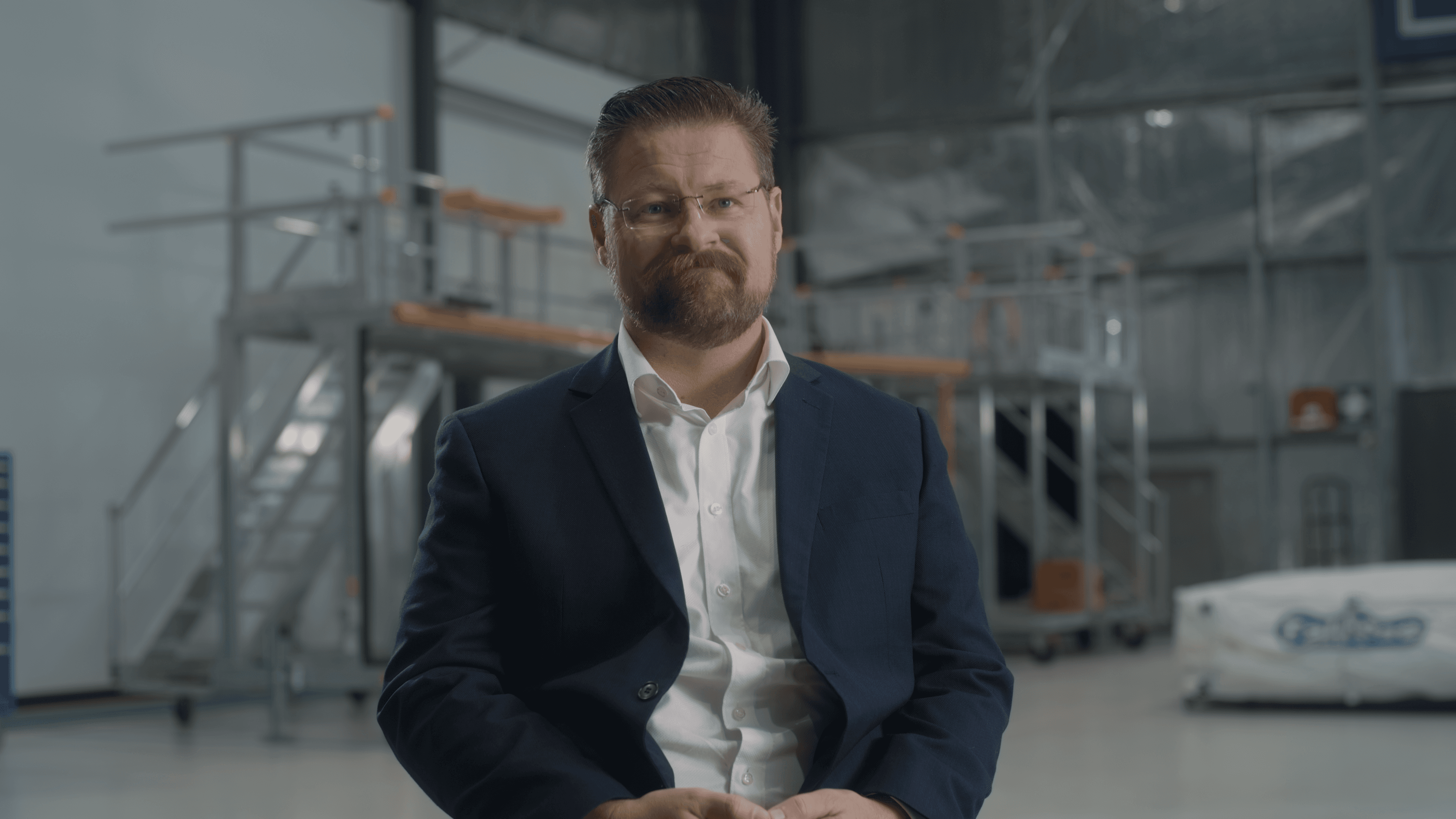
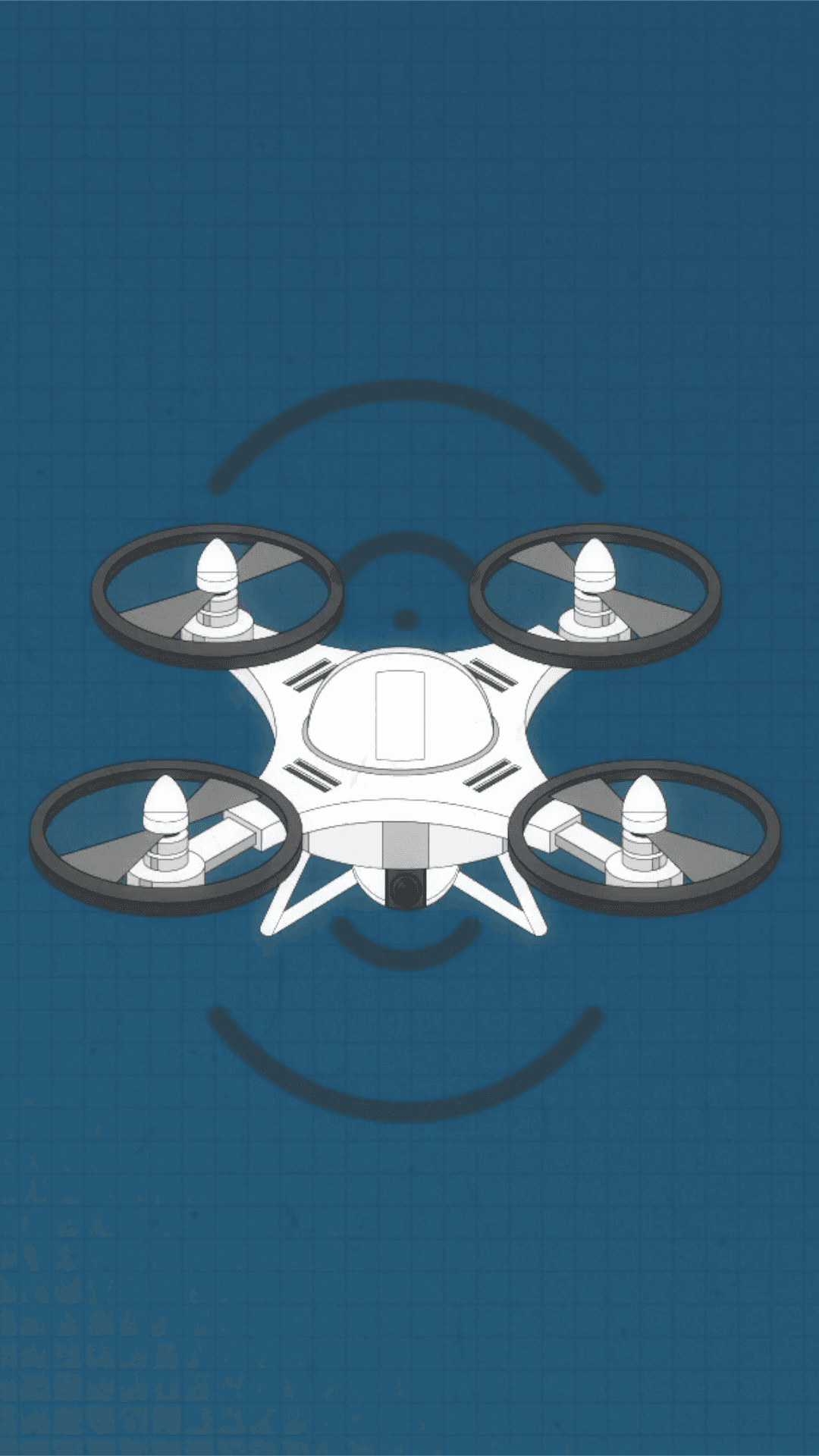
The motion graphics follow the way Vox builds its explainers. They handle no-fly zones, the airspace around an airport, line of sight, and where a vertiport sits, the things that are hard to follow in words alone. We built the maps in Google Earth Studio off real locations, places near the people we interviewed and the areas they work in, so the airspace on screen is the actual spot being talked about.
We also made a set of standalone graphics for the roadmap. Where part of the document needed a diagram more than a film, like how the airspace is divided up or where vertiports fit, it got one in the same visual language as the motion graphics, as a static image.
There’s licensed music underneath, understated and easy to listen to, set low so it keeps the pace without getting in the way of the information. Each film runs on the same shape: open on a situation the viewer already knows, move into what the technology makes possible, then show where CASA fits, and close on the same line, that CASA is keeping the skies safe as the industry grows. Each one ends by pointing back to the roadmap.
We delivered the films as 4K masters and shorter social cuts, captioned to WCAG accessibility standards and produced in line with the Australian Government Style Manual. It is the kind of government video production we do from our Canberra and Sydney studios, for federal departments and regulators.
The interviews are with CASA staff and the people working in each area. Adrian Slootjes from CASA describes how his view of drones changed over the years, from wanting them kept clear of his own aeroplane to seeing what they can do: “it’s not an invasion, it’s an occupation. There are already more of them than there are of us.” Richard Stocker and Sharon Marshall-Keeffe, also from CASA, cover the regulatory side, what gets certified and what the rules allow. The growers, operators and researchers talk about what the technology has changed in their own work.
Related Projects
View Project
Video, Campaigns
Defence Housing Australia
View Project
Video, Campaigns
Department of Health, Disability & Ageing
View Project

Video, Graphic Design
Department of Health, Disability and Ageing
View Project

Video
Australian Government
View Project

Website
Tamworth Regional Council
View Project

Video, Photography
Department of the Prime Minister and Cabinet
View Project

Website
Australian Strategic Policy Institute
View Project

Video
Department of Health, Disability and Ageing
Frequently Asked Questions
Explaining the rules for drones and air taxis
Advanced Air Mobility (AAM) is the term for a new generation of aircraft built to move people and goods in ways conventional aviation has not, most visibly the electric air taxis and the large uncrewed aircraft that sit beyond today’s drones. In Australia it is regulated by the Civil Aviation Safety Authority (CASA), which groups AAM alongside remotely piloted aircraft systems (RPAS, the formal name for drones) in a single forward plan for how the technology enters Australian airspace.
Mude produced the explainer film series for CASA’s RPAS and AAM roadmap, including the passenger-flight film that introduces AAM to a general audience. The category covers more than air taxis: cargo flights, regional connections, and operations that are crewed at first and expected to become uncrewed over time. What sets it apart from existing aviation is the aircraft themselves, electric and built to take off vertically, and the fact that the rules for flying them commercially are still being written.
CASA’s position, set out across the roadmap, is that these operations join the transport network once their safety and community impact have been worked through.
Drones in Australia are regulated by the Civil Aviation Safety Authority (CASA), which uses the formal term remotely piloted aircraft systems, or RPAS. The rules scale with risk: low-risk flying carries reduced requirements, and complex operations, flying beyond the pilot’s line of sight, over people, or near controlled airspace, need CASA approval that grows with the risk involved.
CASA’s strategic plan for the sector is set out in its RPAS and AAM Strategic Regulatory Roadmap, developed with industry and government and sitting under the federal New and Emerging Aviation Technology policy. Mude produced the explainer films for the online version of that roadmap.
The films make CASA’s approach concrete: for hard operations it is outcomes-based, so an operator shows how it will manage the specific risks of what it wants to do. That is how a company like Wing reached routine drone delivery, and it is the same logic that lets a farmer fly over their own paddocks under lighter rules.
The roadmap is a long, dense document, which is exactly why CASA commissioned short films and graphics to sit alongside it.
Drone delivery in Australia is approved through CASA under an outcomes-based process:. It is an incremental path, which is why operators describe it as crawl, walk, run.
The delivery film Mude produced for CASA’s roadmap follows Wing, who have been running a drone delivery service in Australia for years and now deliver thousands of packages a week across Canberra and South East Queensland, with a drone going out roughly every thirty seconds at their busiest sites. They reached that point step by step: flying within line of sight first, then beyond it, then over people, and eventually with a single pilot overseeing several aircraft at once.
The film also covers the parts that do not make headlines, like groceries still arriving in Logan during floods when the local shops were shut, and it is clear throughout that the drones overhead are operating under CASA’s oversight.
A vertiport is the place an electric air taxi takes off from and lands at, the eVTOL equivalent of a helipad or a small airport. In the early years they are not expected to appear on suburban rooftops; they start inside existing aviation sites, where the infrastructure and oversight already exist, and spread outward as the public and the regulator get more comfortable with the operations.
This is covered in the passenger-flight film Mude produced for CASA’s roadmap, with Clem Newton from Skyportz walking through what a vertiport is and where the first ones realistically sit. It is one of the questions that is hard to follow in words alone, which is why the roadmap films lean on motion graphics to show where a vertiport fits in the airspace around a city.
Vertiports matter to the timeline because air taxis need somewhere to operate from, and that infrastructure rolls out gradually.
Mude produced a four-part film and graphics series for the online version of CASA’s RPAS and AAM Strategic Regulatory Roadmap, delivered in 2022. It was the second run of video work Mude had done with CASA. The roadmap itself is a long, dense regulatory document, and the online version was built to be interactive, with short films and explanatory graphics making it easy to take in.
Each film was built around one theme and the audience that goes with it: a grower weighing up drones on the farm, a delivery operator, a city commuter sceptical about air taxis, and an overseas manufacturer deciding where to develop and test new aircraft. Mude’s scope ran from discovery and creative direction through scriptwriting and storyboarding, cinematography, 2D motion graphics and illustration, and post-production.
The series was delivered as four explainer films of a few minutes each, four thirty-second social cut-downs, and five standalone graphics for the roadmap, supplied as 4K masters and social versions with WCAG captions. Mude did not touch CASA’s brand or tell CASA how to regulate; the work was the storytelling that made a dense roadmap legible to the people it needed to reach.
The move that makes a dense document work on screen is to stop treating it as one audience. CASA’s drone and air-taxi roadmap reaches a farmer thinking about a spray drone, a delivery business weighing up the outlay, a commuter who has only seen flying taxis in cartoons, and an overseas research lead deciding where to base testing.
Mude split the roadmap series into four films, each built around one of those audiences and what they are worried about or hoping for, with a handful of interviews under each. From there it is a question of craft. The interviews are shot cinematically, taking the cue from the way Masterclass lights and frames a talking head, so the viewer’s eye stays on the person.
The technical parts that words struggle with, no-fly zones, the airspace around an airport, where a vertiport sits, are handled with motion graphics, built on real locations in Google Earth Studio so the airspace on screen is the actual place being discussed. Each film opens on a situation the viewer already recognises, moves into what the technology makes possible, shows where CASA fits, and points back to the roadmap.
That structure turns a document almost nobody would read end to end into something a farmer or an investor will watch.
Motion graphics are animated graphic elements, text, diagrams, maps and simple illustration, used to explain or emphasise something live footage cannot show on its own. A project needs them when the subject has a spatial or abstract dimension that words and filmed footage struggle to carry: how a system fits together, how a process moves, where something sits in space. CASA’s roadmap is a clear case.
Mude used motion graphics to handle the parts of drone and air-taxi regulation that are hard to picture, no-fly zones, the airspace around an airport, line of sight, and where a vertiport fits, taking the cue from the way Vox builds its explainers. The maps were built in Google Earth Studio from real locations near the people interviewed, so the airspace on screen is the actual area being discussed.
Where part of the roadmap needed a diagram more than a film, Mude produced standalone graphics in the same visual language, so the static and moving pieces read as one system. Motion graphics earn their place when they make something legible that would otherwise stay abstract.
An eVTOL is an electric vertical take-off and landing aircraft: it lifts off and lands like a helicopter and runs on a lot of small electric motors. That design makes it quieter, clean and potentially cheap to run than the helicopters operating now, which is why eVTOLs are the aircraft most people picture when they hear ‘flying taxi’.
In the passenger-flight film Mude produced for CASA’s roadmap, the eVTOL is explained to a viewer who assumes the whole idea is science fiction: how the aircraft works, whether there is a pilot on board to begin with, and how the airspace above a city gets managed once there are more of them.
The honest part of that film, and of CASA’s roadmap generally, is that commercial passenger flights are still a couple of years away and depend on each aircraft type being certified to fly. eVTOL developers such as Eve Air Mobility appear in the film talking through where the technology actually is,.
In many cases, yes. CASA’s excluded category lets a landholder fly a drone of up to 25 kilograms over their own land for low-risk work without holding a full remote pilot licence, which keeps a grower from needing formal approvals just to fly over their own paddocks.
It applies to the low-risk end of operations, so it is not a blanket exemption: heavy aircraft, flying beyond line of sight, or work near other people or airspace still bring CASA’s rules into play. The agriculture film Mude produced for CASA’s roadmap follows a grower doing exactly this kind of flying, spraying crops and helping muster stock.
The practical case it makes is plain: charging a battery costs less than fuelling a chopper, and a lot of farm work will not wait, so being able to put a spray on in a wet season when the paddocks are too boggy for a ground sprayer can be the difference between getting the job done and missing the window.
Meg Kummerow from Fly The Farm is one of the operators who appears, talking about what the technology has changed on the ground. Drones sit alongside the existing machinery and crews.
Passenger air taxis are coming to Australia. The timeline is not imminent, and safety is the gate they have to pass through first. The aircraft are eVTOLs, electric and vertical take-off, and CASA’s position is that they can become part of the transport network once their safety and the community questions around them have been worked through. Commercial passenger flights are still a couple of years away and depend on each aircraft type being certified to fly.
Mude produced the passenger-flight film for CASA’s roadmap, and it is built for the sceptic. It walks through what someone actually wants answered before they would step in: whether the aircraft is safe, whether the sky will be full of noise, whether there is a pilot on board to begin with, and how air traffic is managed once there are many more aircraft in the air.
People building the aircraft, such as Rob Weaver from Eve Air Mobility, appear alongside CASA, and Clem Newton from Skyportz explains where these aircraft would take off and land. The film does not oversell the timeline, which is part of why CASA could put it in front of a public that is reasonably sceptical.
Yes, and Australia actively positions itself as a place to do it. The pitch, which Austrade uses the CASA roadmap to make, rests on a few concrete advantages: large areas of low-density airspace to test in, which are hard to find in Europe or the United States; a strong record on protecting intellectual property; an established aerospace base; and a regulator that works alongside companies running trials.
Certification is the part that usually worries overseas operators, and Australia has shortened it. CASA recognises type certificates from authorities including the United States, Europe and Canada, so an aircraft already certified in one of those jurisdictions can enter Australia through a simple validation.
CASA has also committed to a research and development framework that lets operators test new technology in a controlled, time-limited setting before they are ready to put up a full safety case. Mude produced the film aimed at this audience for CASA’s roadmap, which features Australian work already ahead of the field, such as Debbie Saunders and her team at Wildlife Drones tracking endangered animals into country no one can reach on foot.
Most explainer-video work in Australia comes from animation studios producing purely animated pieces, which suits a software product. It is a poor fit for a government regulator that needs real operators, real locations and real authority on screen. Mude works in the gap between those animation shops and the large film and television production houses: explainer films that combine cinematic interviews with people living the subject and motion graphics that carry the technical parts.
CASA’s RPAS and AAM roadmap series is the apparent example. It is interview-led, shot with CASA staff, industry operators, researchers and pilots, and cut against footage of the actual work, with motion graphics handling the things that are hard to follow in words, such as airspace and line of sight. Mude has produced this kind of public-facing film for other federal clients as well, including the Department of Health, Disability and Ageing.
The studio runs from Sydney and Canberra, and the Canberra base matters here because so many of the departments and regulators commissioning this work are based there.
Australian government communications carry standards consumer video does not, and the two that shape production most are the Australian Government Style Manual and the accessibility requirements built on the Web Content Accessibility Guidelines (WCAG). In practice that means content has to be captioned, legible, and usable by people with vision, hearing and cognitive impairments, and it has to read as official without becoming impenetrable. Mude builds to those standards as a default.
The CASA roadmap films were delivered with captions to WCAG standard, in both their full and social versions, so the series met its accessibility obligations across every format it ran in. The same discipline shapes the rest of the work: motion graphics legible at speed, audio mixed so a voiceover stays clear under music, and a register formal enough for a regulator and plain enough for the farmer or commuter the films are made for.
For a government client, the accessibility bar is set in the brief, and the production is built to meet it from the first cut.
Yes. Mude runs a studio in Canberra alongside its Sydney one, and a substantial part of the Canberra work is video for government departments, regulators and national bodies. CASA is one example, a federal aviation regulator Mude has made two runs of video work with, and the Department of Health, Disability and Ageing is another.
A Canberra base matters for this work because so many of the organisations commissioning public-sector video, the departments, regulators and agencies, are headquartered there, and the briefs tend to be confidential, formal and accountable to a public audience. Government video also runs to a different standard than commercial work, from accessibility requirements through to the Style Manual register, and a studio that does it regularly treats those as part of the brief from the start.
Mude’s government and public-sector video covers explainer films, awareness and education campaigns, interview-led pieces and the motion graphics that go with them, produced for federal and national clients across Canberra and Sydney.