NextOre
Branding a CSIRO commercialisation in mineral extraction for a cleaner future.
Helping miners extract the minerals we need more efficiently with less waste.
We partnered with NextOre to refine their brand strategy and visual identity, positioning them as a vital innovation partner in sustainable mining. As the global leader in Magnetic Resonance Sensing and Ore Sorting Technology, NextOre helps miners extract the minerals we need more efficiently with less waste. Grounded in decades of CSIRO research, their technology reduces waste, emissions, and energy use, setting a new benchmark for responsible resource extraction.
The result was a refined brand strategy, marketing plan, and updated visual identity that balances credibility with growth. By retaining core elements while introducing purposeful messaging and design, the brand reflects NextOre’s innovation and sustainability focus without greenwashing. With a sharpened purpose, NextOre is ready to lead the mining industry in aligning profitability with progress.
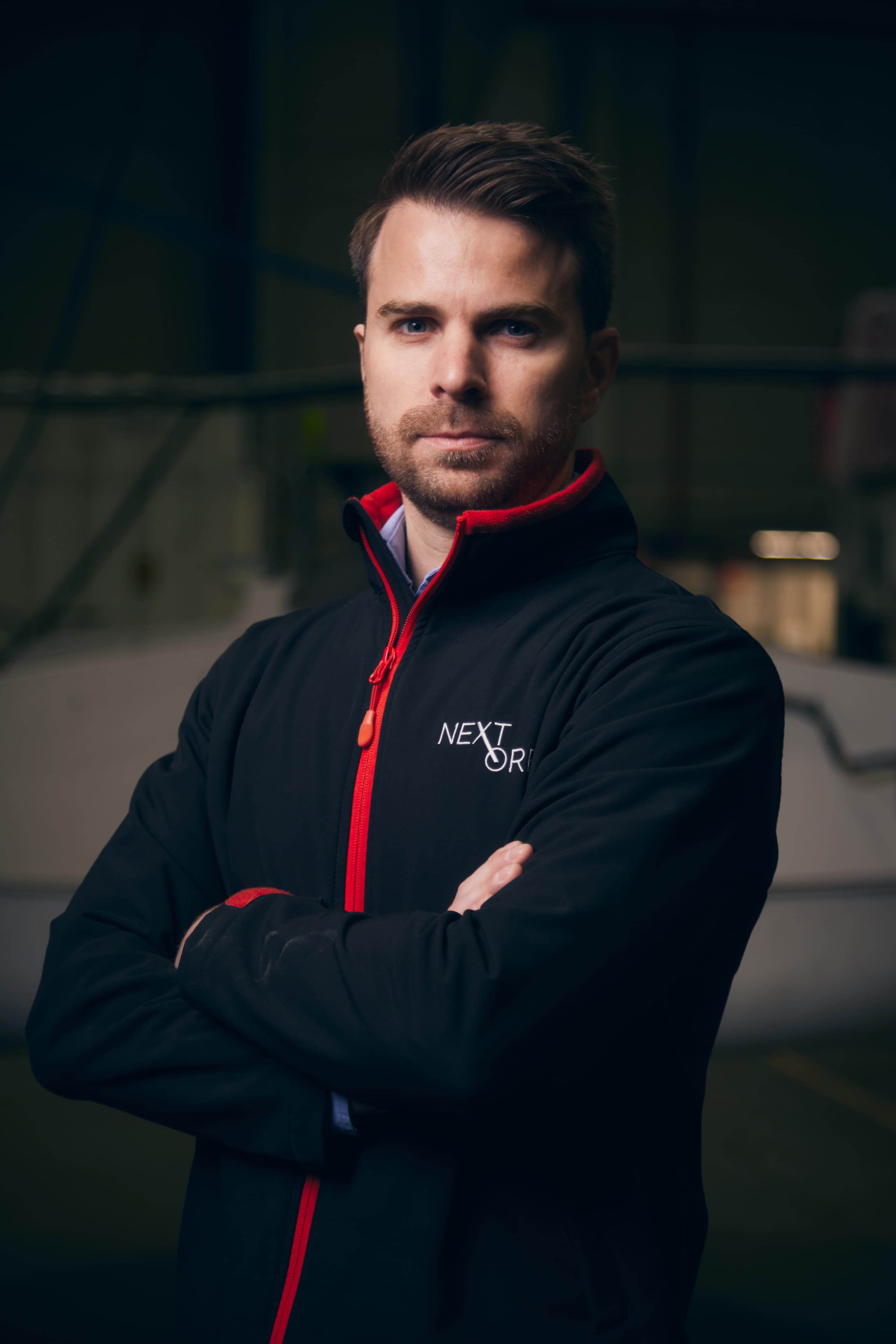
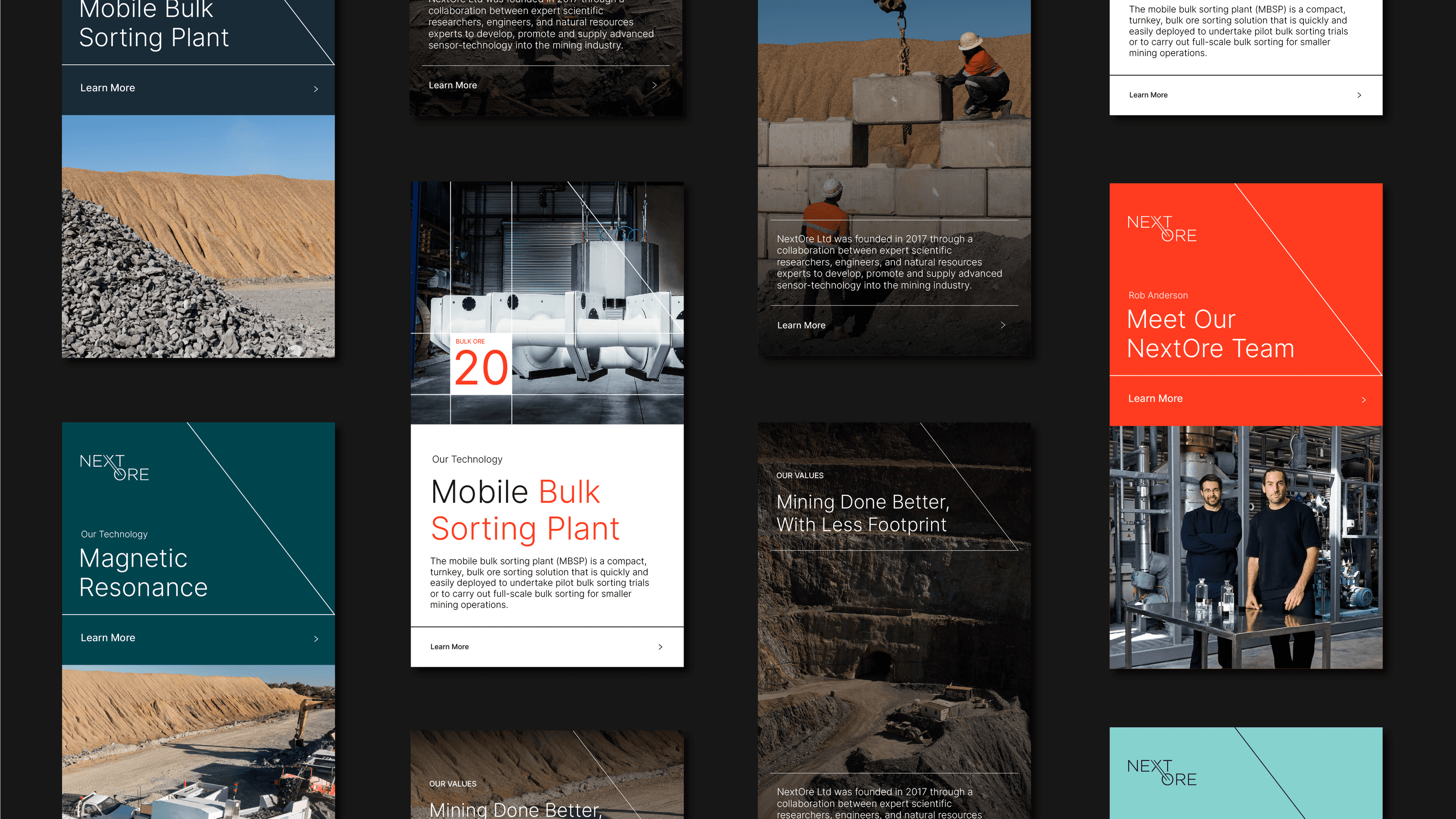
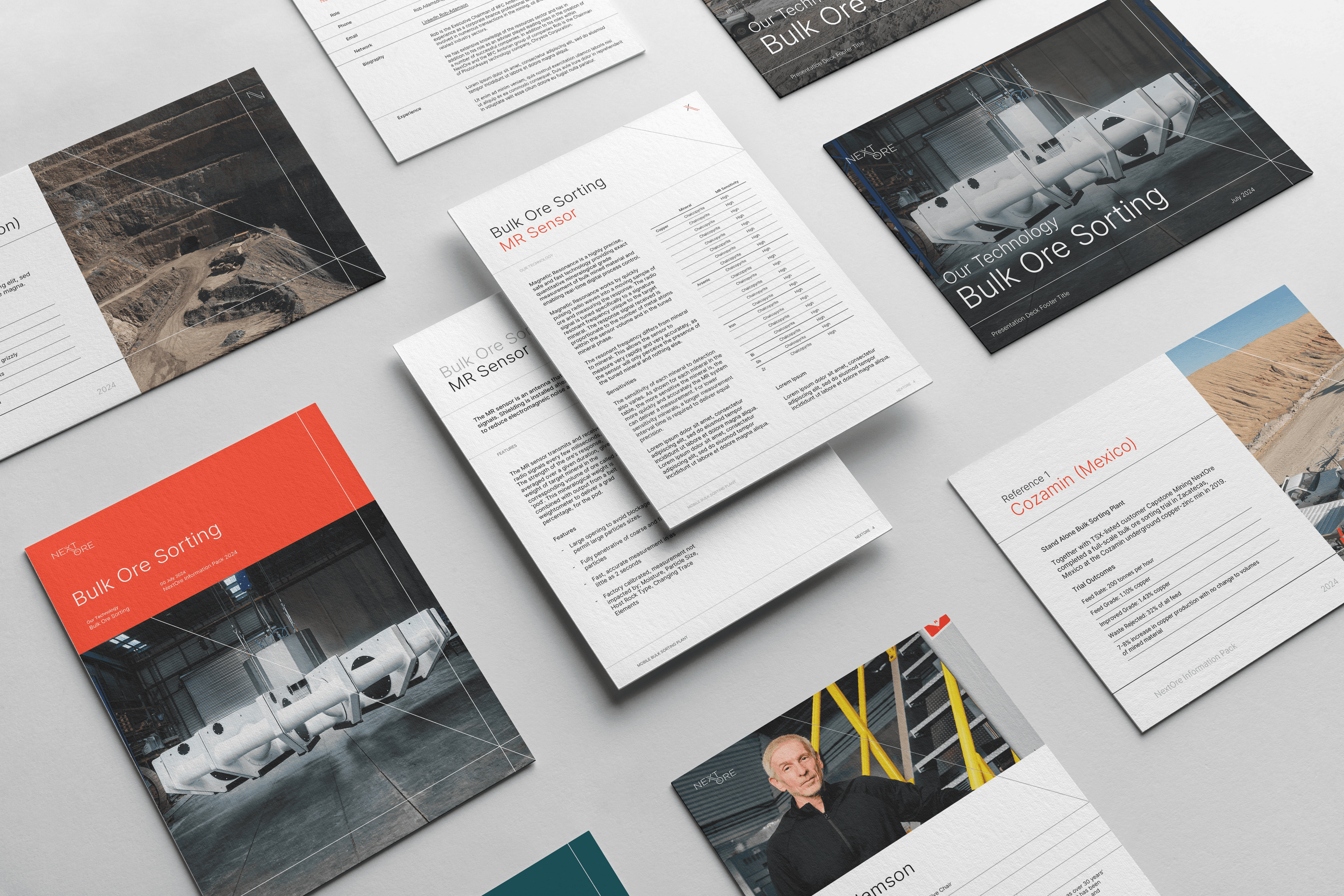
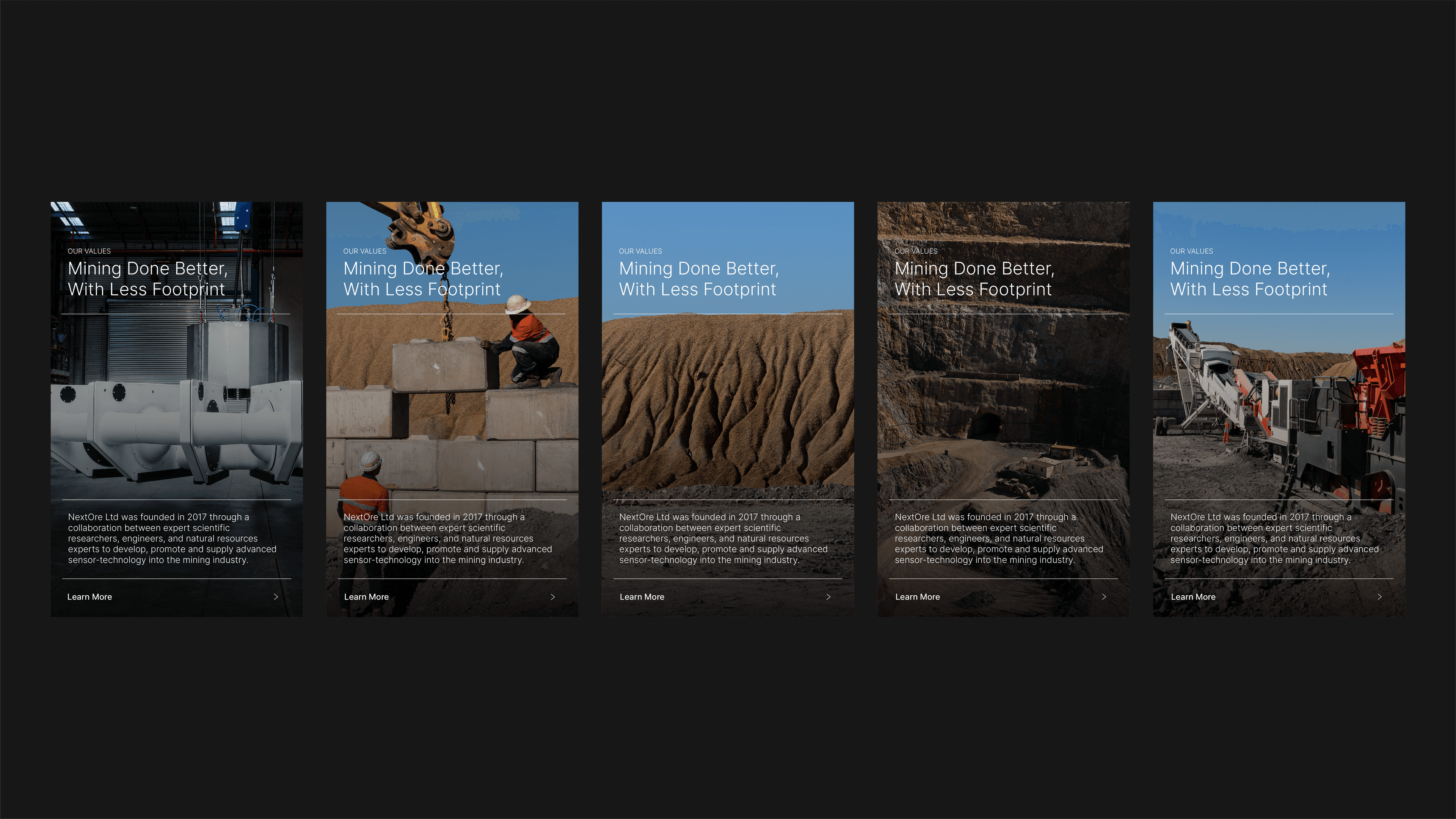
Building on NextOre’s existing identity, we evolved key elements to highlight their innovation and engineering excellence while maintaining a data-led, grounded tone. A modernised design system introduced colours and visuals that reflected their growth in sustainability: purposeful yet restrained, avoiding greenwashing or overstatement. The result is a brand that feels both confident and credible, aligned with their mission to lead in sustainable mining.
Related Projects
View Project
Brand, Website
MagnaTerra Technologies
View Project

Brand, Website
Sunstrata
View Project
Brand
Apporetum
View Project

Video, Campaigns
Defence Housing Australia
View Project

Video
Amazon Music
Webby Awards Nominee
1View Project

Brand
Rosella St
View Project
Video
Sport Integrity Australia
View Project
Website
The Embassy of France in Australia
Frequently Asked Questions
You were going to ask anyway
NextOre is an Australian mining technology company commercialising decades of CSIRO research into Magnetic Resonance ore sensing and bulk ore sorting. The technology measures the grade of mineral ore in real time, before it enters the processing plant, letting mining companies sort uneconomic material out of the stream and significantly reduce the water, energy, reagent consumption and tailings that mining at scale usually produces.
NextOre’s MR technology is currently focused on copper, iron and gold, the minerals critical to the global energy transition. The business is headquartered in Western Sydney, with subsidiaries in Chile and Brazil, and is backed by industry partners including Advisian (the Worley advisory group), RFC Ambrian and Gebr. Pfeiffer. The company has been recognised as Mines and Money Technology Company of the Year (2022), won the KCA Award for Best Licensing Deal (2022), and was the winner of the Australian Technology Competition (2021). NextOre engaged Mude as a brand strategy agency to articulate the company’s positioning, messaging and visual identity. The technology had earned global authority. The brand hadn’t caught up.
NextOre engaged Mude as a brand strategy agency because the company had built a category-leading technology and lacked a brand that matched its commercial ambition. The business was navigating a long B2B sales cycle (typically twelve to eighteen months), serving multiple audiences across mine operations, investment, consulting and board-level decision making, and trying to position a relatively unknown technology brand against well-resourced industry incumbents.
The technical credibility of the business was strong, anchored in decades of CSIRO research. The brand wasn’t carrying that credibility into the market with confidence. The team’s own assessment was direct: if the pitch lands, NextOre doesn’t have a head-to-head competitor. Mude was brought in to develop a unified brand strategy: a clear purpose, vision, mission, value proposition and messaging architecture, plus an evolved visual identity, that would let NextOre move from being a respected technical brand to a recognised category leader in critical minerals technology.
The strategic challenge in NextOre’s brand positioning was selling a technical, infrastructure-scale technology into an industry that traditionally resists change. Mining decisions are made by committee, sales cycles run twelve to eighteen months, and the people responsible for buying the technology are also responsible for managing risk on critical infrastructure. A new technology, no matter how good, has to overcome the default position that the existing way of doing things is acceptable.
NextOre also had to bridge a dual narrative. The technology delivers commercial benefits (high metal output, low operational costs) and environmental benefits (reduced water, energy and tailings), and the brand had to speak credibly to both audiences without slipping into greenwashing. The team’s own brief on voice was clear: don’t arm-wave, back it up. The brand strategy Mude developed treats profitability and sustainability as the same problem.
NextOre’s brand has to serve five distinct audiences across the mining value chain. Mine General Managers and Technical Services Managers, who diagnose underperformance and identify solutions. Production Managers, who put the numbers together that go into the business case. Consulting and engineering houses, who specify technology into projects on behalf of operators. CEO and board-level decision makers, who weigh commercial and reputational risk and approve the capital. And investors, who care about the long-term commercial trajectory and the sustainability narrative.
Each audience has different information needs and a different decision framework. The brand strategy Mude developed had to land across all five without diluting the technical credibility that anchored the company’s authority. The three-pillar messaging architecture lets the same brand carry different conversations: a technical conversation about MR sensing and ore sorting, a commercial conversation about cost reduction and metal yield, and a sustainability conversation about decarbonisation and tailings reduction.
A logo refresh updates the visual mark of the company. A brand strategy engagement is something fundamentally different: it develops or refines the foundational strategic architecture of the brand, including purpose, vision, mission, values, positioning, value proposition, messaging architecture and tone of voice. The logo is one expression of that strategy, not the strategy itself.
For NextOre, the engagement was a brand strategy build. The logo was fine. The brand around it wasn’t. What got built was the strategic layer underneath: who NextOre is for, who they’re against, what they stand for, what they promise, and how they communicate that promise consistently across every audience touchpoint. Three structured brand strategy workshops developed that foundation, opening with a brand audit and audience discovery phase before moving into the strategic articulation work. The visual identity evolved afterwards to express the strategy more clearly. The strategic work came first.
Brand strategy for deep-tech and resources companies in Australia is served by a mix of brand strategy agencies, brand identity agencies, B2B marketing specialists and consultancy houses. The work tends to cluster around three patterns:
- pure consultancy-led brand strategy (heavy on strategic decks, light on visual delivery)
- pure design-led brand identity work (heavy on visual systems, light on strategic foundation)
- integrated brand strategy and brand identity engagements where the strategic and creative work get developed as one connected system
Mude is a brand and design studio in Sydney and Canberra working on the integrated end of that spectrum, where strategy and identity are developed as one connected system. Its NextOre engagement sits alongside other work in climate technology, government and research commercialisation, on the assumption that either layer on its own struggles to land in a complex B2B technology category.
Brand strategy is the strategic foundation of the brand: purpose, vision, mission, values, positioning, value proposition, messaging architecture, audience segmentation, and tone of voice. Brand identity is the expression of that strategy: visual identity, logo, typography, colour, illustration, photography style, and brand guidelines. The two are related and separate engagements.
For NextOre, the brand strategy work came first and shaped what followed. The purpose, vision and mission gave the brand a clear strategic direction. The four brand values defined how the brand behaves. The three messaging pillars structured every customer conversation. Only after that strategic foundation was in place did the visual identity evolve to express it. A lot of B2B brand work skips the strategy and starts at the visual, which produces brands that look interesting and fail to survive a stakeholder review. Mude’s brand strategy and brand identity work runs the other way around, building the strategic foundation first and letting the identity grow from it. The brand core and hierarchy work Mude did for Worldview is another example of how the strategic layer determines what the identity has to carry.
NextOre’s Magnetic Resonance technology is the world’s most advanced sensor system for large-scale bulk ore sorting. The technology measures the grade of an ore stream in real time, on every tonne of ore moving through the conveyor,.
That real-time visibility lets mining companies remove uneconomic material before it enters the processing plant, which significantly reduces the water, energy, reagent and tailings produced per pound of metal recovered. The promise NextOre takes to market is direct: produce more metal with the same effort. NextOre delivers the technology through three product lines: the On-Conveyor MR Analyser, the Mobile Bulk Ore Sorting Plant, and Open Geometry. The technology is the product of decades of CSIRO research and was specifically developed for the operational realities of large-scale mining at industrial throughput rates, not as a laboratory tool retrofitted for industrial scale.
Mude’s brand strategy engagement for NextOre ran across three workshop phases plus an identity workshop and a website discovery, covering the full strategic foundation of the brand. Workshop one focused on the diagnosis: where NextOre sits in its category, who the business is for, who it’s up against, and which user segments matter most to commercial success. Workshop two articulated the strategic foundations: brand purpose, brand vision, brand mission, brand values, value proposition, and a three-pillar messaging architecture. Workshop three focused on cultural integration, making sure the brand strategy could carry across to the internal team and into the market.
The deliverables included:
- a refined brand strategy
- a brand positioning statement
- brand purpose and vision
- four brand values
- three messaging pillars
- an updated brand voice direction
- a value proposition framework
- an evolved visual identity system that built on NextOre’s existing identity.
B2B brand strategy for a deep-tech company has to do work that consumer brand strategy doesn’t. The brand has to carry technical credibility, because the buyers are technical specialists capable of dismantling claims that don’t stand up. It has to translate complex science into language non-specialists can understand, because the buying committee includes people who aren’t experts in the underlying technology. And it has to operate across long sales cycles where the brand impression is built across dozens of touchpoints over twelve to eighteen months.
For NextOre, that meant building a brand strategy anchored in scientific credibility and expressed in language and visual systems that work for non-technical audiences too. The brand voice direction Mude developed was deliberately understated: confident, evidence-based, free of the exaggerated claims and greenwashing common in the mining technology space. The visual identity evolved to support that voice.
NextOre’s brand was developed by Mude, a brand strategy agency, brand positioning agency and brand identity agency with studios in Sydney and Canberra. The engagement covered brand strategy, brand positioning, brand messaging, value proposition, brand voice direction, an evolved visual identity, and a marketing plan. As a brand strategy agency working across science and technology, government and policy, climate technology and complex consumer brands, Mude’s NextOre engagement sits inside a wide practice in distinctive brand work for businesses operating in high-trust, regulated, or technically complex categories.
Mude’s NextOre work sits alongside other brand strategy and brand identity work for businesses where the brand has to carry both technical credibility and commercial ambition. The studio works as both a brand strategy agency and branding and identity agency, with a particular focus on brand strategy work for B2B technology, climate technology and research commercialisation businesses where the brand isn’t just decoration.
Critical minerals companies operate in a category that combines high technical complexity with high political, environmental and commercial scrutiny. Copper, iron, lithium, nickel and the other critical minerals are essential to the global energy transition, and the companies producing them are increasingly held to standards that earlier generations of mining weren’t. Brand strategy for a critical minerals business has to navigate that scrutiny credibly.
The strategic positioning has to acknowledge the legitimate environmental concerns about mining without retreating into apology, and has to articulate the commercial logic of clean extraction without slipping into greenwashing. NextOre is a useful case study because the technology actually delivers on both axes: real reductions in water, energy and tailings per pound of metal, plus real improvements in commercial yield. The brand strategy Mude developed lets NextOre talk about both honestly, which is challenging in a category where exaggerated environmental claims are common.
A full brand strategy engagement for a B2B technology company typically runs across multiple workshop phases over weeks to months, depending on the complexity of the business, the number of stakeholders involved, and whether the engagement covers brand strategy alone or extends into visual identity and digital implementation. The NextOre engagement ran across three brand strategy workshops, an identity workshop, and a website discovery, totalling around eleven hours of structured workshop time plus the synthesis and deliverable work that sits between sessions.
The website discovery worked through four distinct user types, each with a different set of jobs to do, pains, and gains. Technical buyers (Mine GMs, Technical Services Managers, Production Managers) need to estimate resource and cost savings, find comparable mine-site case studies, and dig into mineral sensitivity for their specific ore body. The CEO and board view is different: digestible technology explanations, team credibility, and clear environmental outcomes that hold up in ESG disclosures. NextOre’s own investors get a different surface again, with limited financial access, quarterly reports, and ROI tools sitting behind a portal. Internal admins need to update the site across territories without engineering support.
The discovery surfaced specific deliverables the new site needed to carry:
- a global interactive map plotting case studies geographically
- an ROI calculator
- replacement of the existing 3D rendered video with real mine-site footage
- technical report downloads for analyst use
- a content architecture that could feed SASB-style sustainability disclosure reporting, mirroring the structure Atlassian uses to make its sustainability data citable in third-party reporting