Secretariat of the Pacific Regional Environment Programme (SPREP)
A documentary capturing Tonga’s recovery after the 2022 eruption and tsunami.
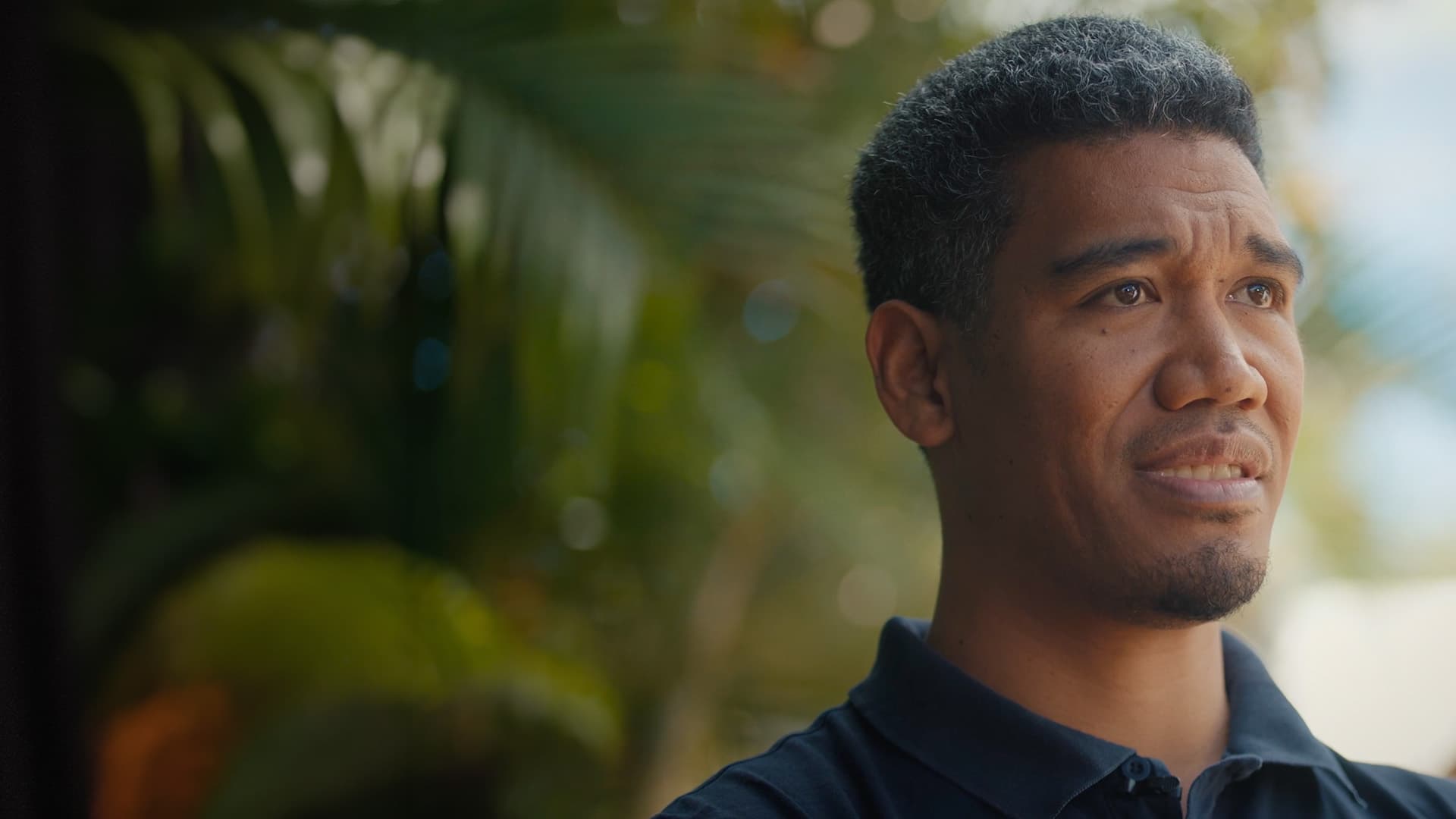
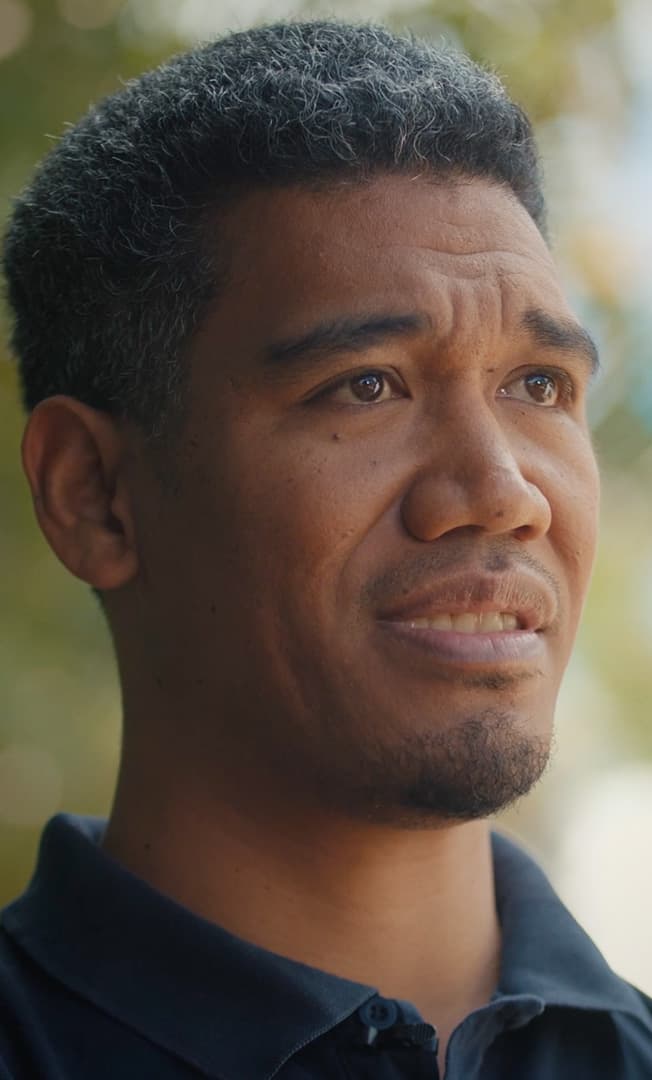
A documentary made for SPREP on the 2022 Hunga Tonga eruption, the tsunami that followed an hour later, and the disaster waste response across Tonga.
Mude was commissioned by SPREP to produce a 30-minute documentary capturing the aftermath of the Hunga Tonga–Hunga Haʻapai eruption in January 2022. This catastrophic event wreaked havoc on Tonga, devastating homes, the environment, and infrastructure, profoundly impacting the lives of its residents. Our documentary provides a poignant narrative, documenting the emotional toll on the local communities and the extensive cleanup and rebuilding efforts that followed. It offers an in-depth look at how Tonga managed its disaster waste, highlighting the coordinated response by various organisations to restore normalcy to the island nation.
Telly Awards
8
This is a European Union funded documentary we made for the Secretariat of the Pacific Regional Environmental Programme (SPREP), about the Hunga Tonga-Hunga Ha’apai eruption of January 2022 and the disaster waste response that followed.
It runs around half an hour, is built around interviews with people on the ground in Tonga and the people who coordinated the response, and was commissioned as a training reference for government teams, NGOs and emergency services across the Pacific, with the brief that the audience should walk away better prepared for the next disaster of this kind. It premiered at the SPREP workshop in December 2022 and was published to YouTube shortly after.
What happened in Tonga
On the 15th of January 2022, the Hunga Tonga-Hunga Ha’apai volcano erupted with a force that scientists later described as a once-in-a-thousand-year event for this type of volcano. The blast was visible from space, registered around the world, and within about an hour a tsunami had reached Tonga’s main island of Tongatapu. Tonga’s disaster planning was built around tsunamis triggered by earthquakes in the Tonga Trench, which come with warning time, evacuation windows, and a regional seismic signal you can pick up.
The Hunga Tonga eruption produced a tsunami with none of those, and the sequence on the ground collapsed almost into a single moment, with people hearing the eruption, the windows shaking, the sky going black with ash, and the wave arriving. There was no protocol for it because no one had built one, and that doctrinal gap shapes almost every account in the film. Three people died, coastal homes were destroyed, and Tonga’s single underwater fibre optic cable was severed, which cut almost all communication with the outside world.
Volcanic ash covered the country in a layer that one interviewee described as needing fifty sweeps in a single spot just to shift, the airport runway was unusable for a week, and drinking water (around 80 to 90 percent of which comes from rainwater catchment) was contaminated to the point that the tanks had to be cleaned out and left empty until the next rain came. Tongan cemeteries, which sit along the coast, were torn open by the wave, and families collected the remains of their relatives by hand.
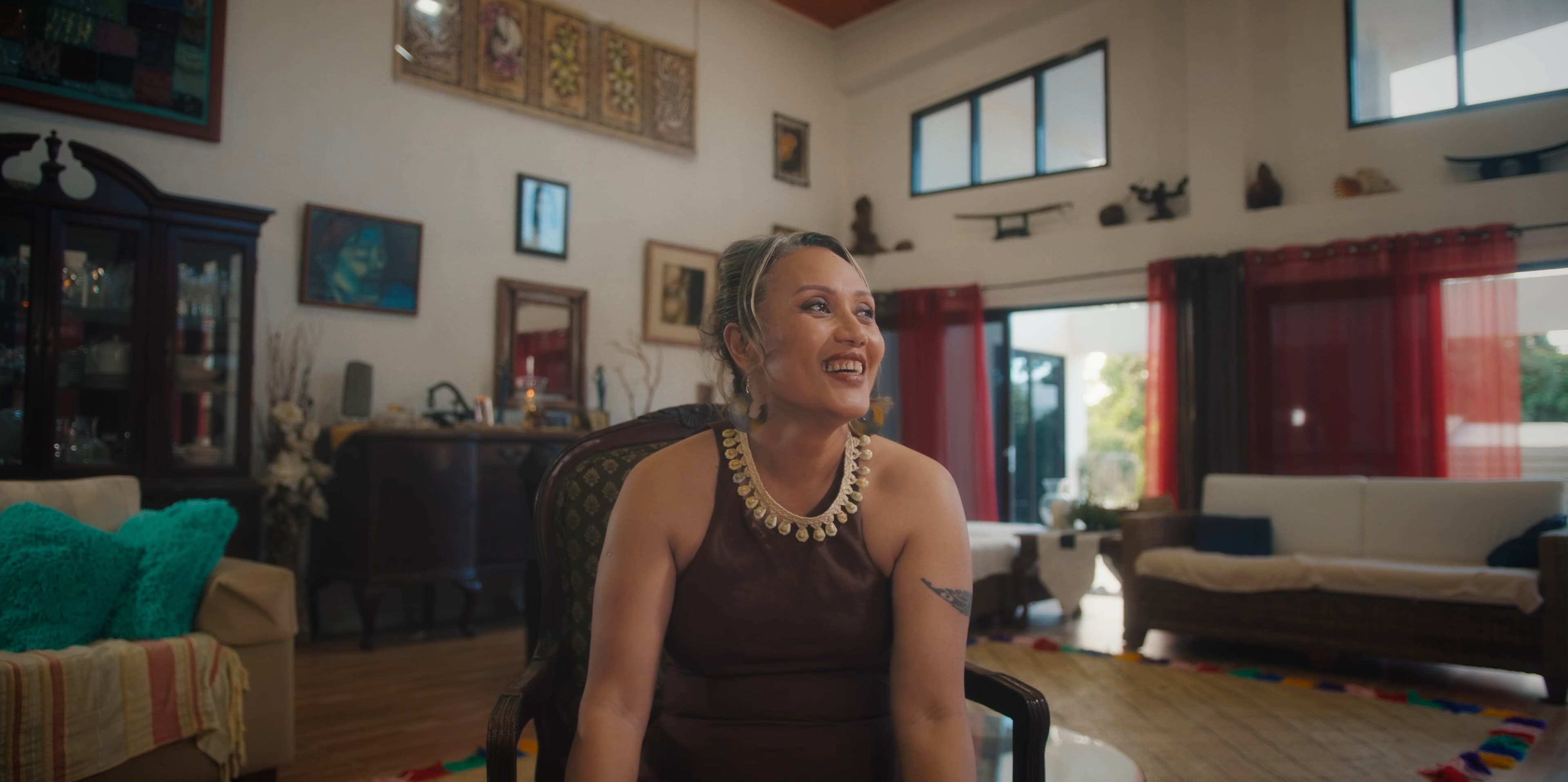
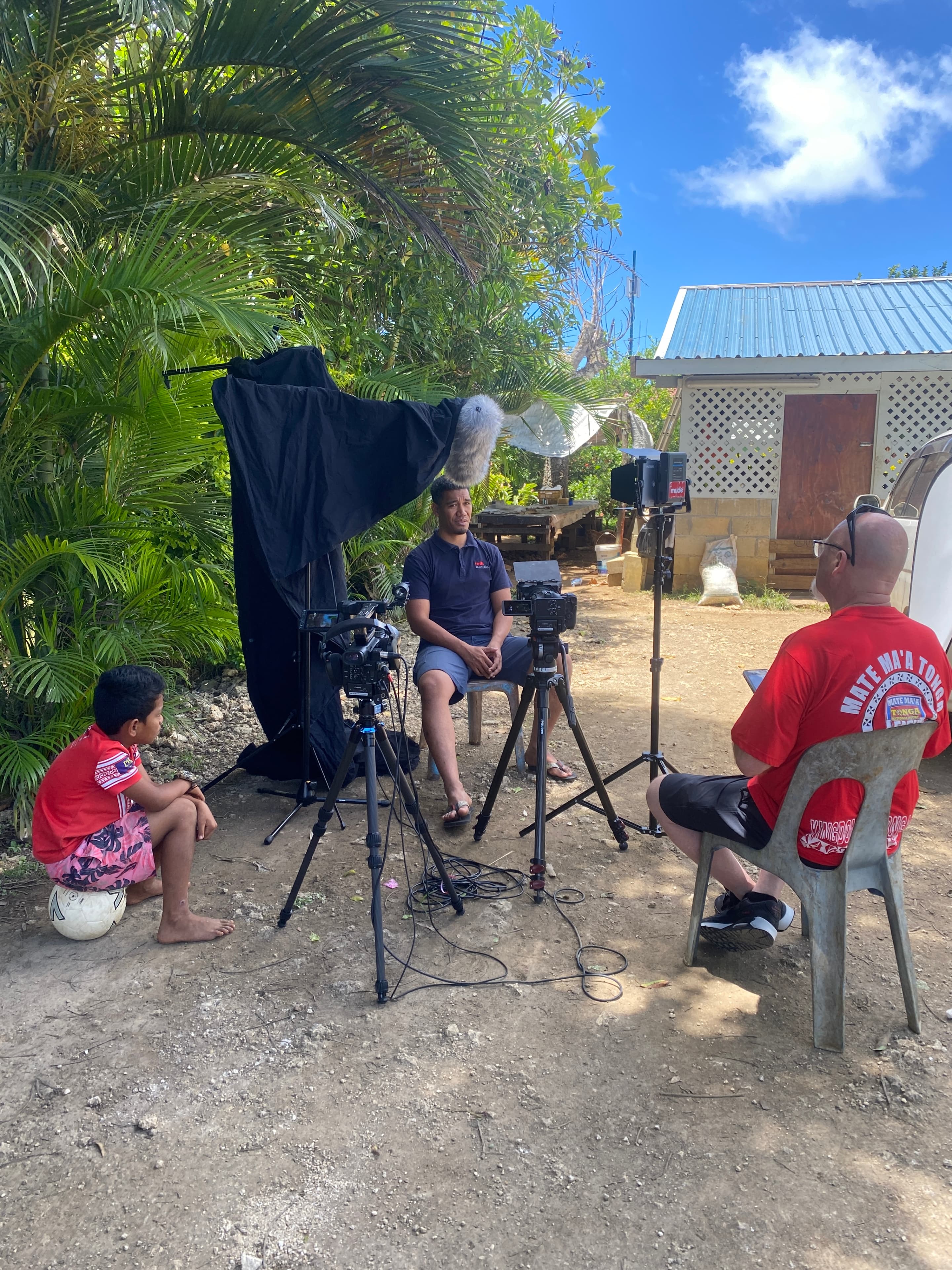
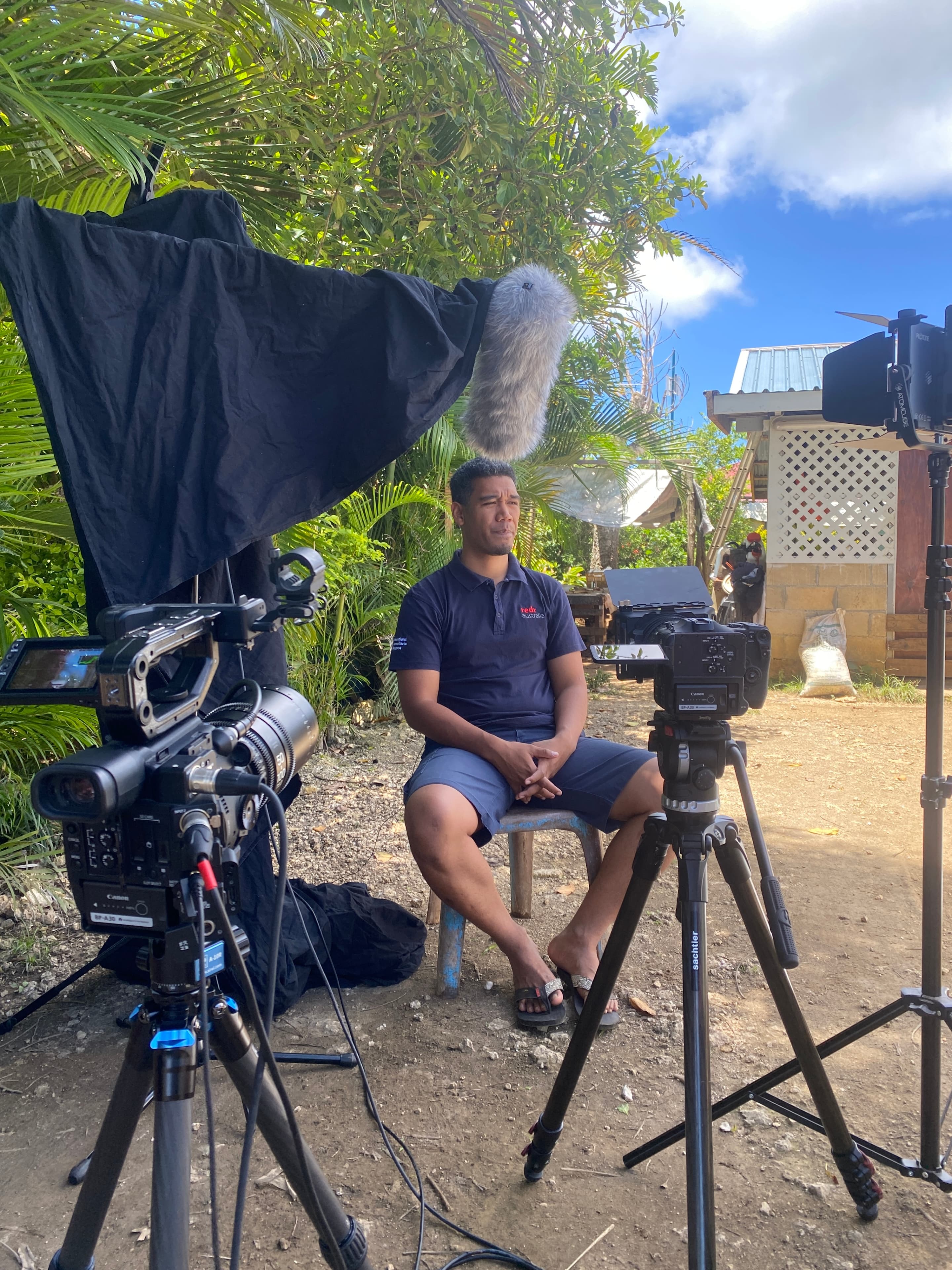
The brief
SPREP runs training programmes and workshops on disaster preparedness across Pacific island nations, and they wanted a documentary that would be useful in that context, which meant a film with two jobs to do at once: tell the story of what happened, and make a clear, honest case for what the response got right and what it didn’t. The working title was The Rising Tide: Are we prepared for future disasters? and that question shaped the whole structure.
The specific focus was disaster waste management, which sounds narrow until you start looking at what it actually covers, because waste is the connecting thread between most of the friction points in a disaster like this. Volcanic ash on the runway means aid planes can’t land, ash in the harbour means relief ships can’t dock, asbestos in the debris from damaged buildings becomes a hazard for emergency workers handling the cleanup, and plastic bottles and packaging from incoming aid creates its own waste problem on the way to solving an immediate one.
The brief asked us to draw those connections out clearly so that other Pacific nations watching the film could plan for them in advance rather than improvise around them after the fact.
There was also an unstated requirement that the film not feel like a typical government or NGO production, and SPREP didn’t want a piece that played safe. The tone we agreed on was sleek and honest, willing to be critical where the response had fallen short but never judgemental of the people doing the work, on the basis that the audience for this film is people doing similar work in similar conditions and they would smell a sanitised version immediately.
The project began with a discovery session and a creative brief that worked through the messaging pillars, audience segmentation, perspective mapping for interviewees, and the narrative framework that would carry the film, and from there it moved into pre-production planning before our team flew to Tonga to shoot.
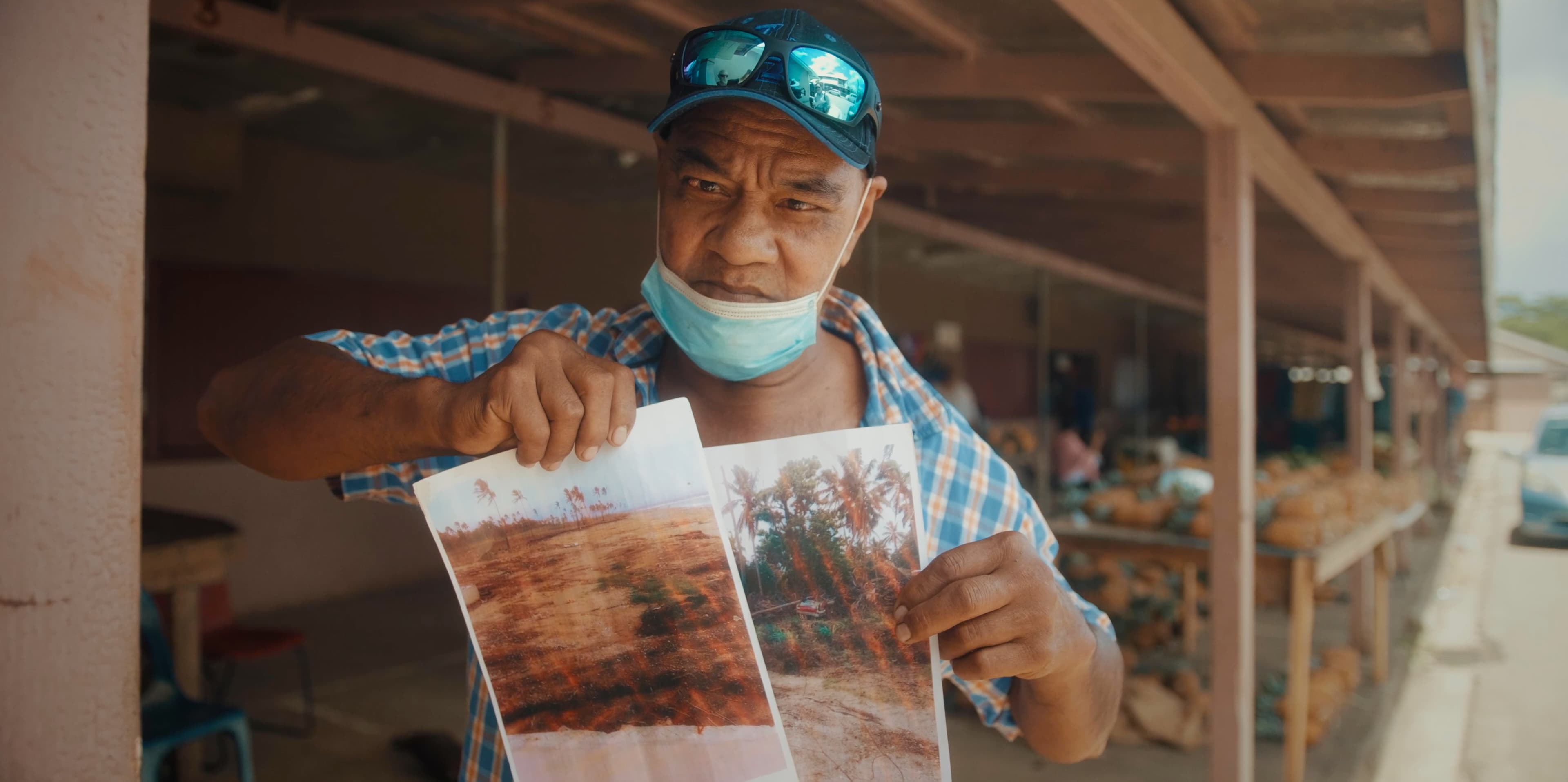
We built the documentary around interviews with people on four sides of the response: the general public who lived through it, the government and emergency services teams who coordinated it, the local NGOs and waste authorities who led the cleanup, and the international partners who arrived with equipment and aid.
The public footage was captured almost entirely on mobile phones, in kitchens and yards in the seconds and minutes after the first explosion, and we spoke to people who described the cleanup of their own homes, the sound of children crying in neighbouring houses, the loss of family graves to the wave, and the role of the church and the community in holding things together when the government systems were overwhelmed.
In a country where most of the population is related to someone in every village, the immediate response to an event like this is everyone trying to find out if their family is alive, and that sequence of the disaster, the part that happens before any coordinated response can begin, only comes through in the interviews.
The government and emergency services interviews ran across the National Emergency Management Office (NEMO), the Tonga Waste Authority, the Tonga Fire and Emergency Services, the Tonga Red Cross Society, and officials from the Tonga Ministry of Meteorology, Energy, Information, Disaster Management, Environment, Climate Change and Communications (MEIDECC), which holds the country’s disaster risk reduction portfolio along with the Tonga Meteorological Services and the Tonga Geological Services that sit under it.
We heard about specific gaps, including a complete absence of equipment appropriate for clearing volcanic ash or bulky tsunami debris, and a doctrine that hadn’t planned for non-seismic tsunamis, and we heard about the manual workarounds that emerged when the digital systems failed, including an operations manager at one of the banks who hand-carried staff salaries to outer island branches on a boat because there was no other way to get them paid.
The Nuku’alofa cleanup was led in large part by local NGOs working with community groups, town officers and church leaders, and one of the more striking numbers from the response is that during the cleanup, an equivalent of three tonnes of compacted plastic litter was collected in two days from across Tongatapu and shipped out of Tonga on the Royal Australian Navy’s HMAS Canberra.
Landfill input across the January to March period rose by 32 percent, partly from the disaster waste itself and partly from the packaging of incoming aid. On the international side, the Royal Australian Navy and the New Zealand Defence Force arrived with equipment that didn’t exist in Tonga at the time, including the gear required to handle asbestos safely, and foreign aid programmes coordinated through the Australian and New Zealand governments handled the supply of food, water and shelter through the early weeks of the response, with other Pacific nations and NGOs providing technical assistance on wharf clearance, water and sanitation, and waste disposal.
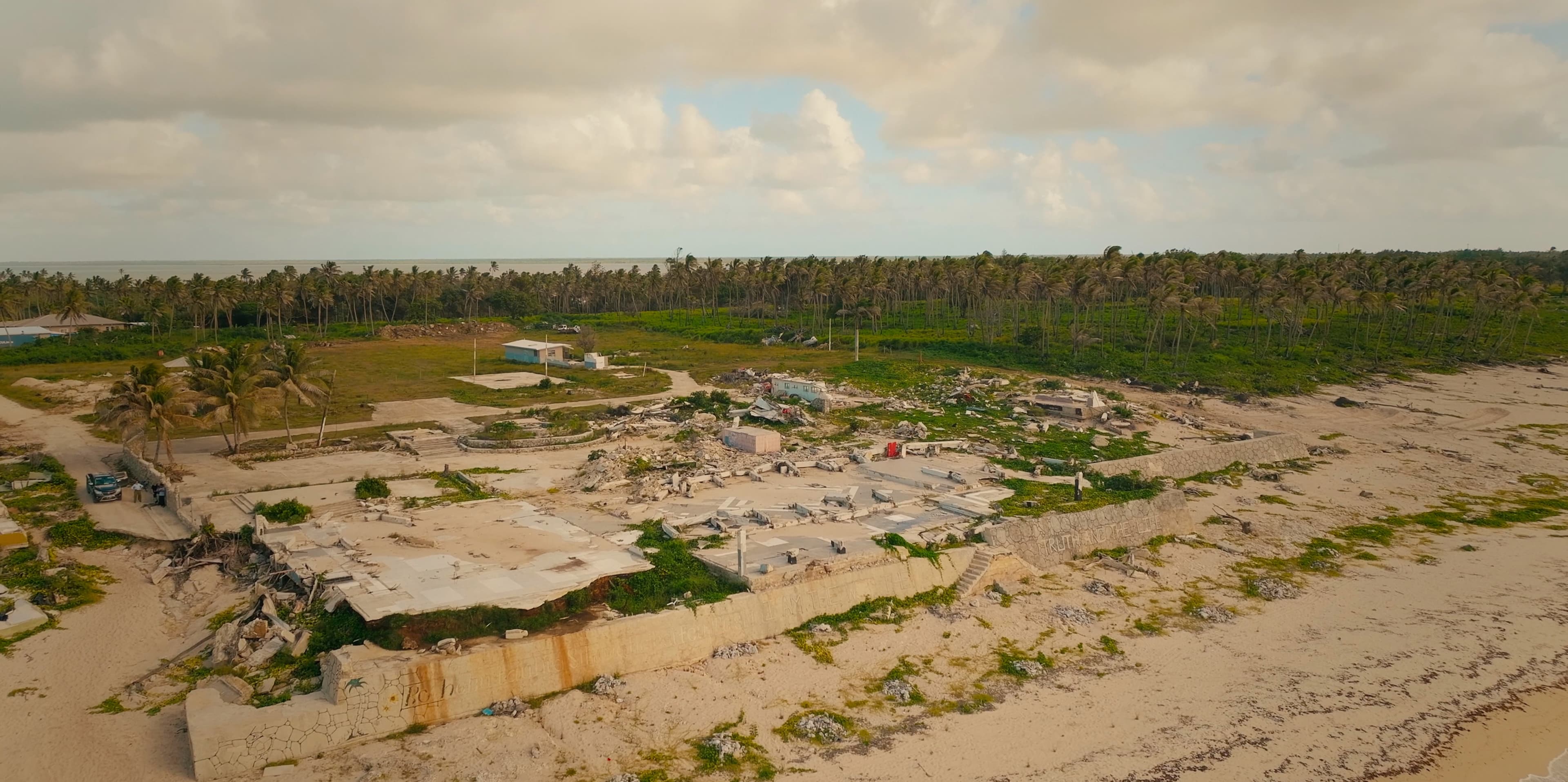
The film opens with the eruption itself, told through the eyes of people who heard it, and moves through the first day (the darkness, the ash, the wave, the confusion about what kind of event was even happening), the early response (the cleanup of the runway and the wharf to allow aid in, the bank operations manager and his boat, the community sweeping the streets), and the longer cleanup that followed.
The middle section is the waste-specific material: the asbestos problem and how it was managed once the Royal Australian Navy and the New Zealand Defence Force arrived with the right kit, the bottleneck at the airport, the ash in the rainwater tanks and the month-long wait for the next rain, the 32 percent landfill spike, the three tonnes of compacted plastic, and the disposal of bulky waste from coastal homes that the government later relocated inland.
The final section is the question SPREP wanted the documentary to land on, which is what Tonga’s response got right, what it got wrong, and what other Pacific nations should take from it. The honest answer the interviewees give is that the response succeeded in spite of significant gaps and that they were fortunate the event was not larger, and Tonga has since installed sirens that are tested every Friday and rebuilt its disaster planning to assume tsunamis can come from anywhere, including from volcanic sources.
There is also a clear case made for more evacuation centres, better disability access in those centres, and a shared disaster waste management plan that government agencies, private contractors and communities can work to before the next event rather than improvise after it.
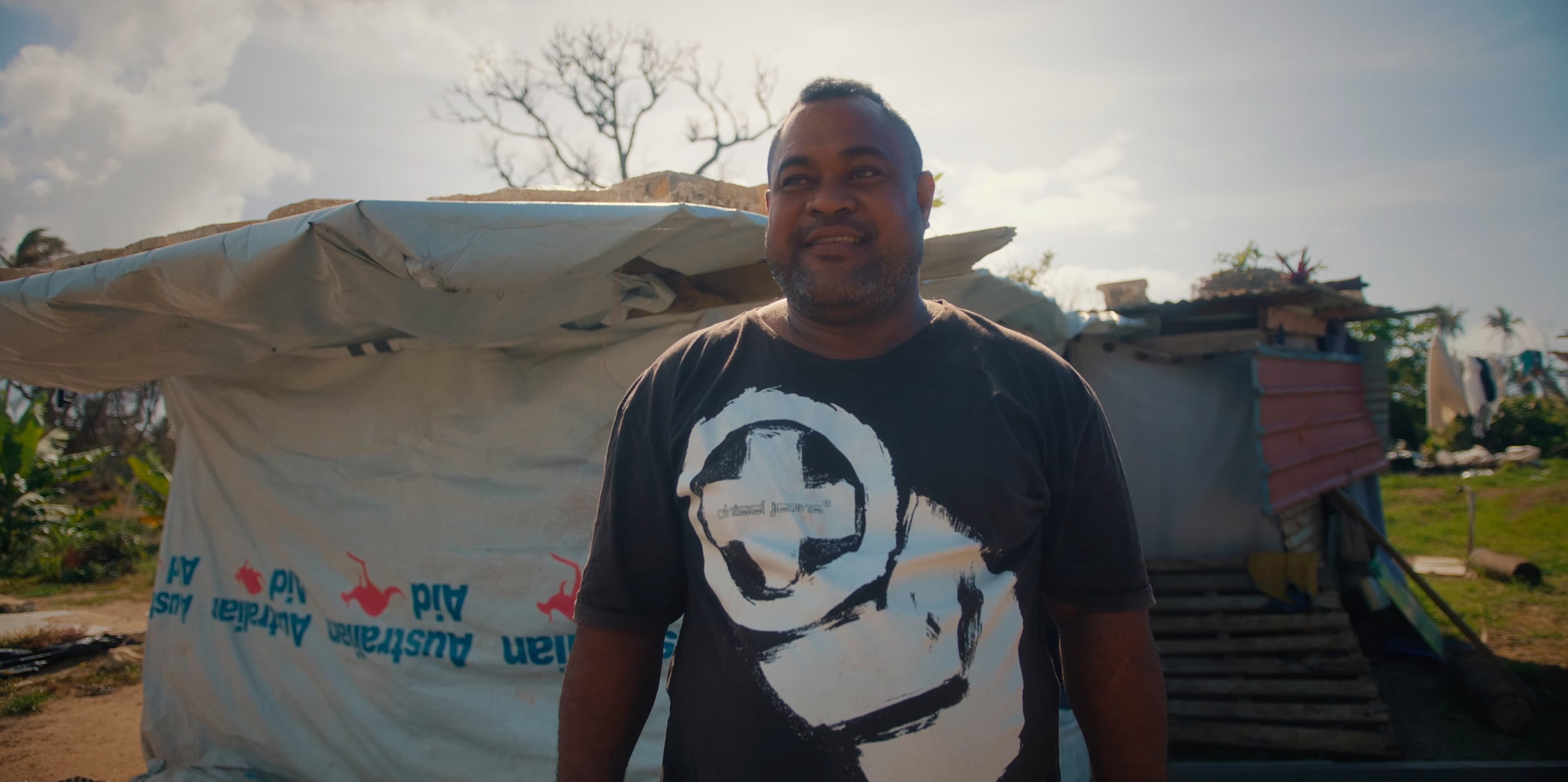
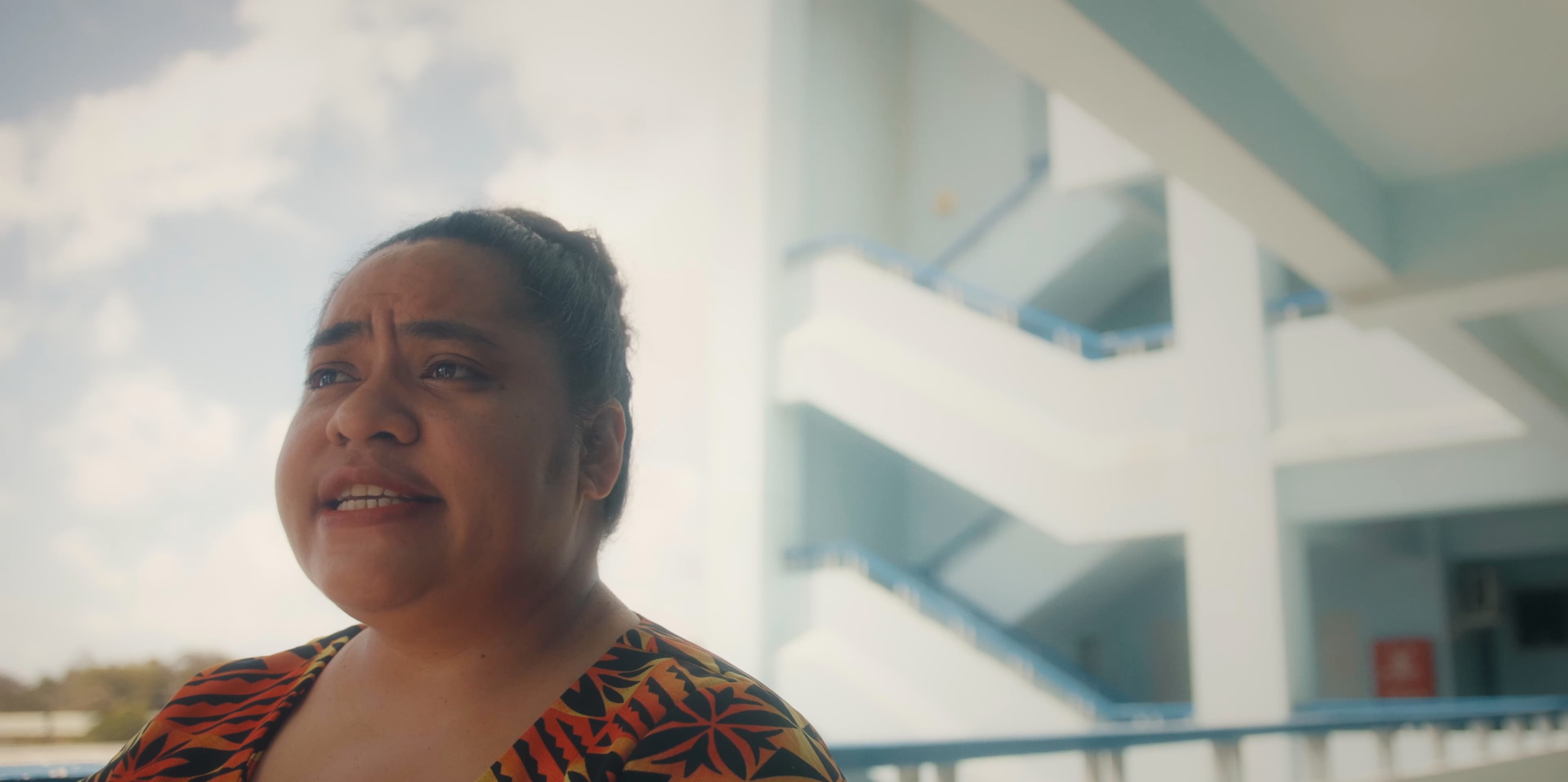
We produced the film from our studio in Glebe, Sydney, with our team travelling for on-location cinematography in Tonga, and pre-production covered the brief, the narrative framework, perspective mapping for interviewees, location scoping and shoot scheduling.
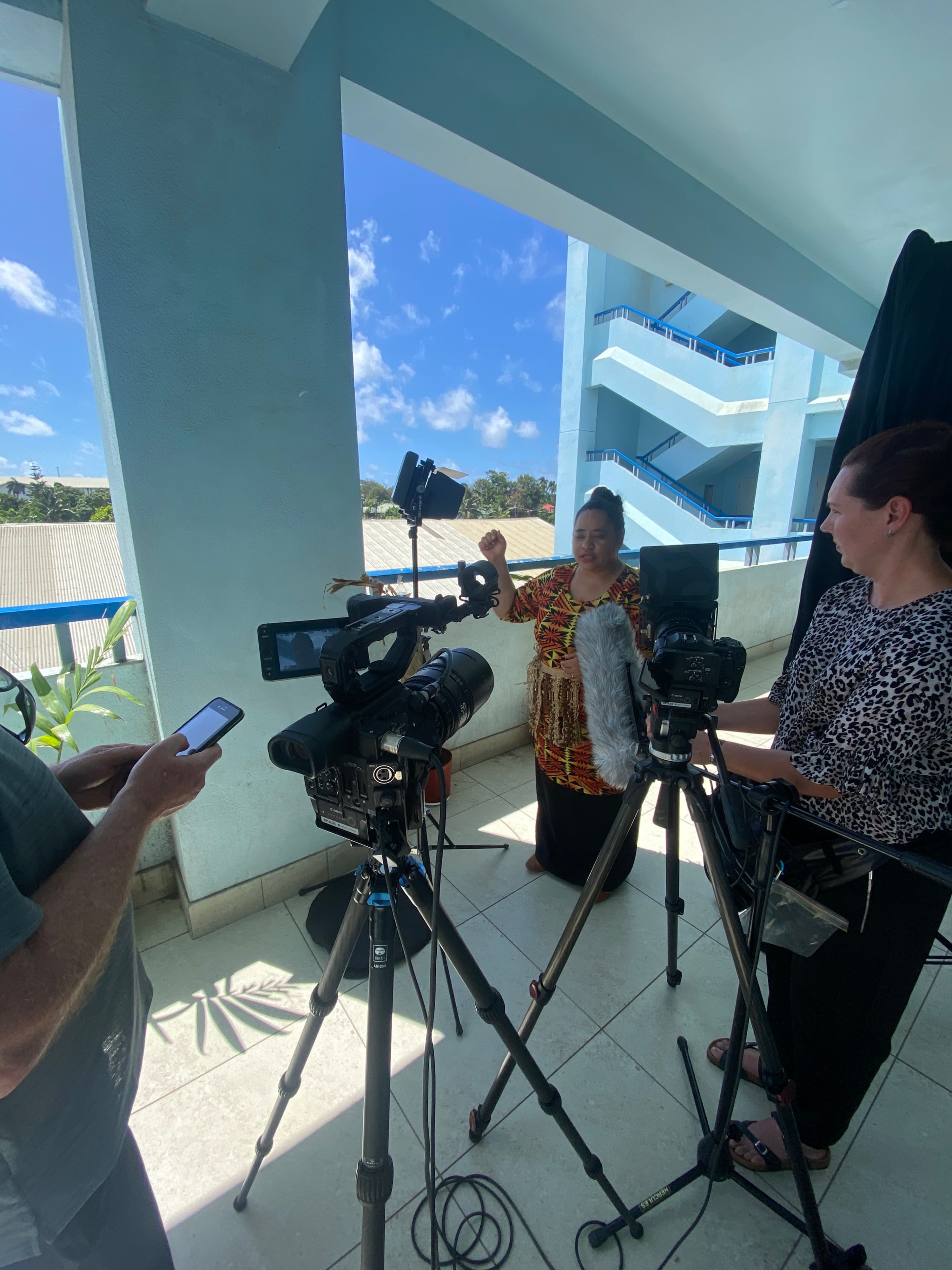
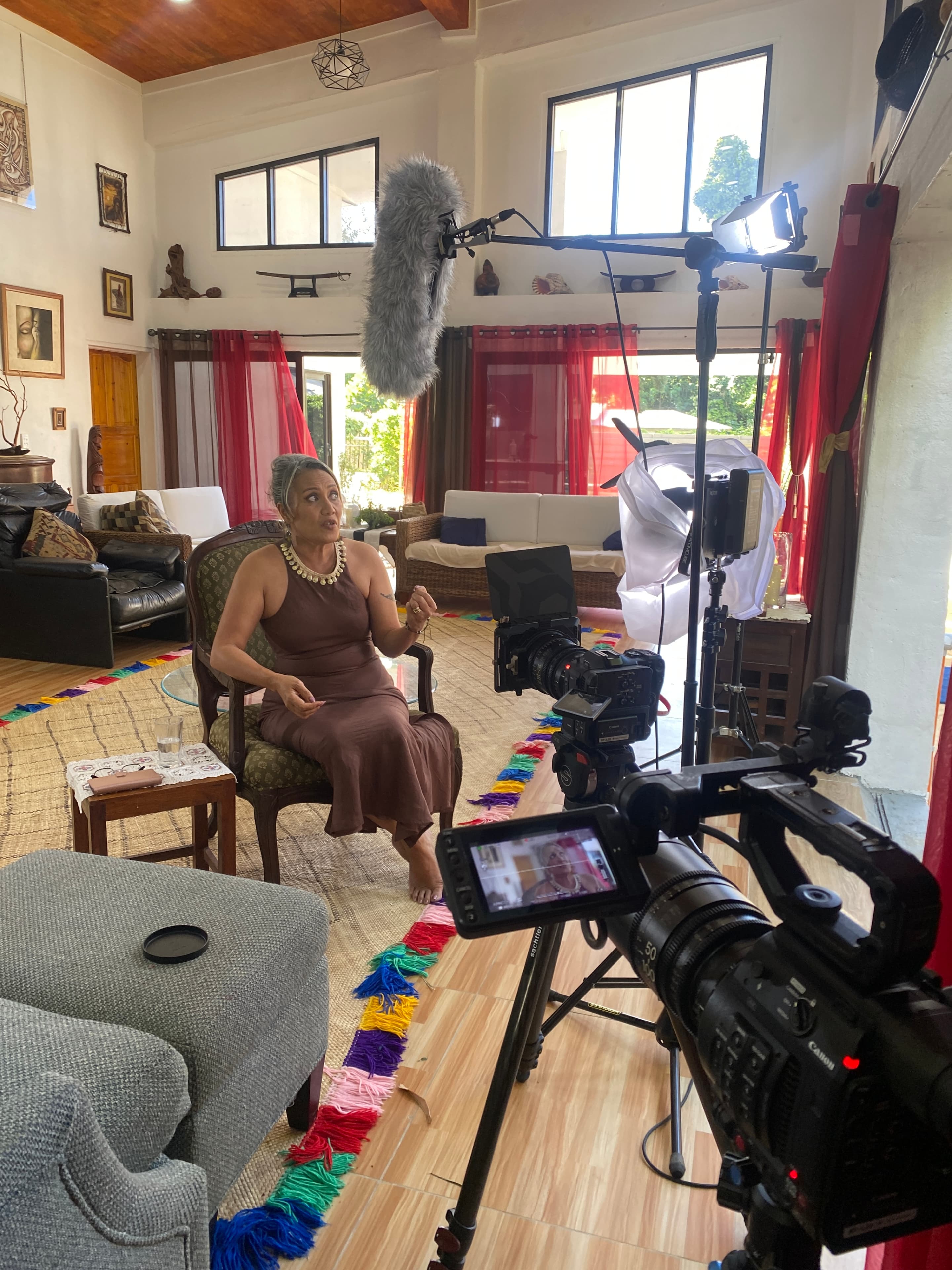
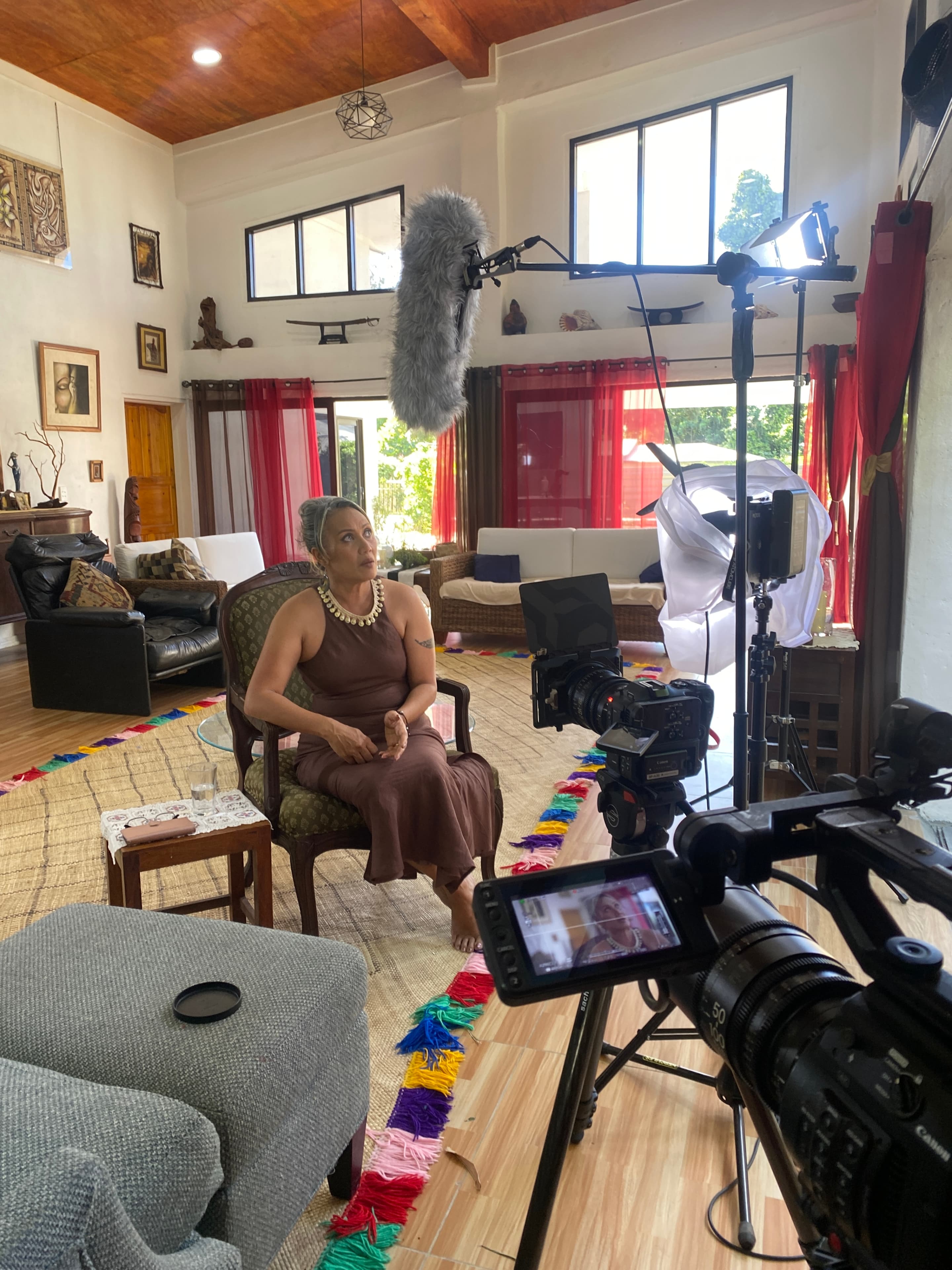
Most of the interviews were captured outdoors using natural light, in keeping with the boots-on-the-ground visual language we agreed on with SPREP, and the cinematography mixed sit-down interviews with walk-and-talk sequences and B-roll coverage of the locations themselves, including coastal cemeteries, evacuation centres, the wharf, the airport runway and the Tonga Waste Authority’s landfill operations.
Post-production integrated several material sources, including our own cinematography, mobile phone footage captured by Tongans during and after the eruption (the only footage of the actual event available, since no professional crew was there), broadcast material licensed from local Tongan television, and the satellite imagery that allowed the rest of the world to see the scale of the eruption in real time, and the editing, colour grading and sound design were all handled in-house, along with subtitle preparation for international audiences and a final delivery cut sized for the SPREP workshop screen as well as a YouTube master.
The score is understated by design, because the story is doing the heavy lifting and the music’s job is to keep the audience inside the narrative without competing for attention, and the brief on the music called for something multi-genred, drawing on both real and digital instruments, timeless enough that it would not date the film as it moves through SPREP’s training rotation over the coming years. The visual direction avoids the conventions of a typical government training video while keeping the film legible as a serious piece of information for the audience it was built for.
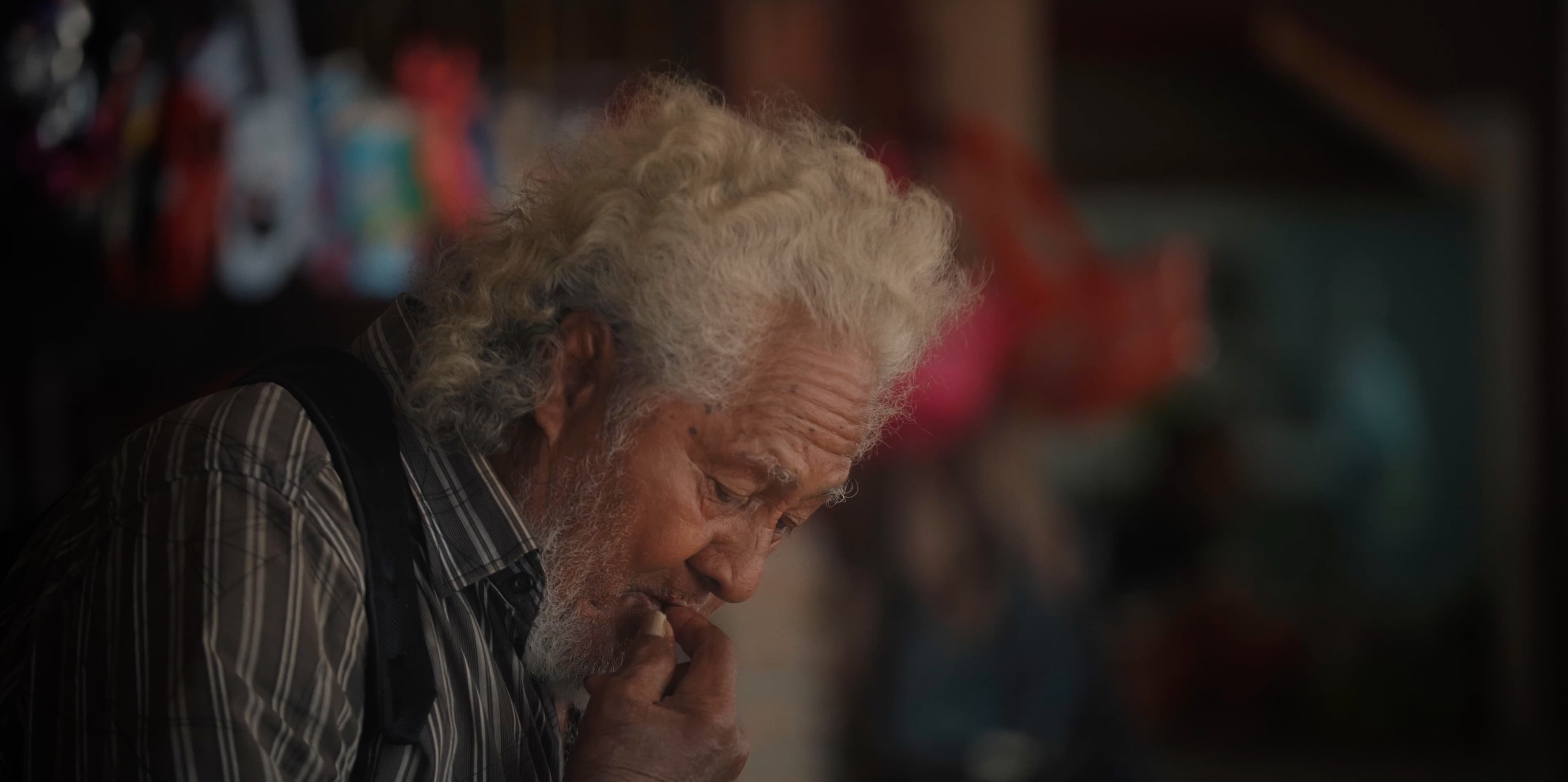
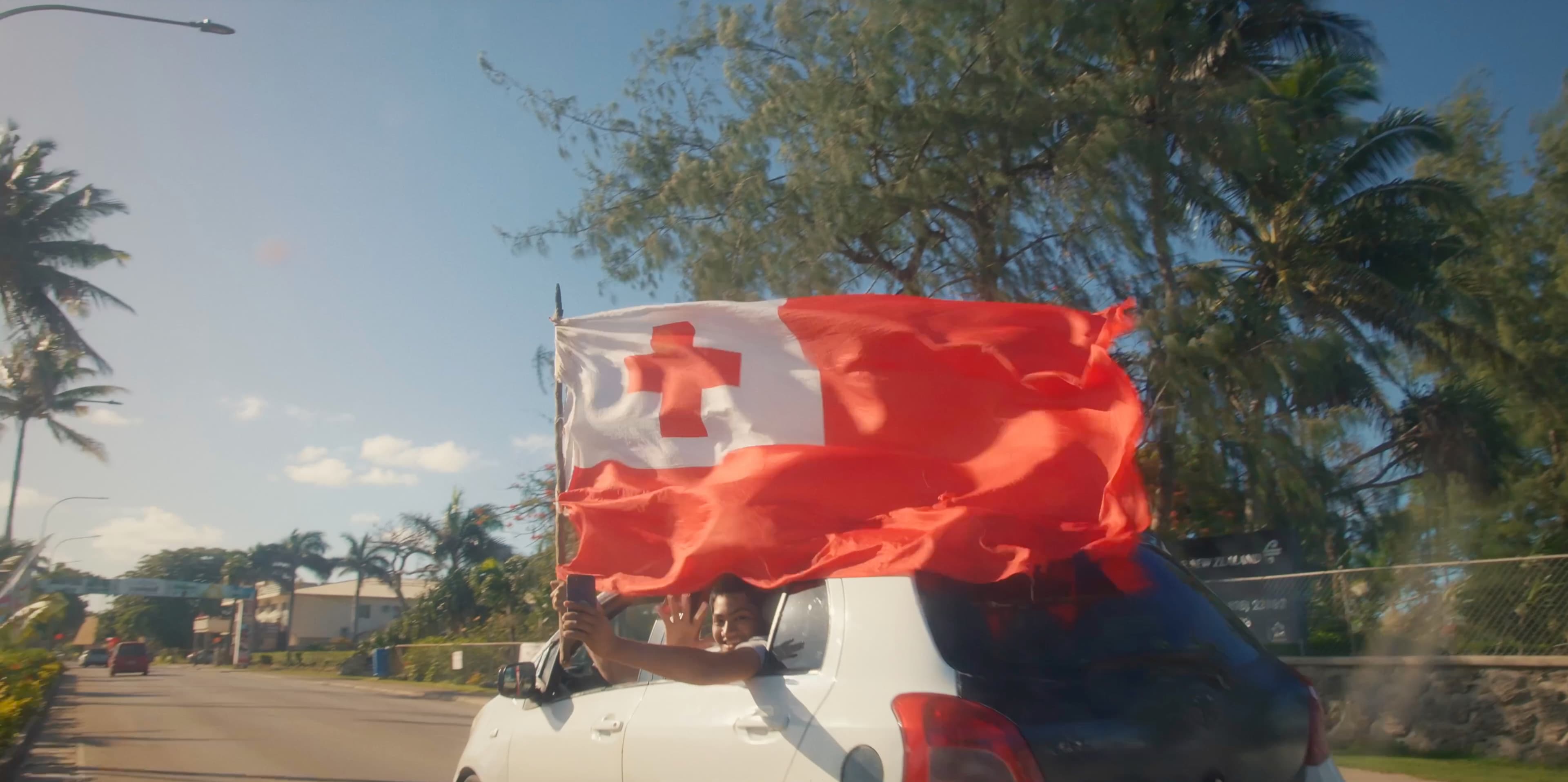
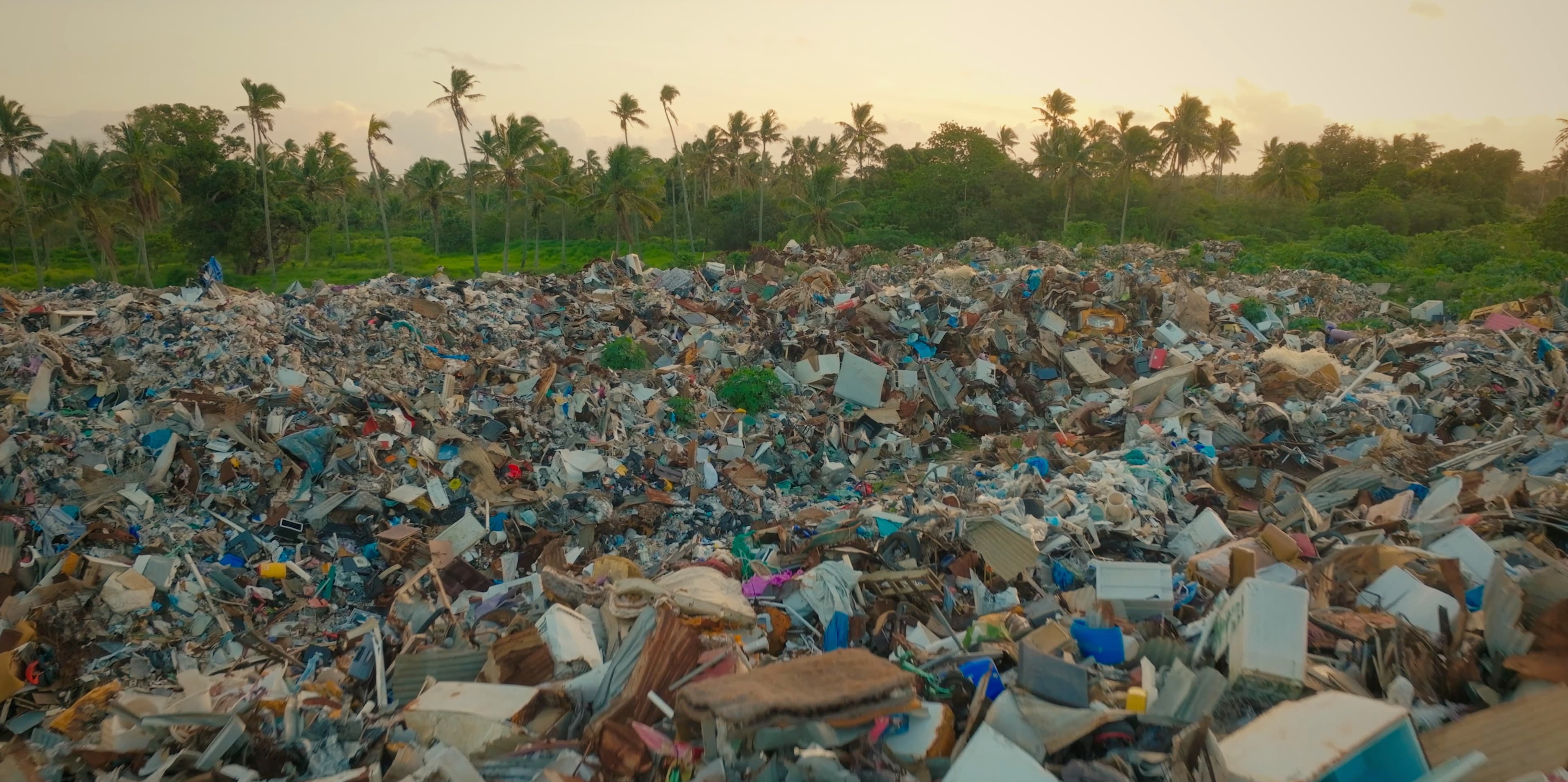
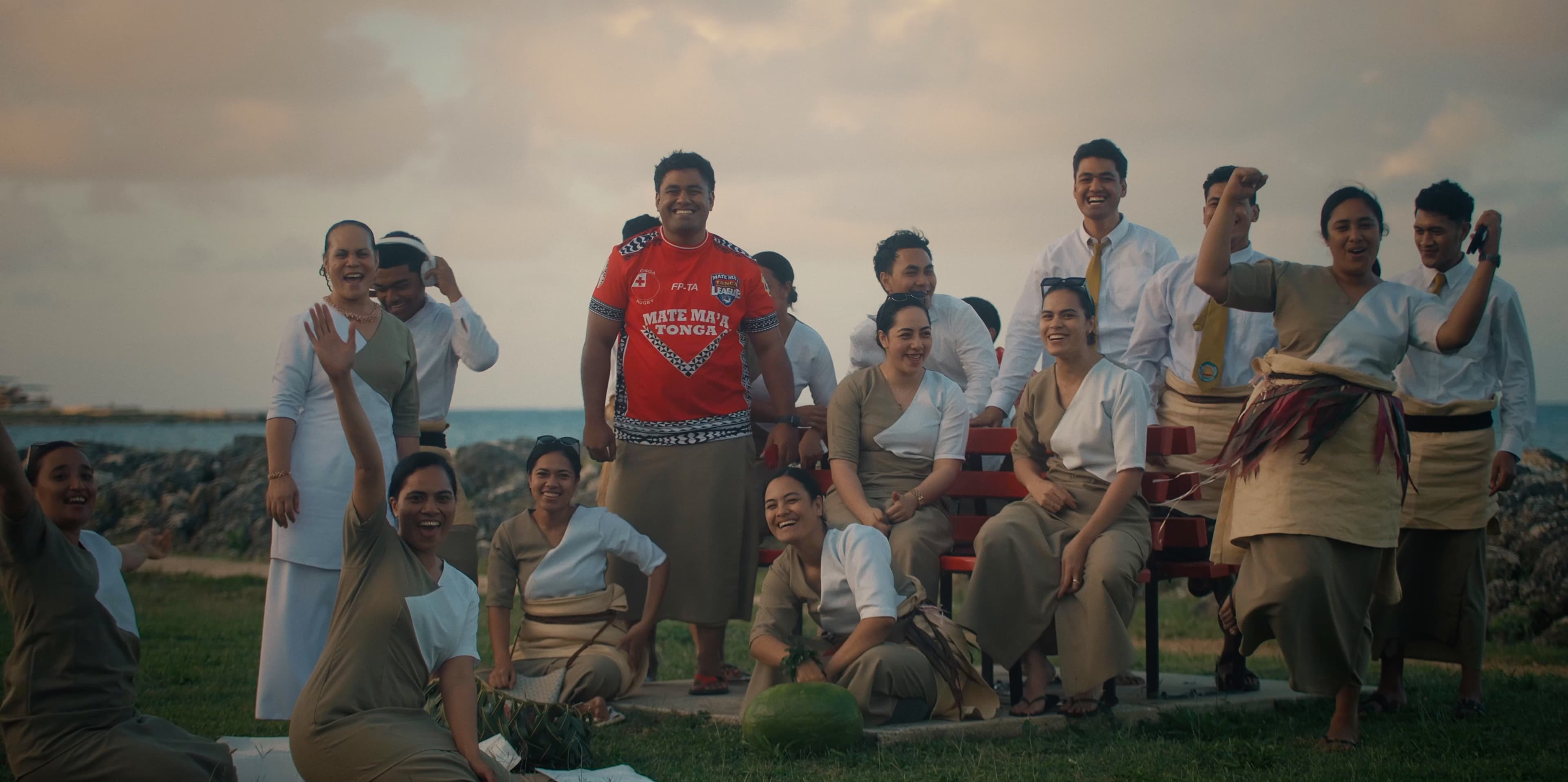
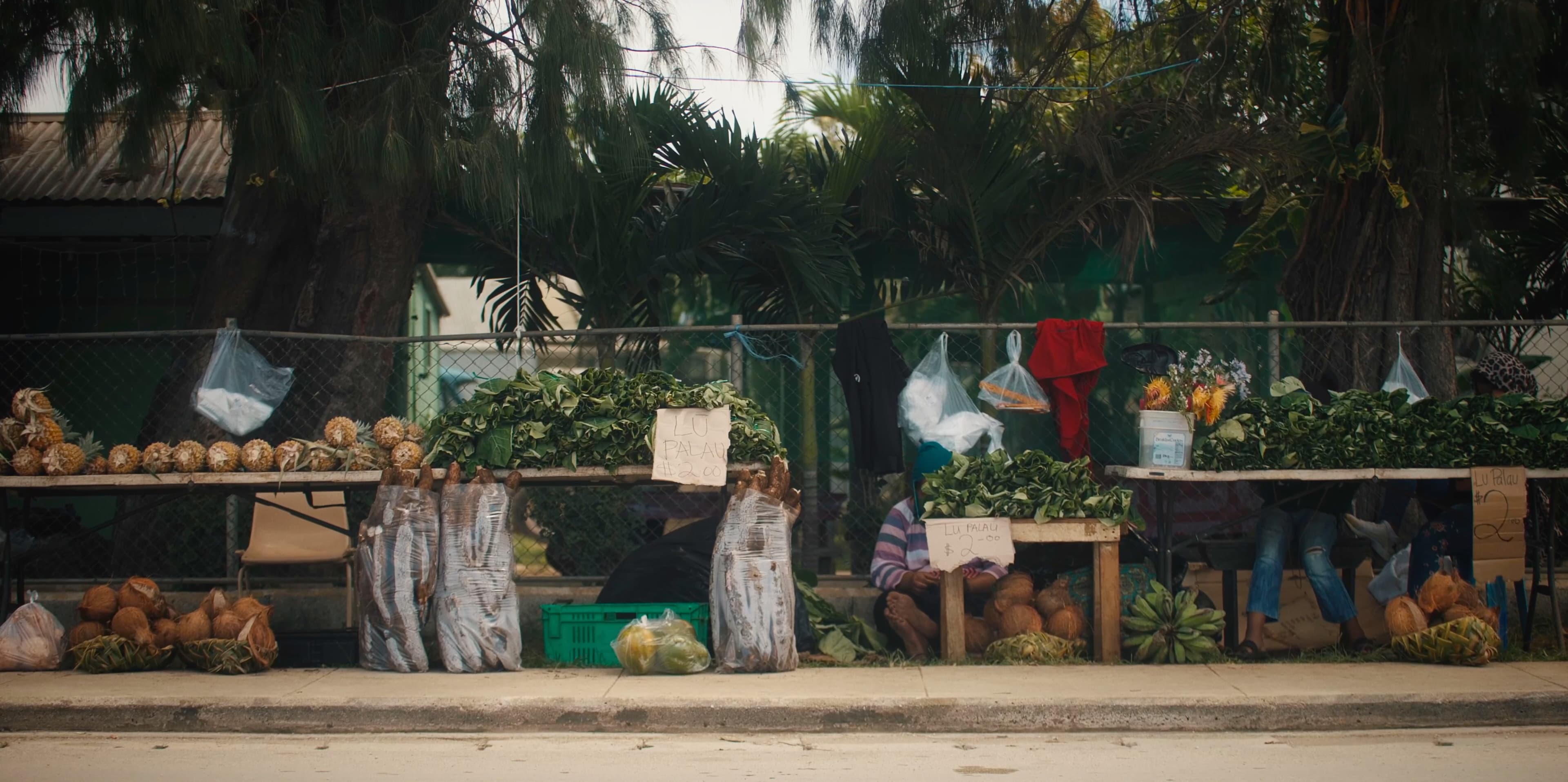
The documentary premiered at the SPREP workshop in December 2022 in front of an audience of Pacific government delegates, regional NGOs and emergency services partners, and was published to the SPREP YouTube channel shortly after, where it now sits in SPREP’s library as a training reference for disaster waste management across the Pacific and as a public record of an event that, on the scientific account, the region will not see again for many lifetimes.
Related Projects
View Project

Brand, Graphic Design
Capital Athletics
View Project
Brand, Graphic Design
Australian Medical Council
View Project
Brand, Video
Worldview
View Project
Website
Australian Strategic Policy Institute
View Project
Brand
The Y
View Project
Video, Photography
AFPA
View Project
Video
Amnesty International
View Project
Website
Australian Strategic Policy Institute
Frequently Asked Questions
An honest record, built to prepare the next response
Mude produces an impact documentary in a clear sequence, and its film for the Secretariat of the Pacific Regional Environment Programme (SPREP) followed it from end to end.
- Run a discovery session and creative brief that set the messaging pillars, the audience, and the narrative framework the film will follow.
- Map the perspectives the story needs, then plan the interviews, locations and shoot schedule in pre-production.
- Travel to location and capture the interviews and footage, so the film is carried by the voices of the people in the story.
- Edit, colour grade and finish the film in-house, including sound, subtitles and the delivery formats each audience needs.
For the SPREP documentary on the 2022 Hunga Tonga eruption, that meant a Sydney-based team flying to Tonga to film interviews and on-location footage, then bringing the edit, grade and sound back to the studio in Glebe. The result was a 30-minute documentary that premiered at the SPREP workshop in December 2022 and went on to win eight Telly Awards. Most of the work that shaped the film happened in the brief and the planning, before the shoot.
Documentary film production usually takes several months from the first brief to final delivery, and most of that time goes into pre-production and post-production, with the shoot itself a small block. The schedule depends on the scale of the story, how much travel the shoot involves, how many interviews are needed, and how much archival material has to be sourced and cleared.
Mude’s documentary for SPREP shows where the time goes on a project like this. Pre-production covered the creative brief, the narrative framework, perspective mapping for interviewees, location scoping and shoot scheduling before the team travelled to Tonga. The filming itself was an on-location block of interviews and B-roll. Post-production then carried the bulk of the work, including the edit, colour grade, sound design, subtitles for international audiences, and two delivery cuts, one sized for the SPREP workshop screen and a master for YouTube. A realistic documentary timeline counts all three stages, from the brief through to the final delivery cuts.
Pre-production is where a documentary is designed before anything is filmed, and it decides whether the footage from the shoot will add up to a coherent film. For Mude, it starts with a discovery session and a creative brief that work through the messaging pillars, the audience, the perspectives the story needs, and the narrative framework that will carry the film.
On the SPREP documentary, that pre-production stage mapped the people the film needed to hear from, scoped the locations in Tonga, and set the shoot schedule before the team left Sydney. The perspective mapping was central, because the story had to hold four points of view at once: the public who lived through the eruption, the government and emergency services who coordinated the response, the local NGOs and waste authorities who led the cleanup, and the international partners who arrived with aid. With that structure settled in advance, a single shoot in Tonga could capture everything the edit would later need.
Documentaries often have to build a single film from footage captured in very different ways, and the craft sits in making those sources feel like one piece. Mude’s SPREP documentary is a clear example, because the actual eruption and tsunami were filmed by Tongans on their mobile phones in the seconds and minutes after the first blast, which is the only footage of the event that exists, since no professional crew was on the ground.
The finished film integrates several material sources around that footage. It combines the team’s own cinematography shot on location in Tonga, the mobile phone footage of the event itself, broadcast material licensed from local Tongan television, and the satellite imagery that let the rest of the world see the scale of the eruption in real time. The work in post-production is to grade, pace and place these so the join is invisible and the audience stays inside the story. On a film like this, that found footage is the only record of the event itself, so bringing it in cleanly is central to the work.
Music and sound design in a documentary carry the emotional register of the film and hold the audience inside the story, and on a serious documentary the score usually succeeds when it stays quiet enough to let the material lead. The aim is for the music to support the interviews and footage without competing with them for attention.
On Mude’s SPREP documentary, the score was understated by design, because the story of the eruption and the recovery was strong enough to carry the film on its own. The brief on the music called for something multi-genred, drawing on both real and digital instruments, and timeless enough that it would not date the film as it moved through SPREP’s training rotation over the years ahead. Sound was finished in-house alongside the edit and grade. On a documentary built to be useful for a long time, a restrained score is part of keeping it watchable years after it was made.
Mude approaches a film for a government body or an NGO as a piece of real storytelling first, so it does not read as a standard institutional video. The conventions of a typical government or training film, the safe tone and the sanitised account, tend to lose exactly the audience the film is meant to reach.
The SPREP documentary was made on that basis. SPREP did not want a piece that played safe, so the agreed tone was honest and direct, prepared to be critical where the disaster response had fallen short, without judging the people doing the work. The reasoning was practical: the audience is people doing similar work in similar conditions, and they would see through a sanitised version immediately. The visual direction avoided the look of a standard government training video while keeping the film legible as a serious piece of information. Because the film was honest, the government and emergency teams it was built for took it seriously.
Cross-cultural documentary production means making a film in a community that is not your own, which calls for working closely with local people so that their perspective shapes the story. The footage, the voices and the framing all have to come from inside the community for the film to be accurate and respectful.
Mude’s SPREP documentary was made this way in Tonga. The account of the event itself came from footage Tongans filmed on their own phones, the story was carried by interviews with Tongan residents, government officials, local NGOs, community leaders and church figures, and broadcast material was licensed from local Tongan television. The film also recognised the role of the church and the community in holding things together when official systems were overwhelmed, which is central to how Tongans themselves describe the response. Built from local voices, the film speaks credibly to a Pacific audience.
The 2022 Hunga Tonga eruption was the eruption of the Hunga Tonga-Hunga Ha’apai volcano on 15 January 2022, which scientists later described as a once-in-a-thousand-year event for this type of volcano. The blast was visible from space and registered around the world, and within about an hour a tsunami had reached Tonga’s main island of Tongatapu.
The event was dangerous in an unusual way because Tonga’s disaster planning was built around tsunamis triggered by earthquakes, which come with warning time and a seismic signal. The eruption produced a tsunami with none of that warning, so for people on the ground the eruption, the shaking, the sky going black with ash and the arrival of the wave collapsed almost into a single moment. Three people died, coastal homes were destroyed, and Tonga’s single underwater fibre optic cable was severed, which cut almost all communication with the outside world. Volcanic ash contaminated drinking water that mostly comes from rainwater catchment, and the airport runway was unusable for a week. Mude’s documentary for SPREP records this event through the people who lived through it and the teams who responded.
Tonga’s response to the 2022 eruption succeeded in spite of significant gaps, and the honest assessment from the people in Mude’s SPREP documentary is that the country was also fortunate the event was not large. The response worked because communities, churches, local NGOs and emergency teams moved quickly, and because international partners arrived with equipment that did not exist in Tonga at the time.
The gaps were real. Tonga had no equipment suited to clearing volcanic ash or bulky tsunami debris, and its disaster doctrine had not planned for a tsunami without an earthquake warning, so much of the early response relied on manual workarounds. Since then, Tonga has installed sirens that are tested every Friday and has rebuilt its disaster planning to assume tsunamis can come from any source, including volcanic ones. The documentary also makes the case for more evacuation centres, better disability access in those centres, and a shared disaster waste management plan that agencies, contractors and communities can work to in advance. The film is built to pass those lessons to other Pacific nations facing similar risks.
Impact films are usually commissioned by organisations whose goal is to inform and prepare an audience, including NGOs, not-for-profits, government bodies, regional agencies and funders. They turn to film because a documentary brings a complex issue to vivid life on screen, and because real voices and real footage build trust in a way text often cannot.
Mude’s SPREP documentary is a clear case. It was commissioned by the Secretariat of the Pacific Regional Environment Programme, funded by the European Union, and made to serve disaster preparedness training for government teams, NGOs and emergency services across the Pacific. The commission existed because SPREP needed its audience to understand a specific event in depth and apply its lessons to their own planning, which is the kind of job an impact film is built for. It is a clear example of impact storytelling, where a real event becomes a resource an audience can learn from.
An impact film is a documentary or short film made to change what an audience understands or does about a real issue. It is a form of impact storytelling, built around real people and real events, and it is usually commissioned by an organisation with a mission, such as an NGO, a government body or a funder.
The difference from a corporate or brand video sits in the job it has to do. A brand video exists to support a company’s commercial goals and carry its identity. An impact film is commissioned to shift what an audience knows or does about an issue, and its success is judged on whether that shift happens. Mude’s documentary for SPREP is an example. It was European Union funded, made for a regional environment agency, and built as a training reference for government teams, NGOs and emergency services across the Pacific. The film was made to leave that audience more prepared for the next disaster, which is why it was shot as an honest account of what happened.
The cost of a documentary is driven by a handful of factors more than by any single line item. Travel and location are usually the leading variable, since flying a crew to a remote location and working there costs more than filming close to home. The number and spread of interviews matters, because each subject adds scheduling, filming and edit time. Archival and licensed material adds cost where a story needs footage the crew could not capture. Post-production is a major share of the budget on most video production, covering the edit, colour grade, sound and any subtitling or versioning.
Mude’s SPREP documentary carried most of these. A Sydney-based team travelled to Tonga to film, the story drew on interviews across the public, government, NGO and international response, and post-production integrated mobile phone footage from Tongans, broadcast material licensed from local Tongan television, and satellite imagery alongside the team’s own cinematography. The most useful way to budget a documentary is to scope those drivers against the story before committing to a number.
Mude structures a documentary’s interviews around the perspectives the story needs, which is decided in pre-production through a process it calls perspective mapping. The interviews are planned so that each one covers a distinct part of the story and the voices together build a complete account.
The SPREP documentary shows how that works in practice. It was built on interviews across four sides of the 2022 disaster response: members of the public who lived through the eruption and tsunami, the government and emergency services teams who coordinated the response, including the National Emergency Management Office and the Tonga Waste Authority, the local NGOs and community leaders who led the Nuku’alofa cleanup, and the international partners from the Australian and New Zealand defence forces who arrived with equipment Tonga did not have. With the interviews planned across those four groups, the finished film carries the whole story, from the first moments of the eruption through to the long cleanup.
Post-production on a documentary is everything that turns the filmed material into a finished film, and on an interview-led documentary it carries most of the creative work. It covers the edit that finds the story in the footage, the colour grade that gives the film a consistent look, sound design and mix, any subtitles, and the final delivery in the formats each audience needs.
Mude handled all of this in-house on its SPREP documentary. The edit shaped hours of interviews and B-roll into a 30-minute film, the grade and sound carried a story filmed largely outdoors in natural light, subtitles were prepared for international audiences across the Pacific, and the film was delivered as two cuts, one sized for the SPREP workshop screen and a master for YouTube. Because the documentary draws on found footage and licensed material as well as original cinematography, post-production was also where those sources were brought into one consistent piece.
Filming a documentary on location in a remote place takes a production built to work with limited infrastructure and to capture a story honestly in the conditions on the ground. It calls for careful planning around travel, access and scheduling, and a visual approach that suits real settings.
Mude produced its SPREP documentary from its studio in Glebe, Sydney, with the team travelling to Tonga for the on-location cinematography. Most of the interviews were filmed outdoors in natural light, in keeping with the boots-on-the-ground visual language agreed with SPREP, and the filming mixed sit-down interviews with walk-and-talk sequences and B-roll of the locations themselves, including coastal cemeteries, evacuation centres, the wharf, the airport runway and the Tonga Waste Authority’s landfill. Filming on location keeps the documentary grounded in the place the story happened, which matters when the audience is people who live and work in similar conditions.
Telling a traumatic story on film is the challenging part of impact storytelling, and it means holding two responsibilities at once: being honest about what happened, and treating the people who lived through it with care. Mude’s approach is to let the people in the story speak for themselves and to build the film around their accounts, so the audience hears the events from the people who were there.
The SPREP documentary covers a disaster in which three people died, homes along the coast were destroyed, and families collected the remains of relatives from cemeteries torn open by the wave. Mude built the film around interviews with the public, emergency teams, local NGOs and international partners, and let those first-hand accounts carry the challenging parts of the story. The people who lived through the disaster describe it in their own words, which keeps the film truthful to their experience.
A documentary works as a training resource when it does more than record what happened and draws out clear, transferable lessons an audience can act on. That means structuring the film around the decisions and the gaps that other people in the same position need to understand, so the story teaches as it unfolds.
Mude’s SPREP documentary was commissioned for exactly this purpose. It was made as a training reference for government teams, NGOs and emergency services across the Pacific, with the brief that the audience should walk away better prepared for the next disaster of its kind. The film was built around a guiding question from its working title, whether the region is prepared for future disasters, and its focus on disaster waste management drew out the practical connections, such as why volcanic ash on a runway stops aid planes landing and why packaging from incoming aid creates a waste problem of its own. It premiered at the SPREP workshop in December 2022 and now sits in SPREP’s library, where Pacific teams return to it when they plan for future disasters.
Disaster waste management is the work of dealing with the waste a disaster creates, from building debris and hazardous material to the packaging of incoming aid, and it is often the connecting thread between the other problems in a disaster response. Mude’s SPREP documentary made this its central focus, because waste touches almost every friction point in an event like the Hunga Tonga eruption.
Tonga showed why it matters. Volcanic ash on the runway stopped aid planes landing, ash in the harbour stopped relief ships docking, and asbestos in the debris from damaged buildings became a hazard for the workers handling the cleanup. Plastic and packaging from incoming aid created a fresh waste problem on the way to solving an immediate one. During the cleanup, an equivalent of three tonnes of compacted plastic litter was collected in two days from across Tongatapu and shipped out on the Royal Australian Navy’s HMAS Canberra, and landfill input rose by 32 percent across the first three months. The documentary draws these connections out so that other Pacific nations can plan for them ahead of the next disaster.
A documentary like this stays useful because it does two things that outlast the news cycle: it preserves a first-hand record of an event, and it carries practical lessons the next response can use. Once the immediate coverage of a disaster fades, a well-made film becomes both an archive and a training tool.
Mude’s SPREP documentary serves both roles. It is a public record of the 2022 Hunga Tonga eruption, an event that on the scientific account the region will not see again for many lifetimes, captured through the people who lived it and the only footage that exists of the eruption itself. It is also a working reference, sitting in SPREP’s library and moving through the organisation’s disaster preparedness training across the Pacific. The film was made to be timeless in its look and sound, so it stays usable as SPREP runs it through training in the years ahead.
Mude is a Sydney and Canberra creative agency and video production company, with a body of documentary film production and impact films made for NGOs, government bodies and regional agencies. Its documentary for the Secretariat of the Pacific Regional Environment Programme, on Tonga’s recovery after the 2022 Hunga Tonga eruption, was funded by the European Union and has won eight Telly Awards.
That film sits alongside video, brand and digital work for organisations including Amnesty International, the Australian Strategic Policy Institute, the Australian Medical Council, the Y and AFPA, across the not-for-profit, government and policy sectors. The common thread is purpose-driven storytelling made to a professional standard for organisations that need to inform a real audience. The Tonga documentary is one part of that wide body of impact and social-purpose film work.